


Solutions
For Exporters & Importers

For Freight Forwarders and Logistics Service Providers
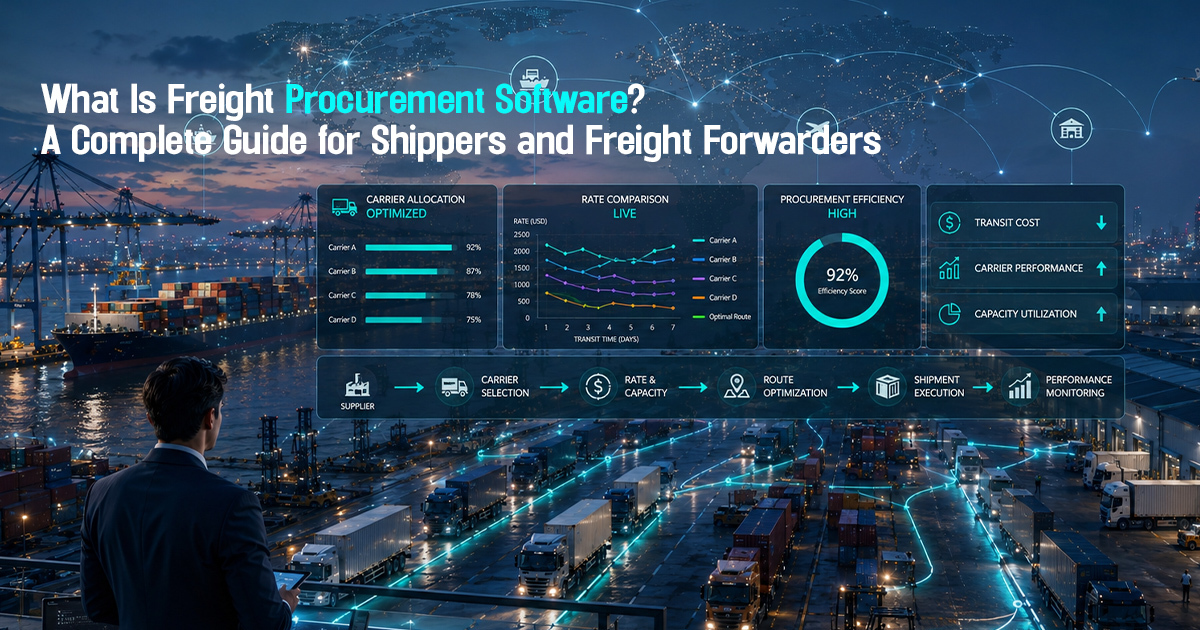
What Is Freight Procurement Software? A Complete Guide for Shippers and Freight Forwarders


4 Minutes
Freight procurement software is a specialized digital tool used by shippers, freight forwarders, and logistics managers to streamline and optimize the process of sourcing, bidding, and awarding freight contracts. Operationally, it matters because freight procurement directly impacts shipping costs, vendor relationships, and shipment efficiency. However, many logistics teams face challenges around fragmented communication, manual rate comparisons, and limited auditability — issues that freight procurement software aims to resolve.
Defining Freight Procurement Software
Freight procurement software is a digital platform designed to manage freight tenders, vendor quotations, contract awarding, and supplier performance tracking in a centralized environment. It supports better rate discovery and cost control by automating manual procurement workflows and providing transparent vendor comparisons.
This software typically integrates freight tender management, bid evaluation, and supplier management capabilities, enabling users to reduce delays, improve compliance, and enhance decision-making by providing structured visibility into freight sourcing cycles.

Key Benefits of Using Freight Procurement Software
Implementing freight procurement software delivers operational clarity by centralizing shipment sourcing details and reducing the risks of manual errors and communication gaps. It enables logistics teams to enforce structured tender workflows that standardize vendor selection and contract negotiations.
With digital freight procurement, teams gain real-time insights into freight rates and vendor performance, which facilitates faster response times and proactive cost optimization. This reduces the likelihood of costly exceptions like detention charges due to shipment delays or misaligned contract terms.
How Freight Procurement Software Works in Practice
At its core, freight procurement software automates key workflow steps such as initiating freight tenders, collecting bids, evaluating supplier quotes, and generating contract awards. It ensures centralized documentation and an audit trail for compliance and financial control.
Users can also perform side-by-side comparisons of bids, monitor historical supplier performance, and identify opportunities for freight cost optimization. The software supports collaborative decision-making among procurement, operations, and finance teams, enabling better alignment with shipment schedules and service requirements.
Practical checklist
When evaluating freight procurement software, consider this checklist to ensure operational fit:
- Ability to manage multiple freight tender types (FCL, LCL, air freight, truck)
- Automated freight bid collection and comparison features
- Integrated supplier performance tracking and scorecards
- Centralized contract management and audit trails
- Compliance support for documentation and regulatory checkpoints
- Collaboration tools for cross-functional procurement teams
- Reporting capabilities to track freight cost optimization progress
- Integration options with shipment tracking and operational systems
Freight procurement software turns fragmented sourcing into a structured, visible process for better cost and risk control.
Common mistakes in freight procurement without software
One frequent issue in freight procurement is relying on spreadsheets and email threads, which leads to data fragmentation and delayed decision-making. This increases the risk of errors in rate comparison and missed deadlines for shipment bookings.
Another common mistake is insufficient supplier evaluation and follow-up, causing teams to overlook vendor reliability factors and hidden costs such as detention or demurrage. Without procurement automation in logistics, coordinating tenders becomes time-consuming and prone to compliance gaps.
Choosing the right freight procurement software for your operations
Selecting logistics procurement solutions requires assessing the software’s fit with your freight sourcing platforms and operational workflows. Focus on platforms that provide transparent bid management and supplier management software features aligned with your shipping volumes and complexity.
Integration with shipment visibility tools enhances end-to-end control, allowing alignment of procurement with execution milestones such as ETD and ETA. This improves exception handling and reduces last-minute procurement challenges.
Freight procurement software vs traditional procurement methods
Traditional freight procurement relies heavily on manual processes, such as phone calls, spreadsheets, and fragmented vendor negotiations. In contrast, freight procurement software offers centralized workflows, automated bid comparisons, and real-time supplier scorecards, significantly improving speed and accuracy.
While manual methods may suffice for simple or low-volume shipments, digital freight procurement becomes essential for complex operations managing multiple lanes, carriers, and contract terms. The software reduces operational risks by providing detailed audit trails and supporting compliance.

Integrating freight procurement software with shipment operations
Effective integration between freight procurement and shipment tracking systems creates operational visibility through synchronized timelines and milestone updates. This alignment helps in proactive exception handling, such as spotting delays that could trigger demurrage risks.
By connecting procurement data with shipment execution, logistics managers gain clearer control over cost drivers and can dynamically adjust vendor assignments or negotiate better rates based on real performance insights, resulting in improved freight cost optimization.
Conclusion
In modern freight operations, freight procurement software serves as a critical tool that transforms manual, fragmented sourcing into efficient, visible, and audit-friendly processes. For freight forwarders, importers, exporters, and logistics managers, adopting these digital solutions supports cost control, compliance discipline, and operational clarity, which are essential to managing complex shipment flows and supplier coordination. Proper evaluation and integration of procurement software with shipment tracking and contract management workflows enable teams to reduce risks such as detention, demurrage, and missed deadlines, while improving freight cost optimization and vendor performance. Ultimately, freight procurement software is not just about technology, but about embedding structured, exception-first workflows into the freight sourcing cycle to achieve consistent and measurable improvements in freight management outcomes.
Get in Touch!
We'll reach out shortly with the info you need. No spam, just a helpful conversation.
Freightstory Technologies Private Limited
A-209, Dynasty Business Park, JB Nagar,
Andheri East, Mumbai- 400059, India


For Exporters & Importers
For Freight Forwarders
© 2026 Frayto. All Rights Reserved.