


Solutions
For Exporters & Importers

For Freight Forwarders and Logistics Service Providers
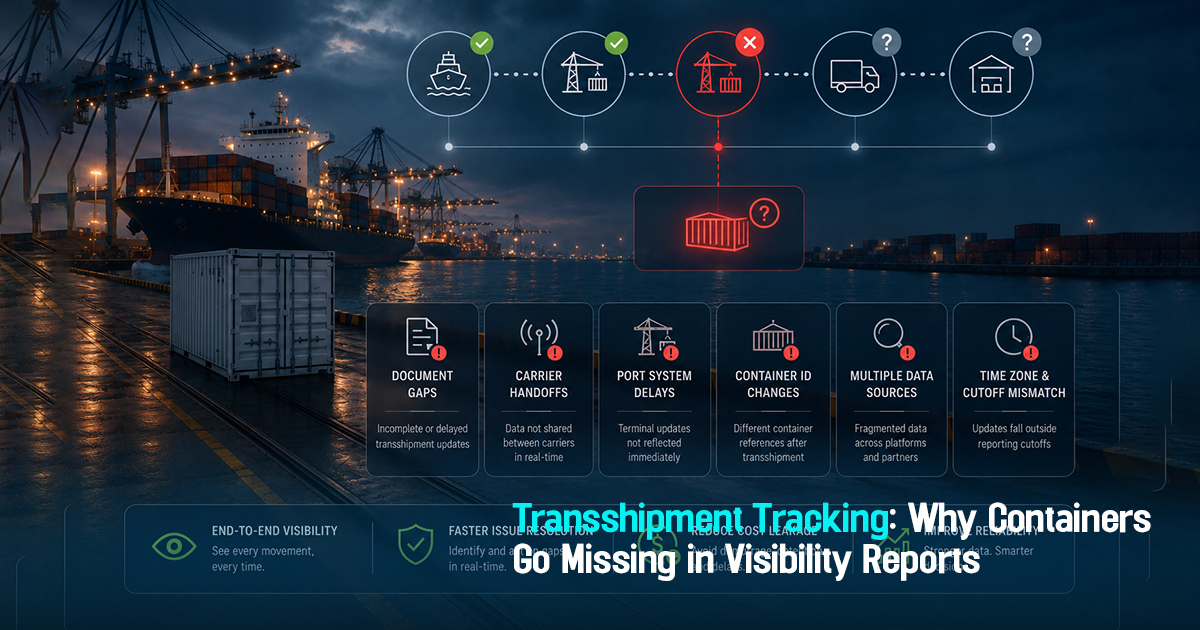
Transshipment Tracking: Why Containers Go Missing in Visibility Reports


7 Minutes
Container tracking visibility refers to the ability of logistics teams to monitor the real-time location and status of shipping containers throughout their journey, including complex transshipment points where containers change vessels or modes. This is critical because missing container reports often stem from visibility gaps at transshipment, leading to operational delays, customer dissatisfaction, and increased costs. This article explains why containers go missing in visibility reports specifically during transshipment tracking and offers a practical guide to enhance shipment visibility, reduce exceptions, and tighten operational control.
What Is Transshipment Tracking and Why It Affects Container Visibility
Transshipment tracking monitors containers as they move between vessels or transport modes at intermediate ports before reaching the final destination. Because containers pass through multiple carriers and systems, shipment visibility challenges increase during transshipment.
At transshipment ports, containers often offload from one vessel and wait for another. This break in continuous tracking creates data handoff points where visibility can drop and containers may appear as "missing" in reports. Delays in updating container status from port or feeder vessels contribute to missing container reports in freight visibility solutions.

A Practical Workflow Framework for Improving Container Tracking Visibility
Container tracking visibility during transshipment can be enhanced by following a structured workflow. This framework addresses operational control points and exception handling essential for maintaining visibility.
The workflow consists of the following key steps, each critical to avoiding visibility gaps and missing container incidents:
- Booking Confirmation and Data Synchronization: Ensure all container details, including booking numbers and transshipment routes, are accurately entered and shared between forwarders, carriers, and ports.
- Milestone Tracking Before Main Leg Departure: Monitor initial port activities and feeder vessel loading to verify container movement alignment with schedule.
- Transshipment Port Arrival and Unloading Updates: Critical checkpoint where real-time updates confirming container offloading from the main vessel are required.
- Feeder Vessel Loading and Departure Tracking: Timely confirmation of container movement onto the connecting vessel mitigates visibility loss.
- Exception Detection and Ownership Assignment: If no update arrives within expected windows, an immediate follow-up triggers with clearly assigned owners accountable for resolving visibility gaps.
- Customer Communication with Accurate Status: Proactive updates prevent escalations, even if containers are delayed at transshipment ports.
- Final Delivery Milestones and Documentation Closure: Confirming container receipt and document handoffs complete the visibility cycle.
Common Reasons Containers Go Missing in Transshipment Visibility
Data silos between carriers and ports create gaps where container events fail to update in centralized systems, causing missing visibility at transshipment stages. This is compounded by lack of standard milestone reporting.
Manual tracking methods using multiple portals or spreadsheets introduce errors and delays, especially when coordinating feeder vessels. Inefficient communication across teams and unclear ownership of exceptions increases the risk of untracked container movements.
Role-wise Responsibilities for Better Container Tracking Visibility
Freight forwarders must coordinate carrier data exchanges, validate milestone updates, and own transshipment exception resolution. Ensuring timely updates from feeder vessel operators is critical.
Importers and exporters should monitor container status especially during transshipment phases and inquire proactively about any unexplained delay or missing updates to avoid surprises on arrival and demurrage costs.
Operations teams need to track ETA/ETD changes, control shipment milestones closely, and assign clear ownership for every visibility gap. This avoids last-minute escalations and clarifies follow-up workflows.
Procurement and documentation teams must ensure all booking and shipping instructions correctly capture transshipment points to enable accurate carrier coordination and document handoffs at each port.
Operational clarity in container tracking starts with owning exceptions during transshipment phases.
Process-wise Breakdown: Container Tracking Before, During, and After Transshipment
Before transshipment: Confirm all shipment details with carriers including transshipment ports and feeder vessel schedules. Sync container booking data across all stakeholders and ensure pre-alerts for initial vessel load.
During transshipment: Monitor milestone updates closely at the transshipment port for container offload confirmation. Track feeder vessel loading and departure. An unexpected delay or lack of confirmation should trigger escalation and carrier follow-up in real time.
After transshipment: Maintain visibility as containers move towards the destination port. Verify document handoffs and update customer communication with accurate ETA based on final leg status.
Freight Operation Examples of Missing Containers Due to Transshipment Tracking Gaps
Example 1: A container shipped from Asia to Europe was delayed because the feeder vessel status was not updated in the freight forwarder’s tracking platform, causing a missing container alert for two days and a costly demurrage risk. This was a direct result of poor exception ownership at the transshipment port.
Example 2: An importer discovered their LCL container was missing from visibility reports because the port feeder service failed to provide real-time loading confirmation, highlighting the importance of synchronizing carrier milestone updates across all legs in logistics container tracking.
Example 3: A freight forwarder manually tracked multiple transshipment containers using separate carrier portals, leading to delayed ETA notifications and customer escalations. Transitioning to centralized shipment visibility solutions would have prevented such operational friction.
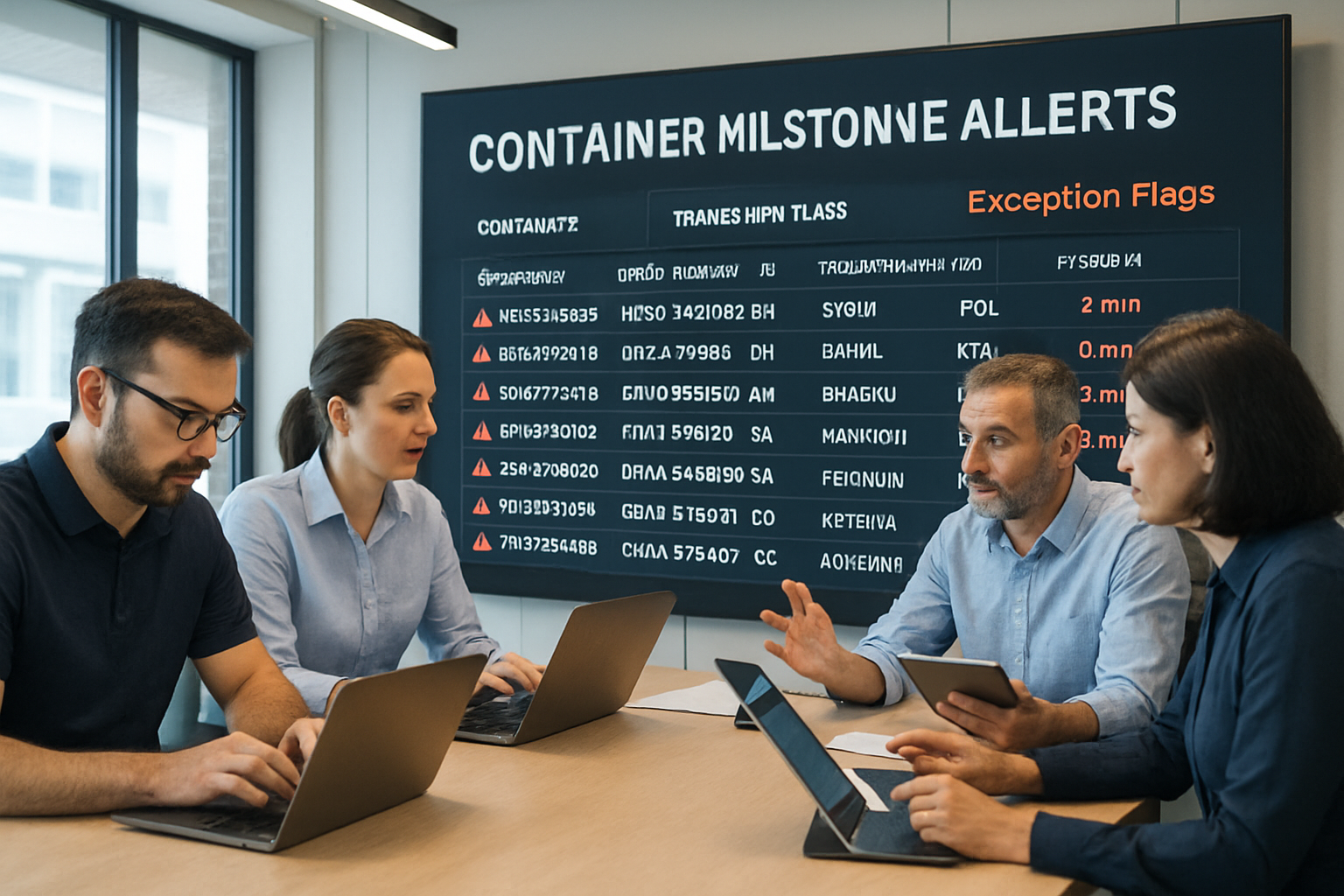
Practical checklist
Use this checklist to close visibility gaps in transshipment container tracking:
- Are transshipment ports and feeder vessel details included in shipment booking data?
- Is ETD/ETA monitored separately for main and feeder vessels?
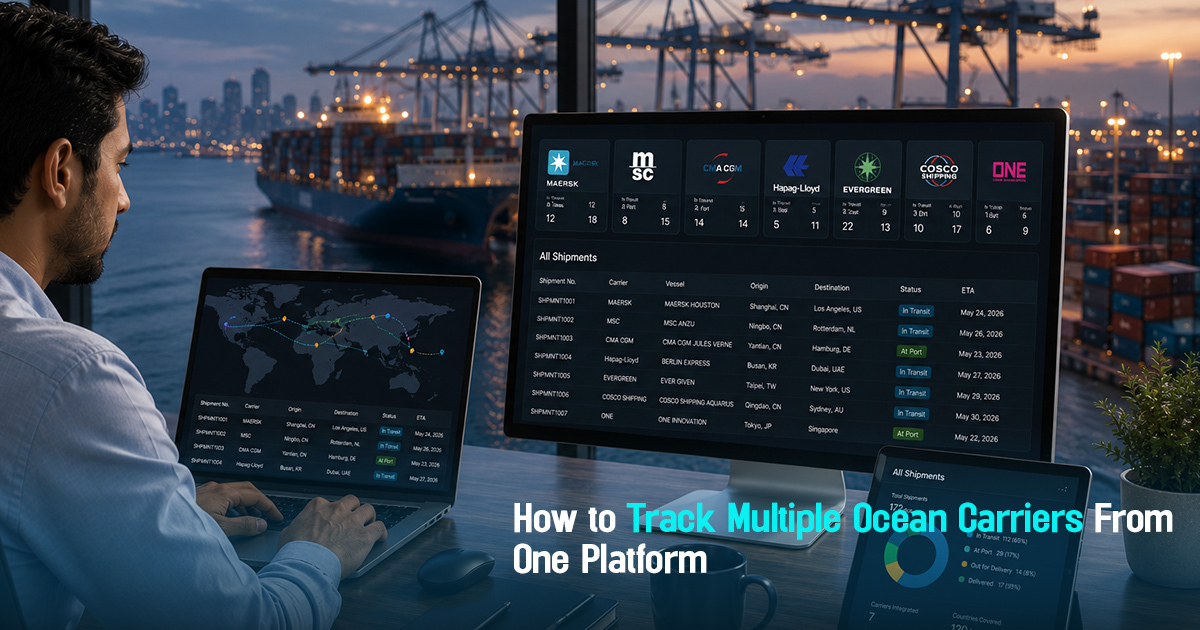
- Are milestone updates from all carriers centralized in one visibility platform?
- Are exception alerts triggered automatically when transshipment events miss updates?
- Is there clear ownership assigned to follow-up missing container status at transshipment?
- Are customers proactively updated with status changes, especially delays at transshipment?
- Are document handoffs confirmed at transshipment ports to prevent clearance delays?
- Is data from feeder services integrated or manually updated in your visibility system?
- Do operations teams hold daily reviews focused on transshipment milestone adherence?
- Are follow-ups tracked with deadline discipline to close visibility gaps quickly?
Common mistakes
Misaligned transshipment data sharing: Relying on separate carriers or port systems without centralized integration causes missing container reports. Fix: Implement a visibility system that consolidates milestone updates from main and feeder vessels into one platform.
Lack of exception ownership: When no clear team or individual is accountable for lost updates at transshipment, delays go unaddressed. Fix: Assign ownership for each container's transshipment status and define escalation steps for missing updates.
Manual, fragmented tracking workflows: Using spreadsheets or multiple portals slows update frequency and increases data errors. Fix: Move to centralized shipment visibility solutions that automate data consolidation and provide real-time alerts.
Poor customer communication during transshipment delays: Waiting for final delivery to update customers causes escalations. Fix: Proactively communicate any container status uncertainty at transshipment with clear reasons and expected resolution times.
Incomplete booking data for transshipment legs: Missing feeder vessel or port details cause carriers to miss updates. Fix: Validate booking data to ensure every transshipment leg is documented, and carriers are informed early.
A Frayto-Aligned Workflow for Container Tracking Visibility
An example operational workflow aligned with best practices and systems like Frayto includes: Booking with full transshipment route → Centralized Milestone Tracking for main and feeder vessels → Automated Exception Flagging on missing updates → Assigned Owner Follow-Up and Carrier Coordination → Customer Status Updates with real-time visibility → Documentation Handoff Confirmed → Final Delivery and Audit Closure. This workflow reduces missing container scenarios and builds operational clarity.
By controlling each step through centralized tracking and structured follow-ups, logistics teams can provide real-time shipment tracking visibility even in complex transshipment environments, turning visibility data into actionable operational decisions.
How to Manage Shipment Visibility Challenges During Transshipment
Visibility challenges arise due to multiple handoffs, data lags, and inconsistent carrier reporting during transshipment. Addressing these requires prioritizing operational clarity and exception-first workflows.
Implementing a daily review of transshipment milestones and automatically flagged exceptions helps teams reduce response times. Integrating feeder vessel tracking or collaborating closely with feeder operators ensures container movements do not go unnoticed. This approach boosts overall container tracking visibility and minimizes missing container reports.
Why Freight Forwarders Struggle with Transshipment Tracking
Freight forwarders often manage multiple carriers across the main and feeder legs with limited system integration. Reliance on carriers for milestone updates and disparate portals creates fragmented visibility.
Without structured follow-up discipline and exception management, tracking details slip through the cracks. Forwarders who centralize shipment tracking, automate exception alerts, and standardize transshipment milestone monitoring improve operational control significantly, reducing missing container incidents and customer escalations.
Why Importers and Exporters Must Prioritize Container Tracking Visibility During Transshipment
Importers face increased detention and demurrage risk if container status is unclear at transshipment, leading to late customs clearance. Exporters need to maintain customer trust by sharing timely progress, especially if containers delay at intermediate ports.
They must demand clear visibility standards from their freight forwarders and carriers, focusing on container movement tracking, milestone alerts, and ETA updates. Understanding where visibility gaps occur helps them avoid costly delays and improves supply chain transparency.
Get in Touch!
We'll reach out shortly with the info you need. No spam, just a helpful conversation.
Recommended Blogs
Freightstory Technologies Private Limited
A-209, Dynasty Business Park, JB Nagar,
Andheri East, Mumbai- 400059, India


For Exporters & Importers
For Freight Forwarders
© 2026 Frayto. All Rights Reserved.