


Solutions
For Exporters & Importers

For Freight Forwarders and Logistics Service Providers
How to Track Multiple Ocean Carriers From One Platform for Effective Shipment Visibility


6 Minutes
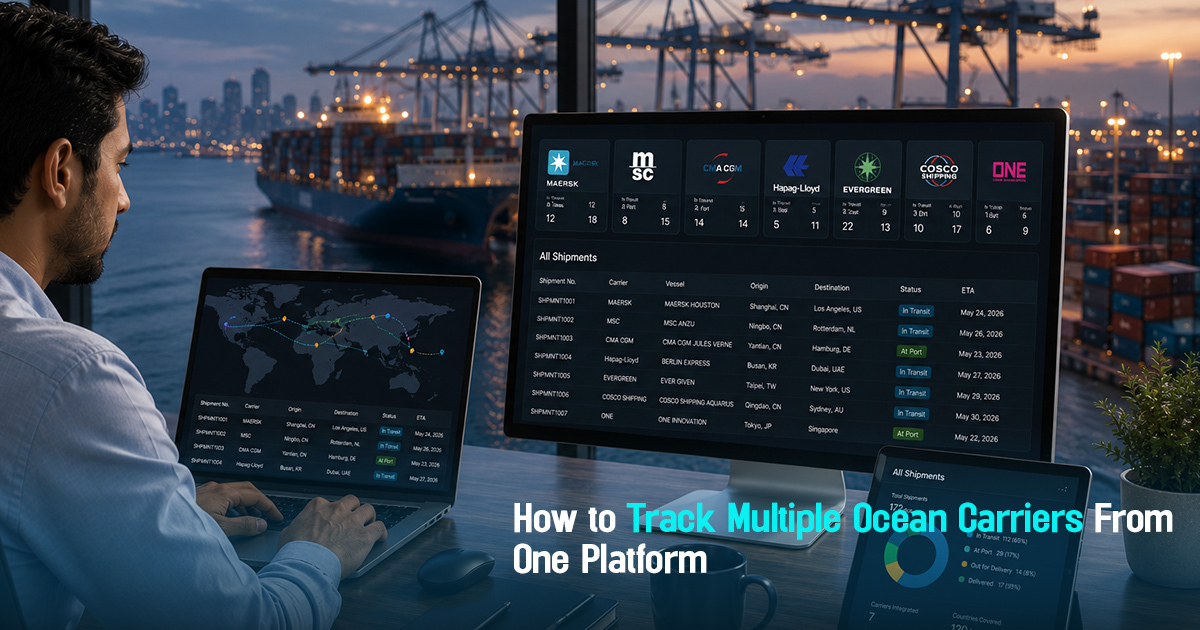
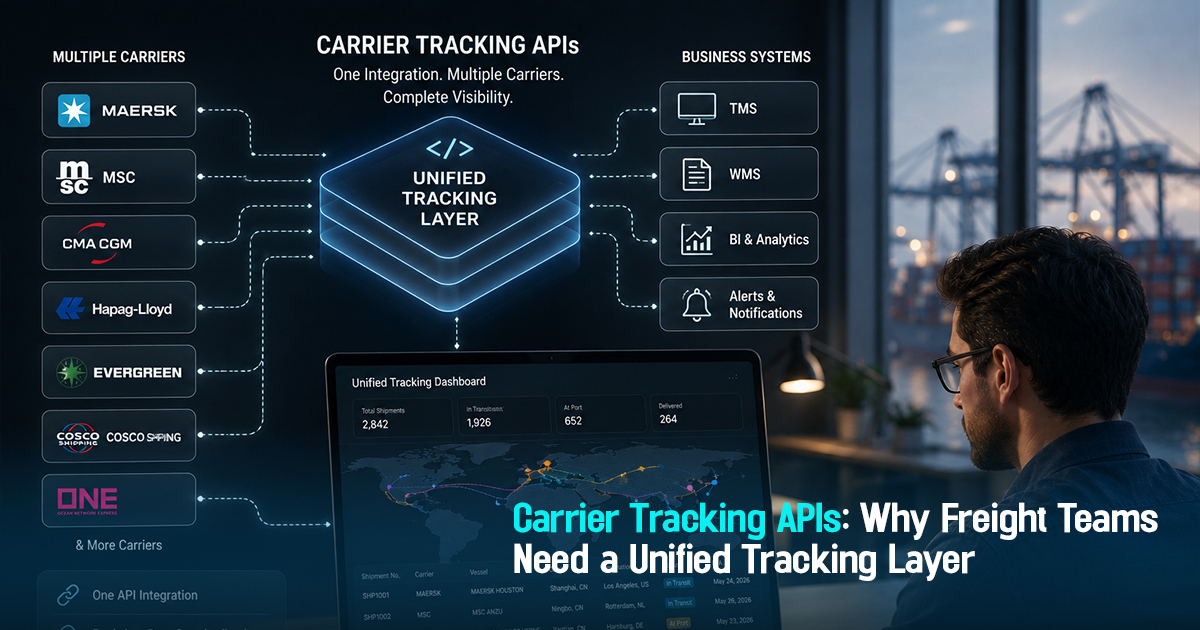
Tracking multiple ocean carriers from one platform means consolidating shipment visibility across different carriers into a single operational dashboard. This is essential because ocean freight involves various carriers, each with its own tracking system, causing fragmented information and delayed updates. Without centralized tracking, operations teams face challenges in timely decision-making, risk mitigation, and customer communication. In this article, we will explore practical workflows and process steps to track multiple ocean carriers effectively, reduce follow-ups, manage exceptions, and maintain operational clarity.
What Does It Mean to Track Multiple Ocean Carriers from One Platform?
Tracking multiple ocean carriers from one platform refers to using a centralized system that aggregates shipment data, milestones, ETAs, and exceptions from various carrier portals and sources into one view. This enables seamless carrier coordination and real-time shipment visibility without toggling between separate carrier websites.
Operationally, it means logistics teams can monitor container statuses, update customers proactively, and identify exceptions early across all ocean freight lanes. This consolidated approach prevents information silos and reduces manual tracking efforts.
A Practical Tracking Workflow for Multiple Ocean Carriers
Managing tracking across carriers requires a structured workflow that ensures data consistency, exception handling, and timely updates. Here is a practical multi-carrier tracking workflow:
- 1. Carrier Data Integration: Collect shipment details and tracking numbers from all contracted ocean carriers and integrate their tracking feeds into a unified dashboard.
- 2. Milestone Synchronization: Standardize carrier-specific milestone events (e.g., vessel departure, port arrival, container discharge) into common lifecycle stages for easy comparison.
- 3. ETD/ETA Monitoring: Continuously monitor estimated times of departure and arrival, highlighting any deviations from original schedules.
- 4. Exception Alerting: Detect delays, transshipment misses, or carrier updates requiring attention, then assign ownership to responsible teams.
- 5. Customer Updates: Automate shipment status notifications based on milestone progress and exceptions to reduce inbound inquiries.
- 6. Documentation Coordination: Link shipment milestones to required document handoffs and customs checkpoints to ensure no visibility gaps.
- 7. Operational Control and Audit: Maintain an auditable log of tracking updates, carrier communications, and exception resolutions.
This workflow enables teams to maintain consistent oversight, ensuring that tracking data from multiple carriers converges into actionable operational insights.
Role-Wise Tracking Responsibilities in Multi-Carrier Environments
Role clarity is vital when tracking shipments across multiple ocean carriers. Each team role must focus on specific aspects to support overall shipment visibility effectively.
Freight forwarders coordinate carrier data acquisition, validate tracking numbers, and follow up on exceptions. Importers and exporters monitor ETAs, request milestone updates, and verify document readiness to prevent customs delays. Operations teams track daily progress against transit plans, manage exceptions, and update customers. Procurement and documentation teams verify carrier compliance with contracted terms, track booking confirmations, and ensure timely handoffs of shipping documents.
Before, During, and After Shipment: Stages in Multi-Carrier Tracking
Stage-wise tracking control helps teams focus on relevant information and actions at each point in the shipment lifecycle. The process breaks down as:
Before Shipment: Confirm accurate container and booking information from all carriers, validate ETD schedules, and align document readiness. This stage sets up a clean data foundation.
During Shipment: Focus on milestone tracking such as vessel departure, port arrivals, and transshipment updates. Monitor ETA changes critically and flag exceptions like delays or equipment issues for immediate action.
After Shipment: Track final container discharge, customs clearance, and delivery completion milestones. Review incident reports, document any exceptions, and consolidate learnings for process improvements.
Centralized tracking with exception-first workflows turns scattered data into timely, actionable shipment insights.
Practical Checklist for Tracking Multiple Ocean Carriers
A usable checklist ensures that critical tracking tasks for multiple carriers are consistently completed without gaps or delays. Use this to audit your tracking processes:
- Are tracking numbers and booking references from all carriers validated and centralized?
- Have carrier-specific milestones been standardized into a common tracking framework?
- Is ETD and ETA data from all carriers monitored daily and compared with planned schedules?
- Are shipment exceptions flagged promptly and assigned clear owners for resolution?
- Is customer communication automated for milestone updates and exceptions across all carriers?
- Are documentation handoffs tied to shipment milestones for smooth customs clearance?
- Is carrier performance reviewed periodically using aggregated tracking data to support procurement decisions?
- Are manual follow-ups on shipment status minimized by integrating carrier APIs where possible?
- Is there an auditable record of all tracking updates, customer notifications, and exception handling actions?
Consistently applying this checklist improves accuracy, reduces delays, and builds operational control when tracking multiple carriers.
Common Mistakes When Tracking Multiple Ocean Carriers and How to Fix Them
Many logistics teams struggle with multi-carrier tracking due to common pitfalls. Let’s discuss practical fixes for typical mistakes.
Mistake 1: Fragmented Carrier Data Silos – Tracking shipments separately in carrier portals causes delayed visibility and duplicated efforts.
Fix: Use a centralized platform that consolidates tracking data and normalizes milestones for all carriers.
Mistake 2: Ignoring ETA/ETD Changes – Missing schedule deviations leads to late customer alerts and demurrage risks.
Fix: Implement continuous ETD/ETA monitoring with alerts for early exception detection and ownership assignment.
Mistake 3: Manual Follow-Ups on Carrier Status – Excess calls and emails increase operational costs and slow down updates.
Fix: Automate data collection via carrier APIs or Scheduled Data Imports to reduce manual workload and improve update frequency.
Mistake 4: Lack of Milestone Standardization – Different carrier event definitions cause confusion and complicate exception management.
Fix: Define a unified milestone taxonomy for milestones like loading, departure, arrival, discharge, and customs clearance.
Addressing these mistakes through structured workflows and technology can significantly improve shipment visibility and operational control.

Frayto-Aligned Workflow for Multi-Carrier Ocean Freight Tracking
Frayto’s approach to multi-carrier tracking aligns well with operational needs and includes:
- Carrier Integration Setup: Centralize carrier tracking numbers and booking references within the shipment management system to receive automatic milestone updates.
- Milestone Normalization: Translate diverse carrier event data into a consistent set of shipment milestones visible on a unified timeline.
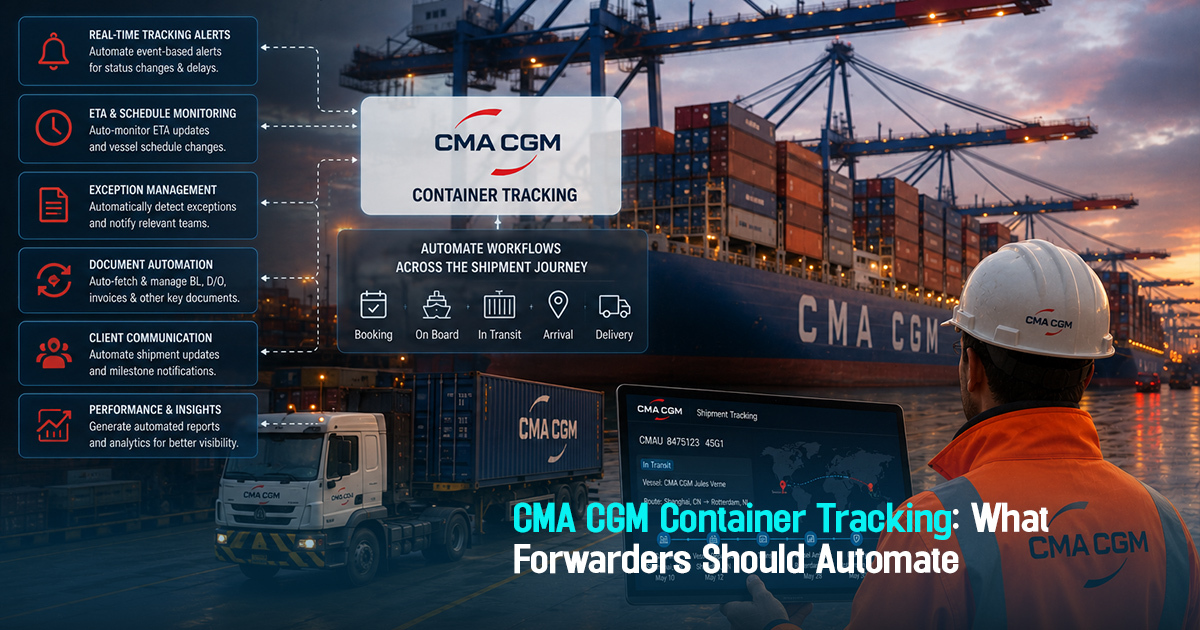
- Exception Management: Flag milestone misses or abnormal ETA shifts and assign them to dedicated team members for quick resolution.
- Customer Communication Automation: Trigger automatic shipment status updates to customers at key milestones and on exceptions to reduce inbound queries and build trust.
- Documentation Linkage: Attach necessary shipping and customs documents to shipment milestones to streamline clearance and audit readiness.
This structured process drives operational clarity, improves visibility-driven decision making, and reduces manual tracking overhead.
Real-World Examples of Multi-Carrier Tracking Challenges and Solutions
Example 1: A forwarder managing shipments on three ocean carriers manually visited each carrier’s website, resulting in delayed ETA updates. By centralizing tracking into one platform, they reduced follow-ups by 40% and improved notification speed.
Example 2: An importer missed a vessel ETA change due to lack of cross-carrier monitoring, causing additional container detention costs. Implementing ETD/ETA monitoring and exception alerts prevented recurrence.
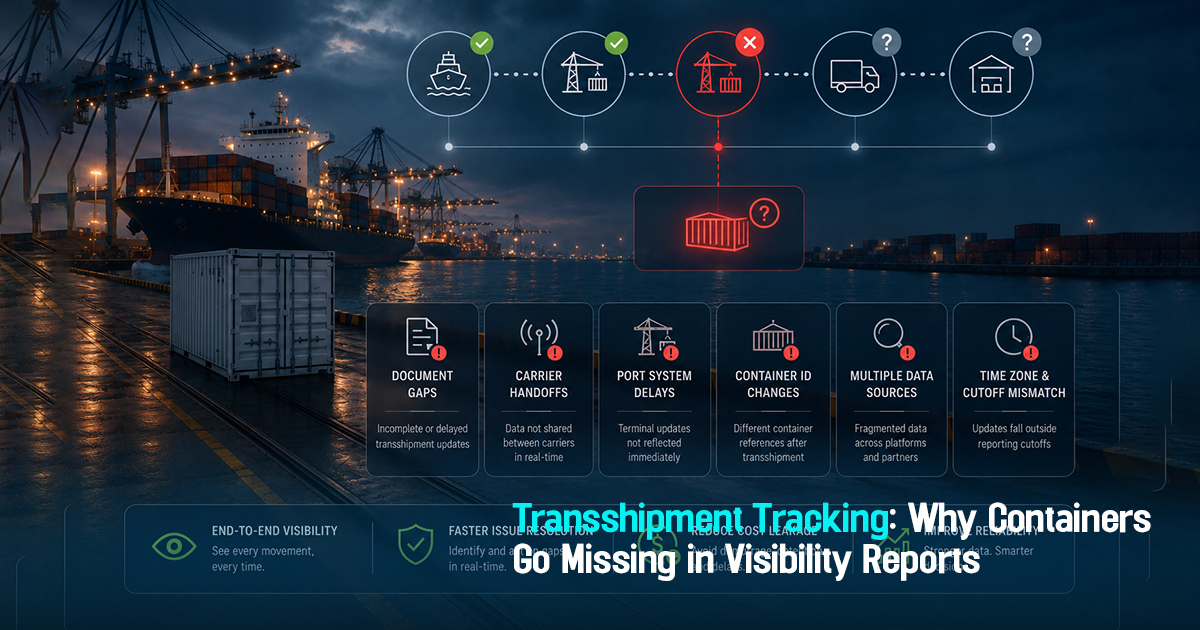
Example 3: A logistics team lost control during a transshipment leg because the tracking was fragmented between carriers, leading to container misplacement. Synchronizing milestones and ownership across all carriers improved control and visibility.
How to Choose and Use Ocean Freight Visibility Tools Effectively
Effective multi-carrier tracking depends on the right tools that support data integration, milestone standardization, exception management, and customer communication. When evaluating ocean carrier tracking software, check if it:
Supports multiple carriers and consolidates tracking data without manual effort.
Automates ETD/ETA monitoring and flags exceptions with owners assigned for corrective action.
Includes workflow features that assign follow-ups, send customer notifications, and track document handoffs.
Use the platform daily to review shipment statuses across carriers, escalations, and document handoffs to maintain continuous operational control.
Get in Touch!
We'll reach out shortly with the info you need. No spam, just a helpful conversation.
Recommended Blogs
Freightstory Technologies Private Limited
A-209, Dynasty Business Park, JB Nagar,
Andheri East, Mumbai- 400059, India


For Exporters & Importers
For Freight Forwarders
© 2026 Frayto. All Rights Reserved.