


Solutions
For Exporters & Importers

For Freight Forwarders and Logistics Service Providers
CMA CGM Container Tracking: What Forwarders Should Automate for Better Visibility


6 Minutes
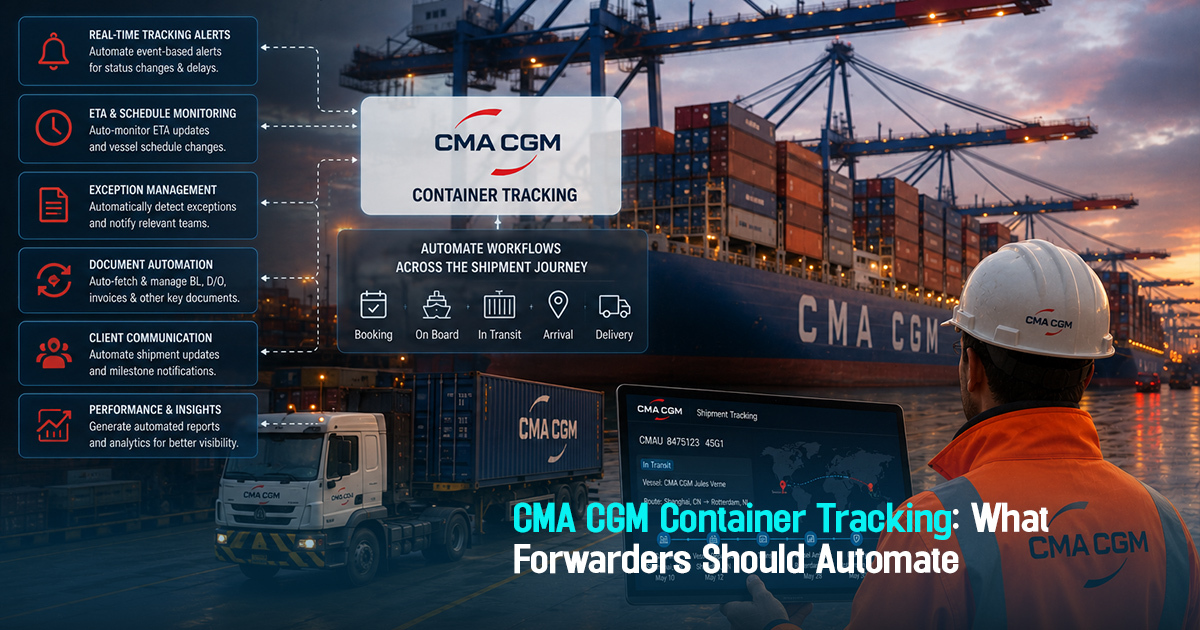
CMA CGM container tracking is a vital process for freight forwarders and logistics operations teams aiming to maintain real-time visibility over ocean shipments. Operationally, tracking containers effectively reduces costly delays and improves customer communication by providing early alerts for exceptions. However, manual tracking often leads to missed updates, delayed exception handling, and fragmented information flow. This article explores practical automation approaches forwarders should adopt to optimize CMA CGM container tracking, helping teams reduce follow-ups, improve milestone monitoring, and secure end-to-end shipment clarity.
What Is CMA CGM Container Tracking and Why Automation Matters
CMA CGM container tracking refers to monitoring the status and location of shipping containers transported by the CMA CGM ocean carrier. Automation in this context means using digital tools and systems to collect, process, and update shipment data without manual intervention. Reliable tracking provides operational clarity on estimated departure (ETD), estimated arrival (ETA), key voyage milestones, and exceptions.
For freight forwarders, automating CMA CGM container tracking addresses common operational challenges like missed ETA changes or delayed exception escalation. Instead of juggling carrier emails, portals, and spreadsheets, automation facilitates centralized shipment visibility, sharper milestone management, and proactive customer communication—all critical for efficient freight management with reduced detention or demurrage risks.

A Practical Workflow for CMA CGM Container Tracking Automation
Automating CMA CGM container tracking requires a structured workflow that ensures visibility and control across the shipment lifecycle. The following framework highlights key steps:
1. Integrate Carrier Tracking Data: Connect automated APIs or data feeds from CMA CGM into a centralized platform to capture container movements, ETDs/ETAs, and milestones.
2. Milestone Monitoring and Alerts: Define critical shipment events such as vessel departure, transshipment, arrival at destination port, and customs release. Set automatic alerts for deviations against these milestones.
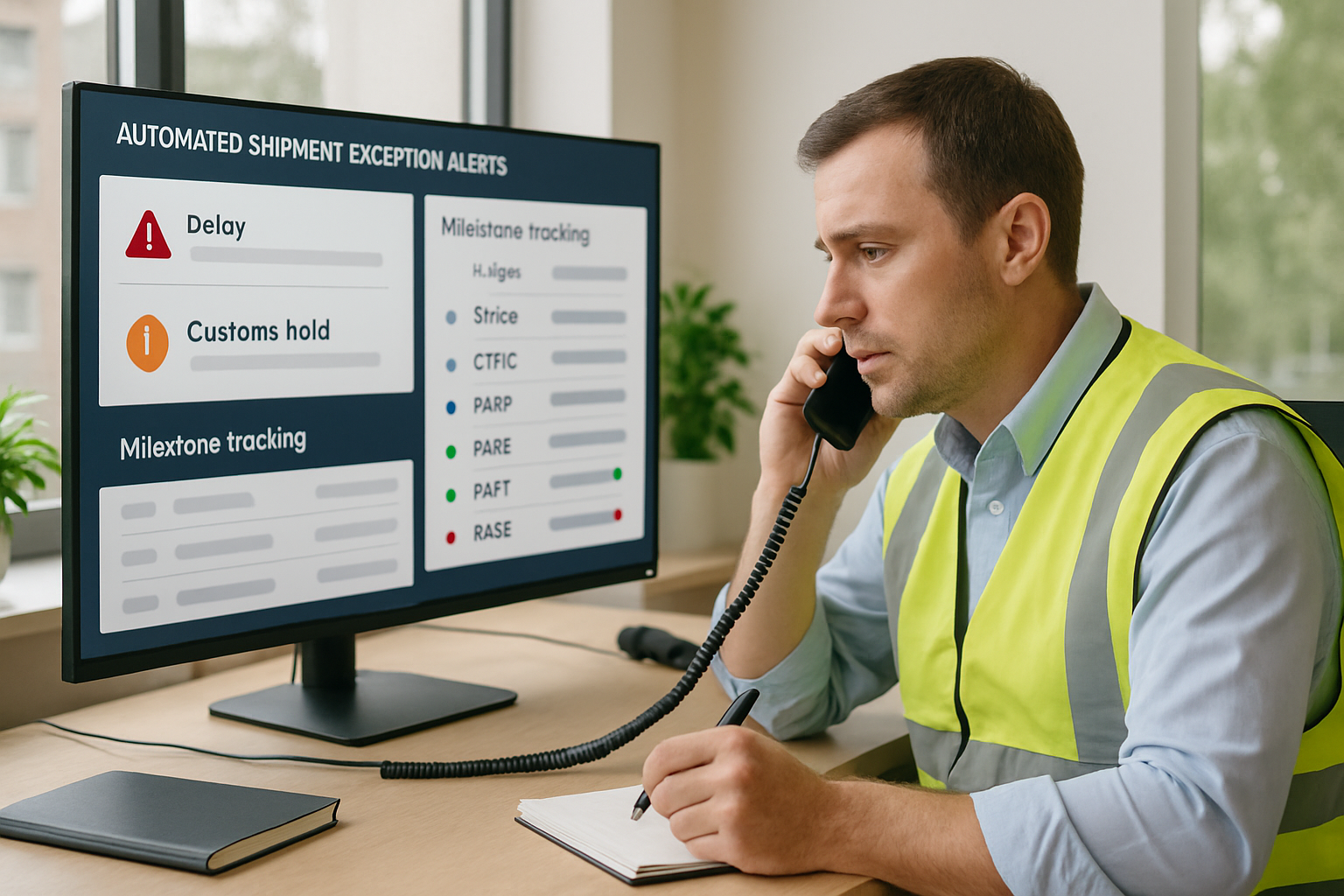
3. Exception Identification and Ownership: Use the tracking data to flag exceptions like delays or documentation issues promptly. Assign clear ownership to operations or procurement teams for resolution.
4. Real-Time Customer Updates: Automate status notifications to clients, focusing on exceptions and ETA changes, to reduce inbound inquiries and build trust.
5. Documentation and Customs Checkpoint Integration: Link tracking updates with documentation status and customs clearance milestones to prevent bottlenecks and last-mile surprises.
6. Audit Trail and Data Validation: Maintain an auditable record of tracking data, alerts, and customer communications to support dispute resolution and continuous process improvement.
This workflow enables freight teams to shift from reactive manual tracking to proactive, exception-first operations—based on accurate, real-time data.
Role-Wise Guidance: What Each Team Should Automate
Freight forwarders should automate carrier data gathering and milestone alerts to minimize siloed communications and reduce manual portal checks.
Importers and exporters must monitor ETA/ETD updates automatically and receive timely exception notifications to plan customs clearance and inventory management effectively.
Operations teams benefit from dashboards presenting real-time container status and exception queues with clear ownership to accelerate follow-ups and reduce delays.
Procurement and documentation teams should use automated tracking linked with booking and document workflows to ensure visibility on booking confirmations, documentation handoffs, and customs release, reducing risk of shipment holdups.
For example, a forwarder automating exception alerts prevented a three-day undocumented delay at a transshipment port, saving significant detention fees and customer dissatisfaction.
Process-Wise: Before, During, and After Shipment Tracking Automation
Before shipment: Validate container booking details with CMA CGM and ensure tracking integrations are activated. Confirm accessorial charges and routing accuracy to avoid downstream issues.
During shipment: Continuously monitor ETD, ETA, and voyage milestones via automated CMA CGM container tracking feeds. Detect exceptions early, assign responsible teams, and issue client updates preemptively.
After shipment: Confirm final delivery milestones, reconcile documentation status, and conduct exception closure reviews to identify improvement areas for future shipments.
Practical checklist
Use this checklist to evaluate your CMA CGM container tracking automation readiness and completeness:
- Is CMA CGM carrier tracking data integrated into your centralized platform?
- Are ETD and ETA milestone changes tracked and alerted in real time?
- Is there automated detection and assignment of shipment exceptions?
- Are clients automatically updated on key shipment status changes?
- Is documentation and customs clearance status linked to container tracking?
- Are detention and demurrage risk flags generated based on tracking data?
- Is there a clear audit trail for tracking events and customer communications?
- Do operations have a dashboard showing ownership and exception status for all CMA CGM containers?
- Are manual follow-ups minimized through automated shipment alerts?
- Are data quality and validity checks in place to prevent erroneous tracking information?
Visibility without ownership is just data; automation connects clarity to action in freight tracking.
Common mistakes
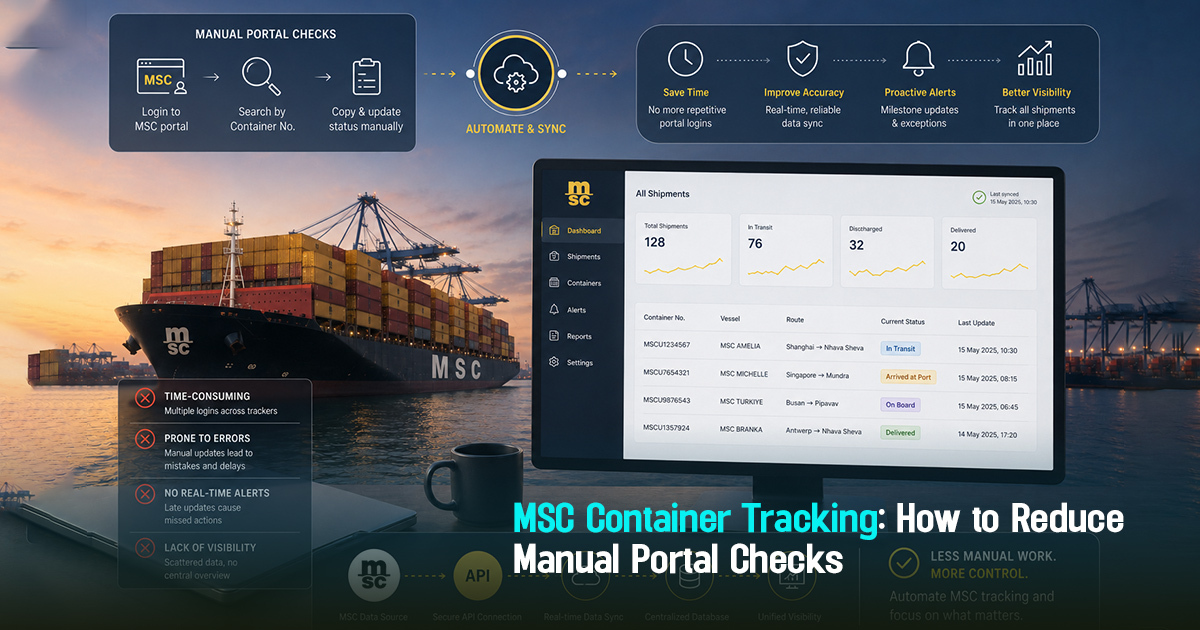
1. Relying on manual portal checks: Forwarders manually checking CMA CGM portals often miss real-time updates, leading to late exception identification. Fix: Integrate automated tracking feeds to centralize data and reduce human error.
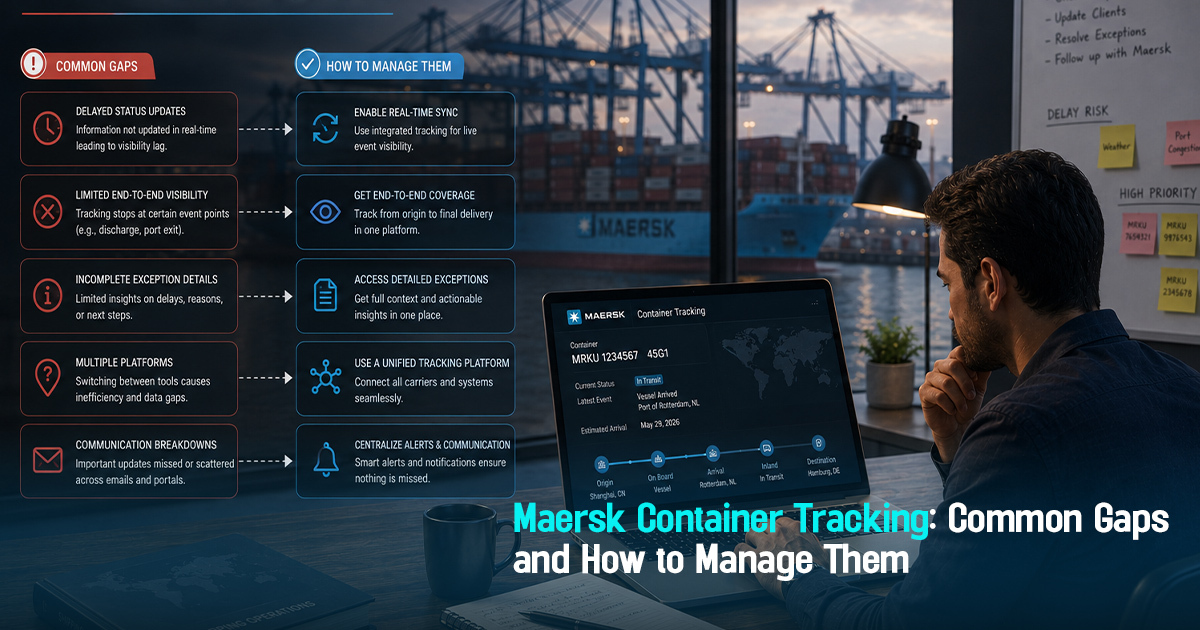
2. Delayed exception ownership assignment: Without clear workflows, exception handling lags, delaying resolution and increasing detention risk. Fix: Automate immediate allocation of exception responsibility to specific team members.
3. Infrequent customer communication: Updates only after major changes cause unnecessary inbound calls and erode trust. Fix: Automate proactive status notifications for all relevant milestones and exceptions.
4. Ignoring documentation checkpoints in tracking workflows: Failing to link shipment tracking with customs clearance and document status causes last-minute delays. Fix: Establish integrated workflows linking tracking milestones with document handoffs and customs checkpoints.
5. Overwhelming teams with raw tracking data: Unfiltered tracking updates drown teams in noise, making decision-making difficult. Fix: Configure alerts for exceptions and priority milestones only to focus operational attention.
Frayto-Aligned CMA CGM Tracking Workflow
A practical tracking sequence aligned with Frayto principles starts with: Booking Confirmation → CMA CGM Container Status Integration → Milestone Monitoring → Exception Detection and Owner Assignment → Customer Notification → Documentation and Customs Status Linkage → Final Delivery Confirmation → Exception Closure and Audit. This sequence ensures that freight forwarders maintain operational control, reduce manual tracking overhead, and deliver consistent visibility across teams and customers.
Centralizing CMA CGM shipment data with exception-first workflows minimizes detention risk and enhances communication, enabling freight operations teams to act decisively and improve overall shipment predictability.
How to Implement CMA CGM Tracking Automation in Weekly Cycles
Week 1: Map current CMA CGM tracking processes. Identify manual choke points, portals used, and exception types frequently missed.
Week 2: Integrate CMA CGM tracking APIs or data exports with your centralized freight visibility platform. Begin automating milestone extraction.
Week 3: Configure exception rules for delays, documentation lapses, or transshipment issues. Assign ownership roles and alert thresholds.
Week 4: Automate customer notification workflows for ETA changes and exceptions. Test the end-to-end tracking visibility and communication cycle.
Week 5 and beyond: Review workflow effectiveness through metrics like time-to-detect delays, time-to-resolve exceptions, and customer inquiry volume. Refine automation and ownership assignments accordingly.
Get in Touch!
We'll reach out shortly with the info you need. No spam, just a helpful conversation.
Recommended Blogs
Freightstory Technologies Private Limited
A-209, Dynasty Business Park, JB Nagar,
Andheri East, Mumbai- 400059, India


For Exporters & Importers
For Freight Forwarders
© 2026 Frayto. All Rights Reserved.