


Solutions
For Exporters & Importers

For Freight Forwarders and Logistics Service Providers
Maersk Container Tracking: Common Gaps and How to Manage Them


6 Minutes
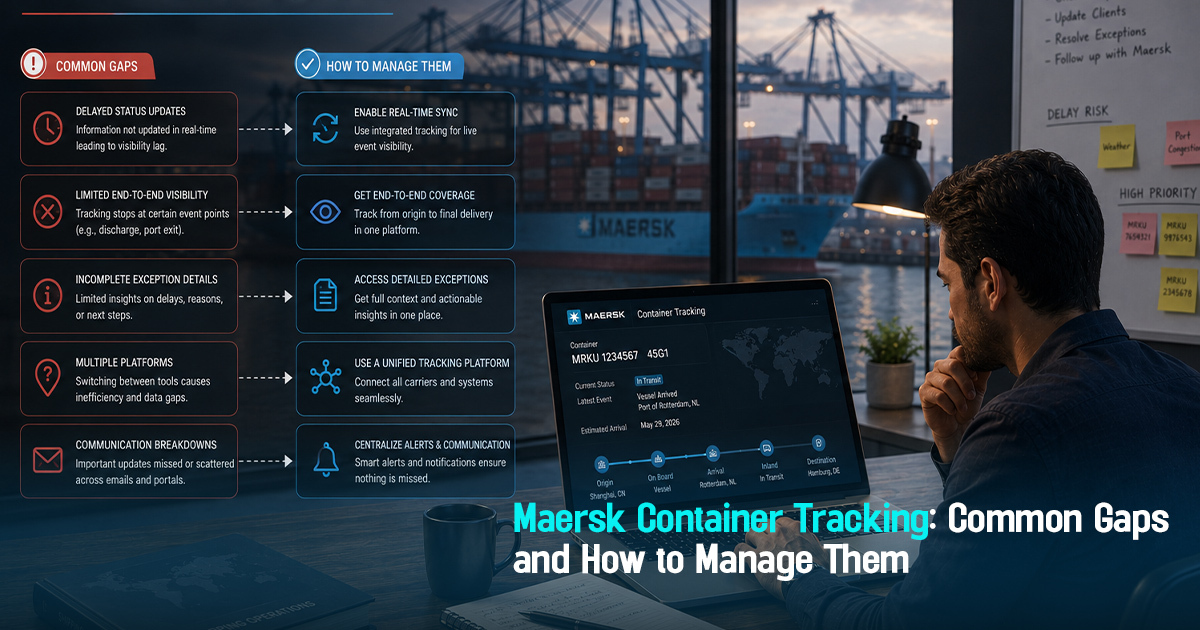
Maersk container tracking refers to the process of monitoring ocean freight containers shipped with Maersk Line, enabling logistics teams to gain visibility on location, status, and milestones. Effective container tracking is critical for operational clarity, timely decision-making, and risk mitigation. However, most freight operations face visibility gaps and data discrepancies when relying solely on Maersk’s container tracking systems, leading to delays in exception handling, poor customer communication, and increased detention or demurrage risk. This article explores the common gaps in Maersk container tracking and offers practical methods to manage and improve shipment visibility for freight forwarders, importers, exporters, and logistics managers.
What is Maersk Container Tracking and Why It Matters
Maersk container tracking enables logistics teams to monitor their shipments' movement, key milestones like loading, departure, arrival, and delivery, as well as any delays or exceptions in near real-time. This tracking is essential for maintaining operational control over freight transit and ensuring customers receive timely updates.
In practice, relying on Maersk’s own tracking portal or feeds without adequate workflow integration often leads to incomplete data visibility. This creates blind spots where exceptions go unnoticed and corrective actions are delayed, resulting in operational inefficiency and escalation risks.
Common Gaps in Maersk Shipment Tracking
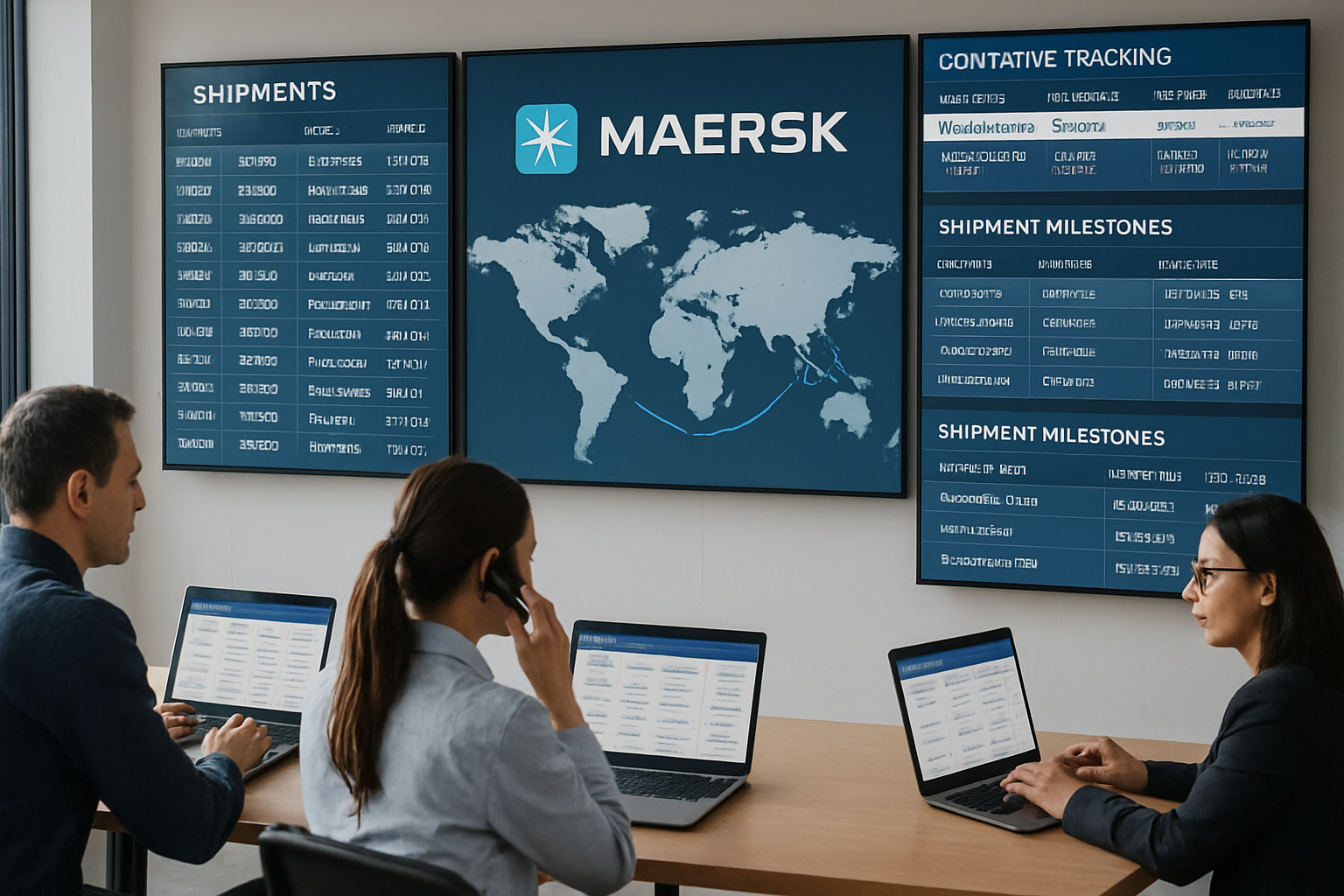
Several gaps persist with Maersk container tracking, impacting freight visibility. Lag in milestone updates is a frequent issue where critical events such as gate-in, loading, discharge, or customs clearance remain unreported or delayed. This creates an information void for operations teams.
Another typical gap is the lack of consolidated tracking across multimodal legs and vendors, especially when shipments use multiple carriers or inland transport providers. Maersk’s tracking system may not integrate well with non-Maersk carriers, causing fragmented visibility and forcing manual reconciliation.
A Practical Workflow for Managing Maersk Container Tracking Gaps
To handle tracking gaps effectively, teams should adopt a structured workflow designed around visibility enhancement and exception-first processes. This workflow includes:
- Centralized Data Aggregation: Consolidate Maersk tracking data with inputs from inland carriers and other vendors into one platform to create unified container visibility.
- Milestone Verification: Regularly verify and validate key shipment milestones such as gate-in, vessel departure (ETD), arrival (ETA), and customs checkpoints to identify missing or delayed updates.
- Exception Flagging: Identify exceptions immediately—such as berth delays, transshipment misses, or customs holds—and assign ownership for resolution.
- Proactive Carrier Follow-up: Use tracking discrepancies as triggers to coordinate directly with Maersk and other carriers for updates or issue resolution.
- Customer Communication: Provide structured shipment updates incorporating verified milestones and exceptions to reduce escalations.
- Documentation Handoffs: Ensure documentation milestones align with container tracking to prevent clearance and delivery delays.
- Audit and Review: Post-delivery, review visibility gaps, delays, and vendor performance to continuously improve tracking processes.
This workflow pushes teams to act on the earliest possible signals of delay or discrepancy, facilitating both operational control and customer trust.
Role-wise Perspective on Managing Maersk Container Visibility
Freight forwarders must coordinate the consolidation of Maersk tracking data with other carriers and communicate early on any discrepancies to importers or exporters.
Importers and exporters should monitor updated ETAs and exceptions continuously and confirm documentation handoffs align with shipment status to avoid customs delays.
Operations teams need to track shipment milestones daily, proactively identify missing tracking events, and initiate follow-ups with Maersk or related carriers.
Procurement and documentation teams should validate carrier confirmations against Maersk tracking and ensure all export-import documentation is ready ahead of expected shipment milestones.
Before, During, and After Shipment: Managing Maersk Tracking Effectively
Before shipment: Validate routing and estimated transit timelines from Maersk, confirm that all booking and documentation details are aligned, and establish tracking visibility requirements.
During transit: Monitor ETD/ETA updates from Maersk container tracking, check milestone events such as vessel departure, port arrival, and customs status, and immediately flag any exceptions for carrier follow-up and customer communication.
After delivery: Review tracking data for any missing milestone updates, assess delays and their causes, evaluate vendor responsiveness, and document lessons learned for procurement and operational improvements.
Centralized shipment visibility with proactive exception handling transforms Maersk container tracking from data to operational control.
Practical checklist
Use this checklist daily to manage Maersk container tracking gaps and maintain shipment visibility:
- Is the Maersk container status updated for gate-in, loading, sailing, and discharge milestones?
- Are inland carrier and third-party vendor tracking inputs integrated with Maersk data?
- Are exceptions like port congestion, transshipment issues, or customs holds flagged and assigned promptly?
- Are ETD and ETA revisions from Maersk verified and communicated internally and to customers?
- Is there a clear owner responsible for carrier follow-ups on shipment discrepancies?
- Are documentation checkpoints linked to shipment milestones to anticipate delays?
- Are customer updates proactive, exception-first, and timed before issue escalation?
- Is there an audit trail recording visibility gaps and carrier response timelines?
- Are repeated tracking discrepancies raised as operational issues with Maersk or service providers?
- Is tracking centralized for all containers and vendors on a single dashboard?

Common mistakes
Here are frequent errors teams make with Maersk container tracking and how to fix them:
- Relying solely on Maersk’s portal: This can cause fragmented visibility when multiple carriers or inland transporters are involved. Fix: Integrate all carrier data into a unified platform to avoid blind spots.
- Ignoring early signs of exceptions: Delayed reaction to missing or late milestone updates leads to escalations. Fix: Adopt exception-first workflows with proactive flagging and ownership.
- Manual follow-ups causing delays: Tracking discrepancies managed via emails or calls create latency. Fix: Automate follow-ups using alerts and assigned ownership in tracking systems.
- Misalignment between documentation and shipment status: Delays in customs clearance due to document mismatches increase detention risk. Fix: Synchronize document handoffs with container tracking milestones.
- Providing late or inconsistent customer updates: Lack of timely communication reduces trust. Fix: Establish standardized communication protocols consistent with shipment visibility.
Frayto-Aligned Workflow for Improved Maersk Shipment Visibility
An effective workflow aligned with best practices and tools like Frayto can enhance Maersk container tracking management by focusing on:
- Rate Request and Booking: Establish tracking visibility expectations during procurement and booking phases.
- Centralized Tracking: Collect and consolidate Maersk container status along with all related documents and carrier inputs in one dashboard.
- Milestone and ETA/ETD Monitoring: Track expected or actual shipment events, paying attention to any deviations or late updates.
- Exception Handling: When gaps or anomalies are detected, immediately assign ownership to initiate carrier follow-up.
- Customer Communication: Provide timely, structured updates highlighting milestone achievements and exceptions to manage expectations.
- Documentation Control: Ensure documentation is checked and handed off aligned with shipment progress to prevent clearance or delivery issues.
- Post-Delivery Review: Analyze visibility failures and process lapses to continuously refine shipment tracking and vendor management.
This workflow supports operational clarity and reduces manual effort in managing Maersk shipment tracking gaps.
Freight Operations Examples of Managing Maersk Container Tracking
Example 1: A freight forwarder noticed an unexpected delay in discharge milestones for a key container input via Maersk's portal. By cross-referencing inland carrier data and assigning immediate follow-up, they uncovered a berth congestion issue early and communicated this to the importer, avoiding customer escalation.
Example 2: An importer faced extra demurrage charges due to late customs clearance visibility in Maersk tracking. The operations team fixed this by linking documentation workflows tightly with tracking updates, ensuring all customs documents were submitted before the container's arrival.
Example 3: An exporter managing multiple vendors integrated Maersk tracking with inland and last-mile carriers on a single platform. This eliminated manual tracking reconciliations, improved milestone accuracy, and resulted in faster exception detection and follow-up.
FAQ
Below are frequently asked questions related to Maersk container tracking gaps and their management:
Get in Touch!
We'll reach out shortly with the info you need. No spam, just a helpful conversation.
Recommended Blogs
Freightstory Technologies Private Limited
A-209, Dynasty Business Park, JB Nagar,
Andheri East, Mumbai- 400059, India


For Exporters & Importers
For Freight Forwarders
© 2026 Frayto. All Rights Reserved.