


Solutions
For Exporters & Importers

For Freight Forwarders and Logistics Service Providers
Shipment Delay Prediction: How Freight Teams Can Act Earlier


7 Minutes
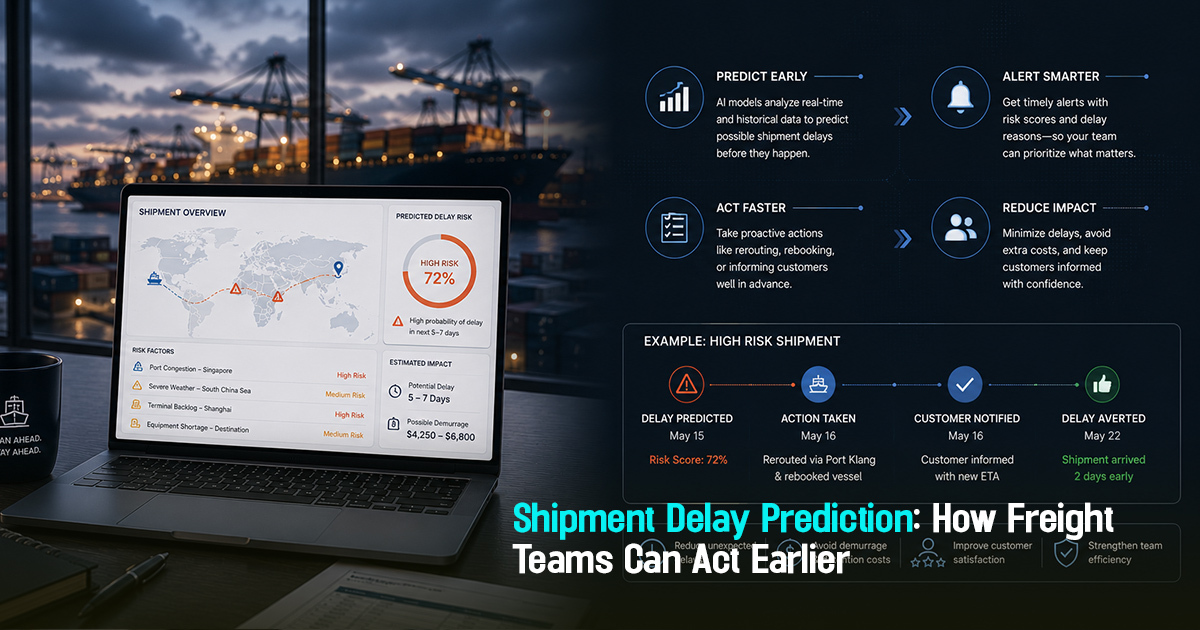
Shipment delay prediction is the process of using data and analytics to foresee potential freight disruptions before they escalate, enabling logistics teams to act earlier and reduce operational risk. This capability matters operationally because delays often compound into higher costs, missed delivery windows, and customer dissatisfaction. Freight teams struggle with late visibility of shipment issues, which limits their response time. This article explores practical approaches for shipment delay prediction, focusing on workflows, vendor coordination, milestone tracking, and exception handling to help teams anticipate delays and respond proactively.
What is Shipment Delay Prediction in Freight Operations?
Shipment delay prediction refers to the systematic use of freight data, milestone tracking, ETA/ETD monitoring, and analytical insights to identify shipments at risk of delay before the delay occurs. It combines historical patterns, real-time tracking, and exception detection to provide early signals to decision-makers.
In freight operations, this predictive approach shifts teams from reactive management to proactive mitigation, ultimately reducing costs, preventing detention and demurrage, and improving customer communication through earlier notifications and contingency planning.

A Practical Framework for Shipment Delay Prediction
Implementing shipment delay prediction requires a structured workflow integrating key operational stages. Consider the following 6-point framework that freight teams can adopt:
1. Data Collection and Integration: Gather real-time shipment tracking data, historical delay records, carrier updates, and external disruption alerts into a centralized system for clear visibility.
2. Milestone and ETA/ETD Monitoring: Track critical shipment milestones and compare planned vs actual ETA/ETD to identify deviations early.
3. Risk Scoring and Exception Flagging: Use predictive analytics to score shipments based on risk factors such as transit anomalies, route disruptions, or documentation delays, flagging them for review.
4. Exception Ownership and Coordination: Assign responsible owners for exceptions to follow up with carriers and vendors, ensuring swift resolution and updated information.
5. Proactive Customer Communication: Share early delay notifications with customers and stakeholders before escalation, enhancing trust and transparency.
6. Continuous Learning and Workflow Improvement: Analyze delay patterns post-shipment to refine predictive criteria and improve operational workflows.
Each step aligns operations teams towards structured visibility and earlier action, turning data into decisions and reducing costly surprises.
Role-Wise Responsibilities in Shipment Delay Prediction
Freight Forwarders must coordinate carrier communication and ensure milestone data is gathered timely to feed prediction analytics. Proactive follow-ups on flagged exceptions prevent escalation.
Importers and Exporters should monitor key dates, ask for updated ETAs proactively, and align internal teams for contingency plans when a delay risk emerges.
Operations Teams track shipment milestones daily, validate delay signals, assign owners for exceptions, and ensure frequent updates reach all stakeholders.
Procurement and Documentation Teams validate accessorial charges linked to late shipments, ensure documentation handoffs are on time, and flag potential regulatory delay risks early.
This clear role delineation helps maintain freight visibility layers and closes coordination gaps that contribute to delayed actions.
Process-Wise Breakdown: Before, During, and After Shipment
Before Shipment: Confirm routing, validate all documentation, and establish baseline ETAs/ETDs with carriers to set prediction parameters.
During Transit: Centralize real-time tracking with carriers, monitor milestone updates, detect early deviations, and act on exceptions with assigned ownership and vendor coordination.
After Delivery: Review delay causes, document exceptions, assess carrier performance, feed learnings into predictive models, and optimize workflows for future shipments.
This stage-wise approach aligns operational timing with decision points, reducing lag and enabling faster mitigation steps.
Freight Operations Examples Highlighting Shipment Delay Prediction
Example 1: A shipment’s harbor delay was detected early from vessel milestone missed updates. Freight forwarders escalated the issue with carriers immediately, avoiding demurrage by reallocating transport resources quicker.
Example 2: An importer faced container release delays due to documentation mismatches flagged by predictive alerts. Early coordination with customs documents and vendors resolved the hold-up two days before expected arrival.
Example 3: Operations teams used freight delay forecasting to flag high-risk transit routes, enabling procurement to compare alternative vendor quotes and secure more reliable capacity ahead of seasonal congestion.
These examples show how early signals combined with structured workflows reduce cost impacts and improve stakeholder confidence.
Early visibility and clear ownership turn delay risks into manageable exceptions before they disrupt operations.
Practical Checklist for Shipment Delay Prediction
Use this checklist to ensure freight teams embed delay prediction into everyday operations:
- Are ETD and ETA milestones tracked centrally and compared against planned schedules daily?
- Is carrier delay data automatically flagged and exceptions assigned to owners promptly?
- Are documentation handoffs completed and validated well before customs checkpoints?
- Is there real-time access to multi-carrier status updates consolidated for instant review?
- Do procurement teams review vendor reliability trends and adjust sourcing based on delay risks?
- Are customers and internal stakeholders alerted proactively about potential shipment delays?
- Is there a process to analyze completed shipments for delay patterns to improve forecasting accuracy?
- Are detention and demurrage risks monitored continuously with early action triggers?
- Is there documented accountability for exception follow-up and closure within defined timelines?
- Are contingency plans and alternate routing defined in advance for high-risk shipments?
Common Mistakes in Shipment Delay Prediction and How to Fix Them
1. Relying on Manual Tracking and Updates: Teams lose critical lead time when data is manually collected or siloed. Fix: Centralize tracking systems to automate milestone collection and exception flagging.
2. Lack of Assigned Exception Owners: Without clear ownership, flagged risks often go unresolved or escalate late. Fix: Define roles for each exception and monitor follow-up until closure.
3. Ignoring Early Milestone Deviations: Missing early delays in ETD or port clearance results in reactive last-minute fires. Fix: Implement daily milestone comparison and threshold alerts.
4. Poor Vendor Coordination for Delay Mitigation: Lack of communication channels restricts the ability to replan or reroute shipments. Fix: Establish direct carrier and vendor communication protocols integrated with shipment tracking.
5. Overlooking Documentation Delay Impact: Late or incomplete documents lead to customs holds and shipment delays. Fix: Integrate documentation workflows tightly with the shipment milestones and customs checkpoints.
Addressing these mistakes with practical fixes enables freight teams to shift from reactive crisis management to structured control.
A Frayto-Aligned Workflow for Shipment Delay Prediction
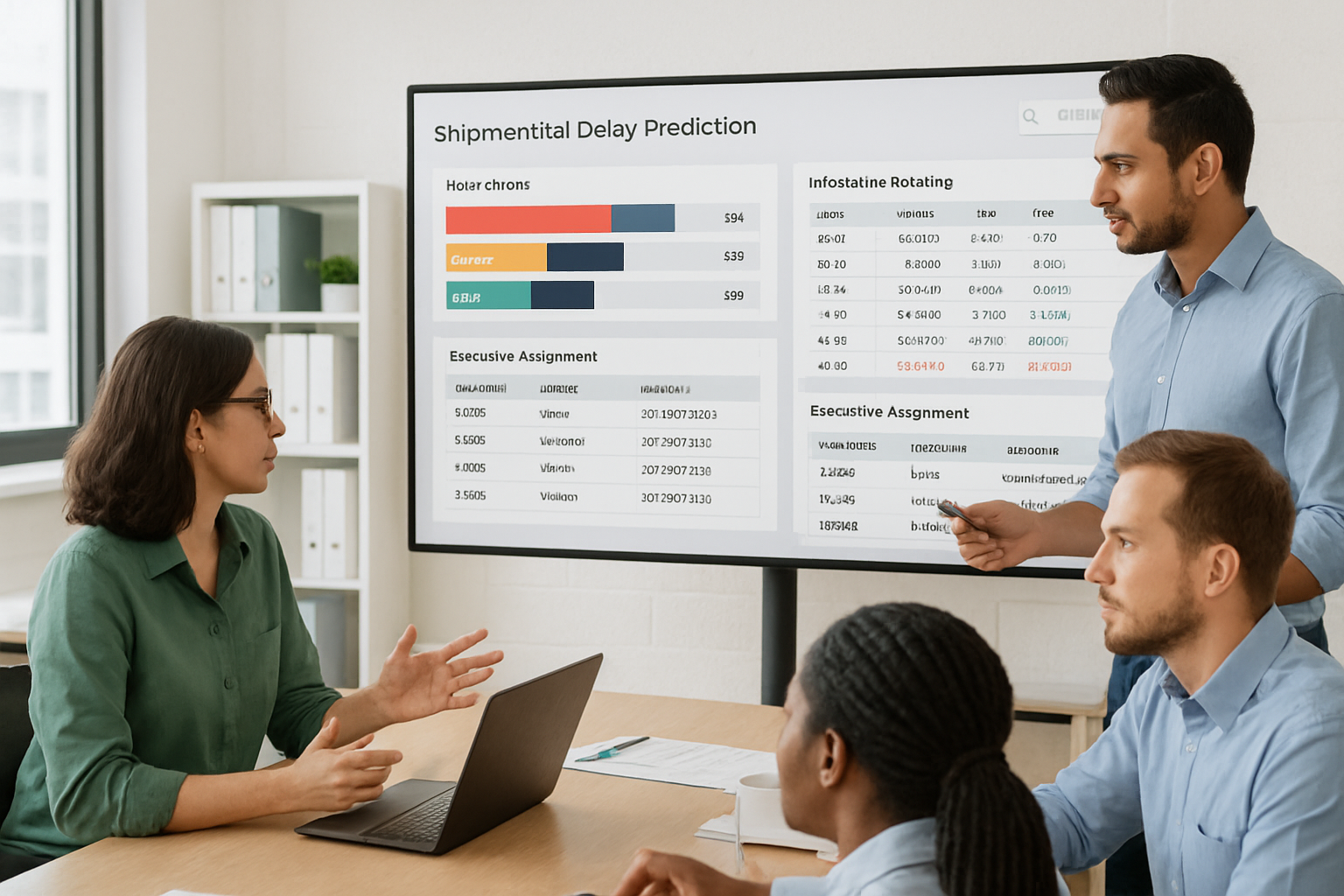
Frayto's structured freight workflows emphasize shipment delay prediction through the following steps:
Rate Request → Vendor Comparison → Approval → Booking → Centralized Tracking → Milestone Monitoring → Exception Assignment → Early Notification → Delivery Confirmation. This workflow integrates procurement discipline with centralized shipment visibility, enabling teams to discover risks early, monitor progress, coordinate vendors, assign ownership, and communicate proactively.
Using such frameworks bridges procurement decisions with operational execution, closing the gap that often causes late delay detection and reactive firefighting.
Why Freight Teams Struggle with Timely Shipment Delay Prediction
Many teams struggle because shipment tracking data arrives late or is fragmented across multiple carrier portals and email chains, causing visibility gaps that hinder early risk identification. Without centralized shipment visibility tools, daily milestone verification becomes tedious and error-prone, delaying exception assignment and slowing follow-ups.
Logistics disruption management also suffers when data quality issues mask delay indicators, and coordination workflows lack defined ownership or decision points. Teams often react to delays only after customers escalate, which is costly and erodes trust.
How Logistics Teams Can Improve Shipment Delay Forecasting
To improve freight delay forecasting, logistics teams should focus on consolidating multi-carrier tracking sources into unified dashboards for real-time visibility. Implementing structured milestone and ETA/ETD monitoring with automated alerts for threshold deviations enables early risk flagging. Exception-first processes should be deployed where responsibility is clearly assigned and escalations happen within set timelines.
Additionally, integrating supply chain risk intelligence, such as geopolitical issues or port congestion data, with shipment tracking can refine predictions and anticipate disruptions. Engaging procurement in evaluating carrier reliability supports more resilient booking decisions, further reducing delay risk.
Comparison: Shipment Visibility vs Shipment Delay Prediction
Shipment visibility generally refers to the real-time tracking of a shipment’s location and status. While this provides operational clarity, it is often passive and focuses on what has happened already. Shipment delay prediction, on the other hand, actively anticipates future disruptions by analyzing historical and real-time data signals.
Visibility is necessary but not sufficient; delay prediction requires advanced analytics, exception flagging, and proactive workflows to enable early action. Teams that combine both benefit from improved freight operations optimization and lower risk of costly surprises.
Conclusion
Shipment delay prediction is critical for freight teams to move from reactive crisis management to proactive freight operations. By integrating centralized shipment visibility with structured milestone tracking, exception ownership, and early customer communication, teams can maintain operational clarity and accelerate their response times. This requires disciplined workflows connecting procurement, operations, vendors, and documentation teams to ensure that delay signals are not missed and action is taken well before escalation. Optimizing shipment delay prediction reduces detention risks, minimizes cost impacts, and strengthens customer trust. Freight teams that adopt these practices gain a tangible advantage in managing disruptions and improving execution consistency, making their entire supply chain more resilient and cost-effective.
Get in Touch!
We'll reach out shortly with the info you need. No spam, just a helpful conversation.


For Exporters & Importers
For Freight Forwarders
© 2026 Frayto. All Rights Reserved.