


Solutions
For Exporters & Importers

For Freight Forwarders and Logistics Service Providers
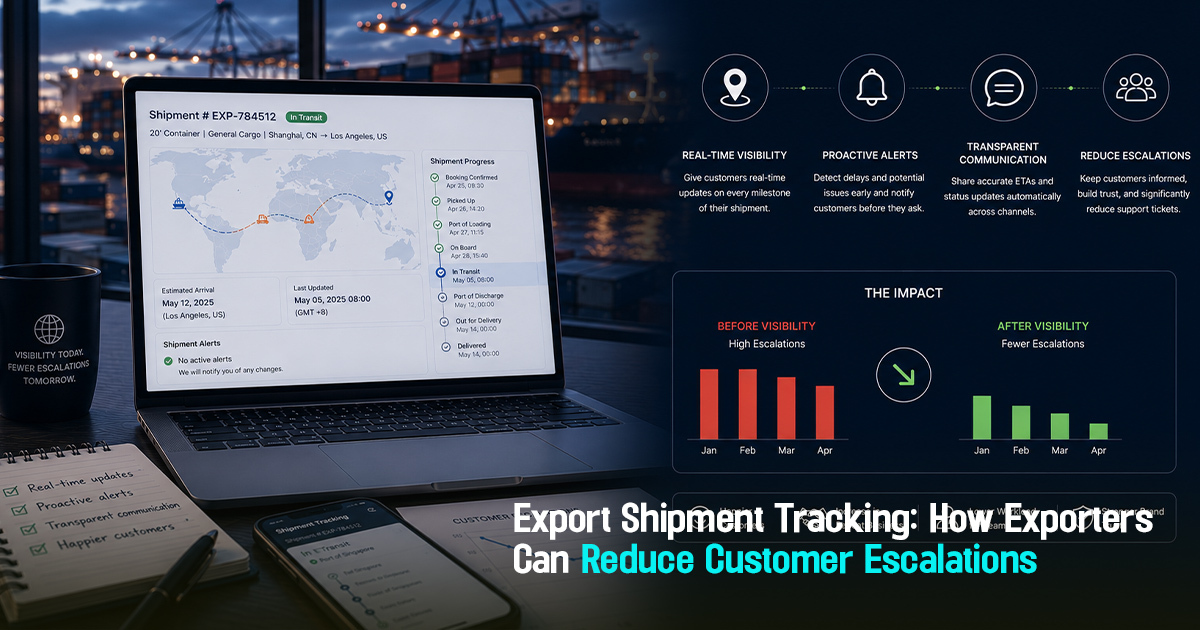
Export Shipment Tracking: How Exporters Can Reduce Customer Escalations


5 Minutes
Export shipment tracking refers to the systematic monitoring of cargo movement from origin to destination, enabling exporters to maintain real-time shipment visibility and proactively manage updates. Operationally, it is crucial because it addresses the challenge of reducing customer escalations caused by unexpected delays, lack of timely information, and shipment status uncertainties. This article offers a practical guide on how exporters can structure their tracking workflows, improve communication with customers, and manage exceptions effectively to build trust and operational clarity.
What is Export Shipment Tracking and Why It Matters
Export shipment tracking is the ongoing process of capturing and consolidating shipment status updates across carriers and logistics providers, producing centralized visibility for exporters and their customers. This process includes monitoring key milestones, ETD/ETA updates, exception alerts, and shipment documentation status to anticipate problems before they escalate.
Without structured tracking, exporters face fragmented information from carrier portals and lack the operational clarity to respond proactively. Incomplete shipment visibility often leads to delayed customer updates, reactive exception handling, and escalating customer dissatisfaction. A practical export shipment tracking system simplifies coordination by centralizing updates and enforcing disciplined workflows, which directly reduces escalations and operational risks.

A Practical Workflow Framework for Export Shipment Tracking
Implementing a structured tracking workflow is essential for minimizing surprises and customer complaints. A typical export shipment tracking workflow includes these core steps: Booking Confirmation → Milestone Data Capture → ETD/ETA Monitoring → Exception Detection & Assignment → Customer Communication → Documentation Handoff → Issue Resolution & Closure.
Each stage is designed to ensure operational visibility and control. For example, milestone data capture involves consolidating carrier updates such as container gate-in, vessel departure, transshipment, and port arrival. ETD/ETA monitoring tracks schedule changes to adjust delivery plans. Exception detection flags deviations early, assigning ownership to chase resolution and notify customers on time, which is critical for reducing escalations.
Role-Wise Responsibilities in Export Shipment Tracking
Freight forwarders coordinate with carriers for milestone updates, escalate exceptions internally, and provide timely status alerts to exporters. Exporters and customers rely on accurate shipment status reports and expect proactive communication on delays or document status. Operations teams track shipment progress daily, manage documentation handoffs, and coordinate exceptions resolution. Procurement and documentation teams validate carrier confirmations, ensure booking details match contracted terms, and manage customs documents to prevent clearance delays.
For example, a freight forwarder missing an update on a vessel delay can cause the exporter’s operations team to have outdated ETAs, leading to uninformed customers and possible escalations. Assigning clear roles and handoff points ensures accountability and seamless workflow, directly improving customer experience during export shipment tracking.
Process-Wise Breakdown: Before, During, and After Shipment Tracking
Before Shipment: Validate booking details, confirm carrier assignments, and collect necessary export documents to avoid last-minute surprises. Ensure all ETDs are agreed upon and initial milestone alerts are set up.
During Shipment: Monitor real-time export tracking data including container status, vessel movements, and customs checkpoints. Track ETA changes closely and handle exceptions such as delays or route changes immediately with assigned owners. Proactively update customers to avoid unnecessary escalations.
After Shipment: Confirm final delivery milestones, ensure all required documents (like PODs) are received and handed off to customers, and conduct post-delivery reviews to capture lessons for future improvements. This phase also covers addressing any post-delivery issues swiftly to maintain customer trust.
Three Concrete Export Shipment Tracking Examples
1. A freight forwarder missed updating an exporter when a transshipment vessel arrived late, causing customer follow-up escalation. Centralized milestone tracking and exception ownership could have immediately flagged this exception for communication.
2. An exporter faced demurrage risks because documentation handoff was delayed after cargo arrival at the destination port. A disciplined documentation workflow with clear cut-off dates would have minimized this risk and informed the customer before penalty charges accumulated.
3. Multiple carrier portals caused a shipment visibility gap for an exporter whose cargo was moving under a combination of sea and inland legs. Integrating shipment tracking into one platform improved visibility, enabling consistent customer updates and smoother exception management.
“Proactive shipment visibility and exception ownership cut customer escalations before they start.
Proactive shipment visibility and exception ownership cut customer escalations before they start.
Practical checklist
Use this checklist to reduce customer escalations by improving export shipment tracking: Each item is actionable for export logistics teams.
- Are ETD and ETA changes monitored daily and updated centrally?
- Are shipment milestone events consolidated from all carriers into one platform?
- Is each exception owned by a specific team member for timely resolution?
- Are customers proactively informed of delays before they escalate?
- Is documentation status tracked to ensure on-time customs clearance?
- Are carrier follow-ups automated to avoid manual delays?
- Are shipment tracking updates linked to purchase orders or shipment contracts?
- Is there a clear handoff process for documentation from operations to customs teams?
- Are final delivery confirmations and PODs collected and shared with customers promptly?
- Is historical shipment data reviewed to identify recurring bottlenecks?
Common mistakes
1. Fragmented tracking data from multiple carrier portals causes visibility gaps and delays in exception awareness. Fix: Consolidate all shipment updates into a centralized tracking platform to gain consistent visibility.
2. Late customer communication after problems occur increases escalations. Fix: Establish an exception-first communication workflow that triggers immediate customer alerts on delays or issues.
3. Lack of documented handoff processes for export documentation leads to customs clearance delays and penalties. Fix: Implement strict documentation workflows with defined checkpoints and accountability.
4. No clear owner for shipment exceptions causes follow-up delays and workflow gaps. Fix: Assign exception ownership to specific team members with responsibility for resolution and communication.
5. Ignoring final delivery confirmation and POD collection hinders timely invoicing and dispute resolution. Fix: Track delivery milestones rigorously and ensure certified proof of delivery is shared with customers promptly.

A Frayto-Aligned Workflow for Export Shipment Tracking
Integrating freight procurement with centralized tracking and exception management helps exporters maintain end-to-end control. For example: Rate Request → Vendor Comparison → Booking Confirmation → Centralized Milestone Tracking → Exception Assignment → Customer Status Updates → Documentation Closure.
This approach emphasizes data consolidation from all vendors, proactive milestone monitoring, and exception-first communication. Assigning clear owners to shipment issues and automating customer updates reduces follow-ups, prevents documentation delays, and mitigates detention or demurrage risks frequently encountered during export shipment tracking.
FAQ
Get in Touch!
We'll reach out shortly with the info you need. No spam, just a helpful conversation.


For Exporters & Importers
For Freight Forwarders
© 2026 Frayto. All Rights Reserved.