


Solutions
For Exporters & Importers

For Freight Forwarders and Logistics Service Providers
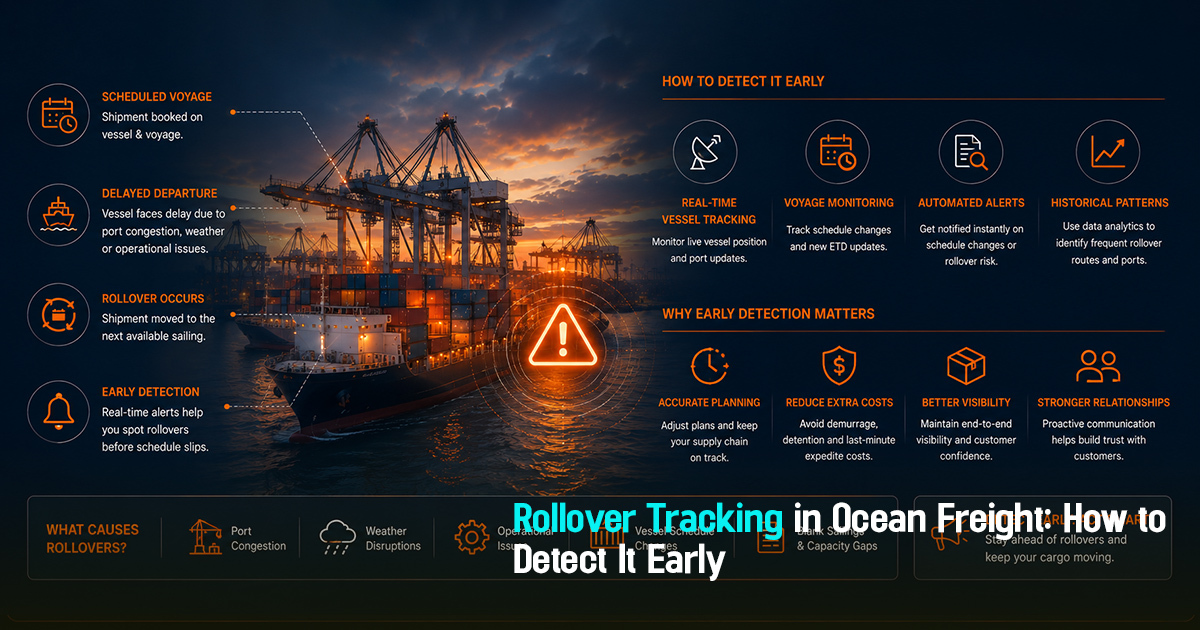
Rollover Tracking in Ocean Freight: How to Detect It Early


7 Minutes
Ocean freight rollover tracking is the process of monitoring ocean shipments to detect early signs of cargo rollover incidents, which can cause container damage, delays, and operational disruption. Effective rollover tracking matters because early detection of such incidents enables logistics teams to initiate exception handling, communicate proactively with stakeholders, and reduce downstream cost and schedule risks. Many freight operations struggle when rollover events go unnoticed until arrival, causing missed mitigation opportunities and escalating demurrage risks. This article presents a practical overview of how ocean freight rollover tracking works, why early detection is critical, and actionable steps logistics teams can implement for improved shipment visibility and risk management.
What Is Ocean Freight Rollover Tracking?
Ocean freight rollover tracking refers to the continuous monitoring and analysis of ocean container shipment status and related milestones to identify signs of cargo rollover or transshipment misses before they escalate into major delays or damage. This includes tracking carrier updates, vessel routes, ETA/ETD changes, and exception alerts that point to potential container mishandling or vessel changes.
Operationally, rollover tracking allows freight teams to spot unusual shipment deviations, coordinate with carriers, and adjust planning to minimize delays, costs, and customer impact. Unlike basic container tracking that shows location alone, rollover tracking actively detects risk patterns requiring immediate action with exception-first workflows and centralized shipment visibility.

A Practical Workflow for Ocean Freight Rollover Tracking
Effective rollover tracking involves a structured workflow comprising: Booking validation, milestone monitoring, exception detection, carrier coordination, communication updates, documentation control, and audit closure to maintain control over ocean freight incidents.
In practice, each stage builds upon the previous to maintain end-to-end visibility and responsiveness. For example, milestone monitoring must flag unusual port calls or container detentions early, triggering carrier coordination and escalation if rollover risks emerge. This workflow ensures no information gap prolongs resolution.
- Booking Validation: Confirm container routing, carrier, and vessel schedule accuracy to anticipate rollover risk points.
- Milestone Monitoring: Track vessel ETD/ETA, port calls, and container gate-in/out events to detect deviations.
- Exception Detection: Identify missed transshipment, unusual vessel diversions, or delayed updates signaling rollover.
- Carrier Coordination: Engage carriers immediately with documented queries on exceptions and vessel changes.
- Communication Updates: Provide timely updates to internal teams and customers on rollover risks and mitigation plans.
- Documentation Control: Track B/L amendments, shipping orders, and customs documents impacted by rollover.
- Audit Closure: Verify resolution, cost impact, and process improvements post-rollover incident closure.
Why Early Detection of Cargo Rollover Is Critical
Early detection of cargo rollover prevents container mishandling, demurrage, and customer escalations by enabling proactive exception management and shipment rerouting. Late discovery often results in missed reefer power-off alerts, customs clearance delays, or extended port stays.
For example, a freight forwarder tracking a shipment noticed a vessel schedule change three days in advance, which indicated a transshipment port change. Early carrier follow-up confirmed rollover risk, enabling rebooking and customer notification—avoiding costly detention charges. This shows how operational clarity and proactive communication reduce risk exposure.
Role-Wise Guidance for Ocean Freight Rollover Tracking
Freight Forwarders should centralize shipment tracking to consolidate carrier updates and exceptions rather than juggling multiple portals or manual calls.
Importers and Exporters need to monitor ETD/ETA closely, request proactive updates on transshipment changes, and verify document accuracy affected by rollovers.
Operations Teams must track milestone adherence daily, assign ownership for exceptions, and ensure rapid follow-up with carriers on unexpected vessel diversions or gate delays.
Procurement and Documentation Teams should validate any booking changes caused by rollover, check invoice accessorials related to demurrage, and maintain audit trails of communication and document amendments.
This role-wise clarity ensures that the right teams focus on the right data points to expedite resolution and maintain customer trust.
Shipment Stage Breakdown: Before, During, and After Rollover Detection
Before Shipment: Verify accurate booking data, vessel schedules, and document readiness to minimize rollover risk. Early identification of complex transshipment legs is crucial.
During Transit: Monitor ETD/ETA changes, vessel position reports, and port call updates. Exception-first workflows should flag delayed transshipment or rerouting promptly for immediate carrier queries and customer alerts.
After Rollover Event: Track container gate-in/out times, detention or demurrage risks, document amendments, and costs incurred. Perform audit reviews and process root cause analyses to prevent recurrence.
This stage-wise focus helps teams implement targeted controls at each operational checkpoint.
Early visibility into rollover risks turns potential disruptions into manageable exceptions for ocean freight operations.
Practical Checklist for Ocean Freight Rollover Tracking
Use this checklist to ensure consistent early detection and control of rollover risk in ocean shipments:
- Are ETD and ETA updates from carriers monitored centrally and daily?
- Is vessel routing including transshipment ports compared to booking data for anomalies?
- Are exceptional events such as vessel diversions or port skips immediately flagged?
- Is ownership assigned for every exception and followed up without delay?
- Are customer and internal teams notified proactively on rollover risks?
- Is document amendment after rollover tracked and communicated for customs clearance?
- Are accessorial charges relating to detention/demurrage reviewed against rollover events?
- Is historical rollover data analyzed to identify patterns or carrier reliability issues?
- Are bookings reviewed pre-shipment to confirm routing avoiding unnecessary transshipment?
- Is cross-team collaboration ensured between operations, procurement, and documentation after rollover incidents?

Common Mistakes in Ocean Freight Rollover Tracking and How to Fix Them
Mistake 1: Ignoring Early ETA Changes often leads to delayed response to rollover risks. Fix: Implement automated alerts for even minor ETD/ETA deviations to ensure quick carrier coordination.
Mistake 2: Fragmented Carrier Communication causes inconsistent status updates. Fix: Centralize communication workflows and assign exception owners to avoid information gaps.
Mistake 3: Overlooking Document Impact Post-Rollover can result in customs clearance delays. Fix: Establish documentation handoff checkpoints immediately after rollover events to validate B/L and S/O amendments.
Mistake 4: No Proactive Customer Updates increases escalations. Fix: Use structured visibility tools to send timely exception-first updates indicating rollover implications and mitigation plans.
Mistake 5: Failing to Review Cost Impact neglects hidden demurrage or detention charges. Fix: Integrate cost tracking with shipment visibility to flag abnormal accessorials linked to rollover.
A Frayto-Aligned Workflow for Ocean Freight Rollover Tracking
Frayto’s approach to rollover tracking emphasizes centralization and exception-first response through the following workflow: Booking → Real-time ETD/ETA & Milestone Monitoring → Exception Detection → Carrier Follow-up → Customer Updates → Documentation Control → Post-Event Audit.
By consolidating shipment information from multiple carriers in one platform, operational teams can detect rollover risks faster. This workflow also ensures responsibility ownership, minimizes manual follow-ups, and maintains complete audit trails for later analysis. The focus remains on visibility driving decisions and clarity driving risk mitigation.
Concrete Examples of Rollover Tracking in Ocean Freight Operations
Example 1: A logistics team tracked a vessel ETA slip of 48 hours before a scheduled transshipment. Early exception detection triggered immediate carrier inquiry, revealing a planned route change and allowing rerouting to avoid port congestion-related demurrage.
Example 2: An importer faced container detention due to delayed customs documents following a rollover incident. The documentation team, alerted early, expedited B/L amendment and submitted required papers before delivery cutoff, avoiding demurrage.
Example 3: A freight forwarder managing multiple carriers identified missing milestone updates on a container. Exception workflow triggered focused carrier follow-up, uncovering a missed transshipment and enabling timely customer notification and alternative trucking arrangements.
Conclusion
Ocean freight rollover tracking is essential for maintaining shipment visibility and operational control during complex inter-port container movements. Early detection of rollover events empowers logistics teams to apply exception-first workflows, coordinate carriers efficiently, and communicate proactively with all stakeholders. Without such structured tracking, rollover incidents often escalate into costly delays, documentation errors, and customer dissatisfaction. A stage-wise focus on booking, transit, and post-rollover activities, combined with role-based clarity, offers practical operational depth. Implementing a centralized, milestone-driven tracking approach and integrating documentation and cost control checkpoints ensures teams reduce risks and maintain audit-ready shipment visibility. Ultimately, structured rollover tracking supports better freight risk management, cost control, and customer confidence in ocean freight operations.
Get in Touch!
We'll reach out shortly with the info you need. No spam, just a helpful conversation.


For Exporters & Importers
For Freight Forwarders
© 2026 Frayto. All Rights Reserved.