


Solutions
For Exporters & Importers

For Freight Forwarders and Logistics Service Providers
Freight Exception Management Software: What It Does and Who Needs It


7 Minutes
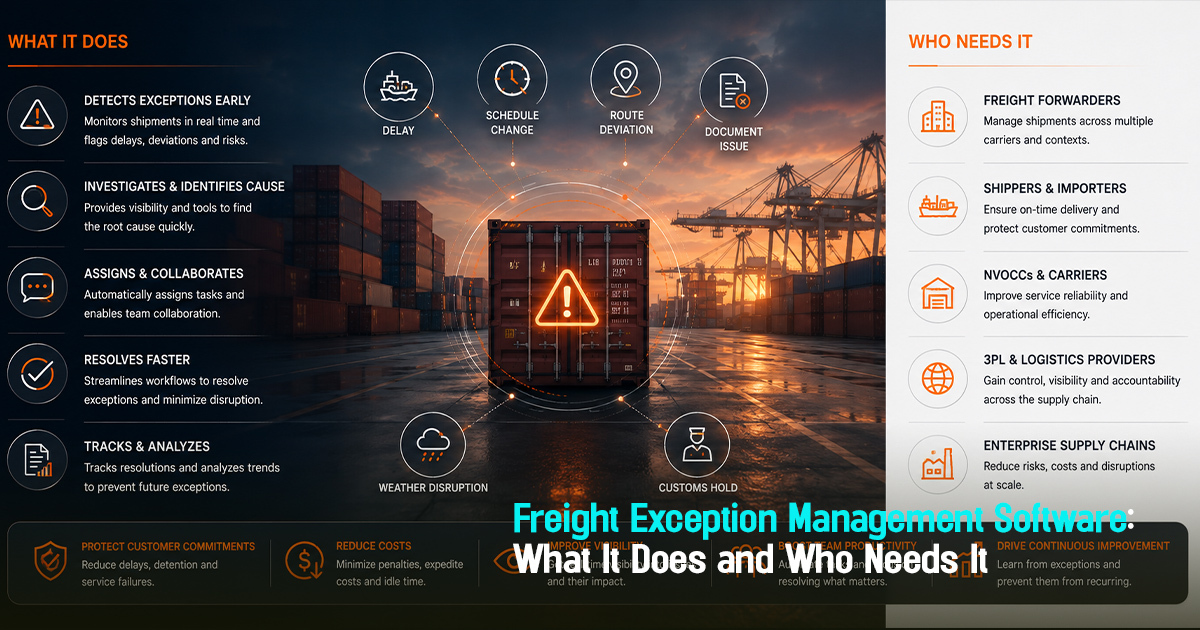
Freight exception management software is a specialized logistics tool designed to identify, track, and resolve shipment disruptions and anomalies promptly. It matters operationally because unhandled freight exceptions can lead to costly delays, increased detention and demurrage risks, and poor customer experience. Many logistics teams struggle with manual exception handling, resulting in late responses and unclear accountability. This article breaks down what freight exception management software does and who genuinely benefits from it, providing practical insights for freight forwarders, importers, exporters, and operations managers seeking greater shipment visibility and control.
What Is Freight Exception Management Software?
Freight exception management software centralizes the monitoring of shipment irregularities such as delays, missing documents, rerouting, or detention risk. It integrates automated alerts, milestone tracking, and issue ownership assignment to ensure timely resolution. This system improves supply chain visibility by making disruptions visible early and actionable.
Operationally, it shifts freight exception handling from reactive firefighting to proactive management. Rather than chasing carriers or customer queries through emails and calls, teams get structured, audit-ready exception reporting. This leads to reduced disruptions, better coordination, and clearer communication with stakeholders.
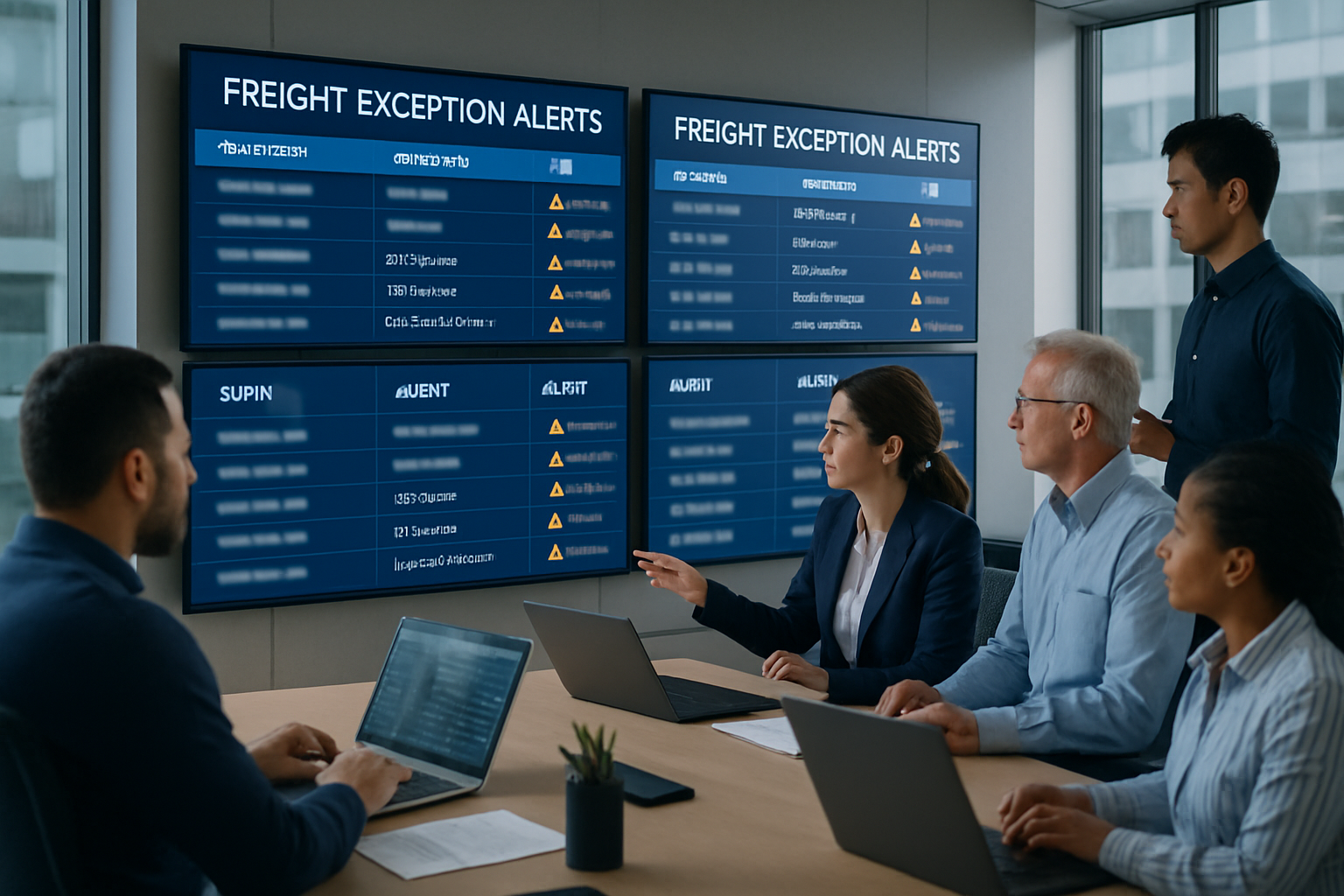
A Practical Freight Exception Management Workflow Framework
Managing freight exceptions effectively requires a structured workflow that teams can standardize and scale. The following framework breaks down key steps:
Each stage addresses critical decision points and coordination efforts essential for operational clarity.
- Exception Detection: Use automated shipment tracking data and alerts to identify exception events like missed milestones or ETA changes as early as possible.
- Exception Categorization: Classify the exception by type—delay, documentation issue, transshipment miss, detention risk etc.—to assign the right specialist or team for resolution.
- Owner Assignment: Assign clear responsibility for the exception to a person or team, ensuring accountability and prompt follow-up without workflow gaps.
- Root Cause Analysis: Investigate the cause of the disruption through communication with carriers, suppliers, and customs, enabling an informed resolution plan.
- Customer Communication: Proactively update customers with exception details and expected resolution times to manage expectations and reduce escalations.
- Exception Resolution: Execute corrective actions such as rerouting, document completion, or carrier escalations with constant progress tracking.
- Closure and Audit: Confirm exception closure with evidence and capture learnings to prevent recurrence and improve operational processes.
Role-Wise Responsibilities in Freight Exception Management
Different logistics roles must coordinate seamlessly to handle freight exceptions efficiently. Understanding role-wise priorities helps reduce delays and confusion.
Clear role responsibilities foster operational discipline and ensure proper handoffs.
- Freight Forwarders: Coordinate carrier communication, identify exceptions early through milestone tracking, and escalate issues directly to the responsible parties.
- Importers and Exporters: Monitor shipment exception alerts, validate pending documentation, and prepare for customs checkpoints that may impact clearance timing.
- Operations Teams: Track daily shipment exceptions in centralized dashboards, assign owners, update customers proactively, and follow up persistently until resolution.
- Procurement Teams: Review exception impacts on agreed transit times and costs, validate carrier service levels, and adjust vendor plans where exceptions indicate performance gaps.
- Documentation Teams: Ensure all exception-related documents are collected, validated, and handed off timely to customs and carriers to avoid clearance delays.
Stage-Wise Implementation Breakdown: Before, During, and After Shipment
Managing freight exceptions requires a stage-wise operational approach. Different activities and controls apply before booking, during transit, and after delivery.
Understanding these stages helps teams plan exception handling systematically.
- Before Shipment: Validate vendor reliability, establish documentation requirements, and define exception thresholds such as acceptable ETA variances to set clear expectations.
- During Shipment: Monitor shipment milestones and ETA/ETD updates closely using freight exception management software; assign owners to emerging exceptions and communicate status updates frequently.
- After Shipment: Audit exception records for root causes, reconcile further delay or cost impacts like detention/demurrage, document lessons learned, and update procurement plans accordingly.
Freight Operation Examples Demonstrating Exception Management Challenges
Real-world freight exceptions illustrate how unstructured management causes issues and how software-enabled workflows solve them.
These examples highlight practical takeaways and operational improvement areas.
- Example 1: A carrier failed to update ETA after a port congestion event, delaying a shipment for four days. Lack of centralized exception tracking meant the operations team only learned of this after customer escalation, increasing demurrage risk.
- Example 2: An importer did not receive updated customs documentation due to manual handoff delays. Exception management software would have flagged this document exception early, enabling proactive customer communication and avoiding clearance delays.
- Example 3: A freight forwarder's procurement team missed rate impact of a sailing delay exception, resulting in unexpected higher costs. An integrated exception reporting tool would have linked rate impact to the exception, triggering timely renegotiations.
Visibility alone isn't enough; timely exception ownership drives operational clarity and reduces freight disruptions.
Practical Checklist for Freight Exception Management
Use this checklist to evaluate and improve freight exception handling workflows in your logistics operations.
Each point is actionable and focuses on reducing exception impact and improving visibility.
- Are exception alerts automated based on shipment milestones and ETA deviations?
- Is every detected exception categorized and assigned an accountable owner within the team?
- Are root causes investigated promptly with follow-up tasks clearly defined?
- Is customer communication proactive, explaining the exception and expected resolution time?
- Are documentation delays or gaps visible in the tracking system before customs checkpoints?
- Is there a centralized dashboard consolidating exceptions across carriers and vendors?
- Are detention and demurrage risks monitored with exception alerts to avoid unnecessary charges?
- Does the system track exception resolution progress and record closure details for audits?
- Are procurement and operations teams aligned on exception impacts and cost mitigation steps?
- Is regular exception performance reviewed to identify recurring issues and improve processes?
Common Mistakes in Freight Exception Management and Practical Fixes
Many freight teams struggle due to avoidable mistakes that increase disruptions and reduce operational clarity.
Recognizing and fixing these errors leads to more efficient exception handling.
- Mistake 1: Relying on manual email and phone chasing for exception follow-ups.
Hurt: Causes delayed responses and missed ownership.
Fix: Implement automated exception alerts and a centralized tracking system with owner assignment to enforce accountability. - Mistake 2: Lack of exception categorization leading to misrouted follow-ups.
Hurt: Wastes time and dilutes responsibility.
Fix: Use classification rules within software tools to direct exceptions (e.g., documentation, transit delay) to specialized teams. - Mistake 3: Poor customer communication during exceptions, often reactive or absent.
Hurt: Increases escalations and undermines trust.
Fix: Establish proactive customer communication protocols triggered by exception events, with clear updates on status and expected fixes. - Mistake 4: Exception data silos due to fragmented carrier portals and spreadsheets.
Hurt: Limits visibility and slows decisions.
Fix: Use integrated freight exception management software that centralizes multiple carrier and vendor data sources. - Mistake 5: No audit trail capturing exception handling details and evidence.
Hurt: Complicates post-shipment reviews, carrier claims, and compliance.
Fix: Enforce digital exception logs with timestamps, owners, actions taken, and closure notes.
A Frayto-Aligned Freight Exception Management Workflow
Frayto’s approach to freight exception management focuses on centralized visibility and structured exception workflows to improve control.
This solution aligns closely with the practical framework discussed earlier, ensuring shipments are monitored comprehensively and exceptions resolved promptly.
- Centralized Exception Detection: Aggregates carrier data, ETA changes, and milestone misses in one dashboard to surface exceptions early.
- Structured Exception Categorization and Ownership: Auto-classifies exceptions and assigns to responsible internal teams or individuals to remove ambiguity.
- Automated Customer Updates: Triggers communication templates automatically on exception creation and updates to keep clients informed.
- Exception Resolution Tracking: Captures follow-up actions, root cause analysis, and resolution steps with timestamps for audit readiness.
- Post-Exception Review and Reporting: Provides analytics to identify the most frequent exception types and vendors with recurring issues for continuous improvement.
Why Freight Forwarders, Importers, and Operations Teams Need Exception Management Software
Each stakeholder group has distinct reasons to invest in formal freight exception management tools. Understanding these helps build alignment across supply chain workflows.
Clear role-based needs promote collaboration and reduce operational silos.
- Freight Forwarders: Gain control over multi-carrier shipments, reduce manual follow-ups, and improve customer service by providing timely exception updates.
- Importers and Exporters: Receive early warning of potential clearance delays or documentation exceptions, allowing corrective action before shipment arrival.
- Operations Teams: Obtain centralized visibility to prioritize high-risk exceptions, assign owners clearly, and track resolution progress day-to-day.
- Procurement Teams: Leverage exception insights to assess carrier reliability, identify performance issues, and adjust vendor contracts accordingly.
- Documentation and Customer Service Teams: Streamline validation and handoff processes and deliver consistent communication on shipment status and disruptions.
FAQs About Freight Exception Management Software
Below are some frequently asked questions related to freight exception management software, offering practical guidance for logistics teams.
Get in Touch!
We'll reach out shortly with the info you need. No spam, just a helpful conversation.


For Exporters & Importers
For Freight Forwarders
© 2026 Frayto. All Rights Reserved.