


Solutions
For Exporters & Importers

For Freight Forwarders and Logistics Service Providers
Real-Time Shipment Tracking vs Milestone Tracking: Which Is Better for Logistics Operations?


4 Minutes
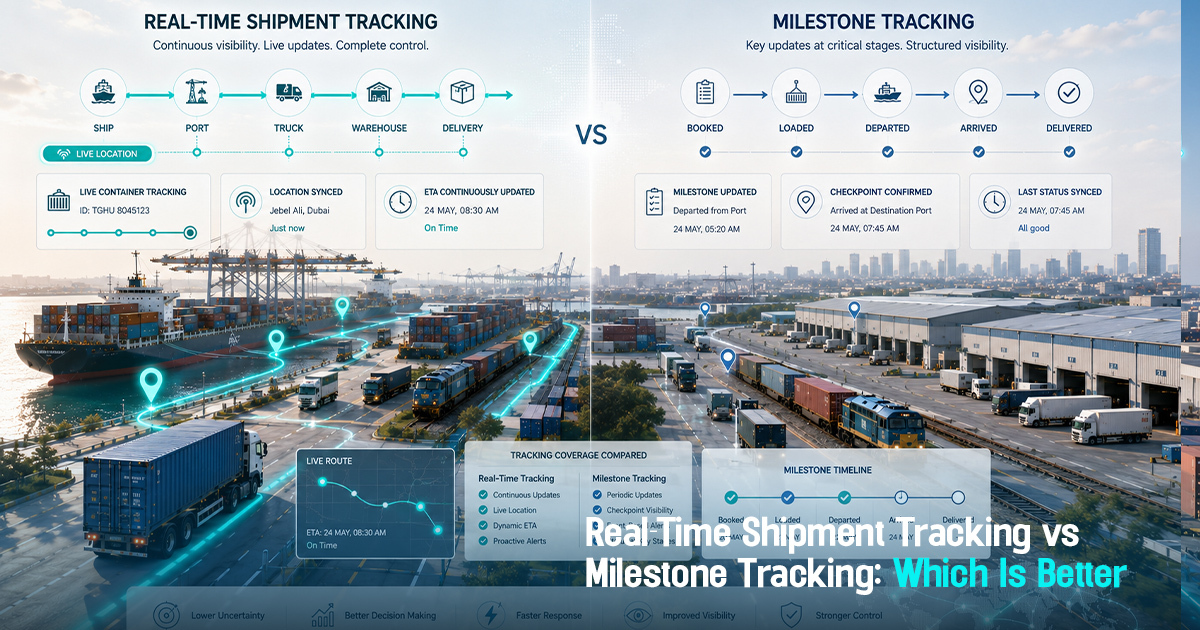
Real-time shipment tracking is a freight visibility method that provides continuous, up-to-the-minute updates on shipment location and status. This approach is critical operationally because it enables logistics teams to respond quickly to delays, exceptions, or changes, reducing uncertainty and improving decision-making. However, many operations still rely on milestone tracking logistics, which reports shipments at key predefined checkpoints rather than continuously. Understanding which method supports better shipment visibility solutions can clarify choices around freight tracking technology and improve overall operational workflows.
Defining Real-Time Shipment Tracking and Milestone Tracking
Real-time shipment tracking delivers constant updates on shipment position and conditions through GPS, IoT devices, or satellite data, while milestone tracking provides status updates only when shipments pass key checkpoints, such as departure, customs clearance, or arrival at hubs.
Both methods contribute to shipment visibility solutions, but their operating philosophies differ: continuous monitoring versus event-driven updates. This influences how logistics teams handle exception management and communication with customers or vendors.

Operational Impact of Real-Time Shipment Tracking
Real-time shipment tracking This early visibility helps teams anticipate risks such as delays, route deviations, or damage.
From an operational standpoint, this allows better exception handling workflows and informed communication with stakeholders, reducing costly disruptions like detention or demurrage charges. It also supports faster corrective actions compared to milestone updates alone.
Advantages of Milestone Tracking Logistics
Milestone tracking logistics focuses on recording shipment status at specific events, such as loading, customs clearance, or delivery. This method requires less technological integration and can be more straightforward for teams with limited tracking resources or simpler supply chains.
It provides clarity on critical touchpoints and standardizes reporting across vendors and carriers. However, reliance on fixed checkpoints can create blind spots during transit and delay awareness of emerging issues.
Timely tracking data transforms reactive freight operations into proactive decision-making hubs.
Comparison: Real-Time vs Milestone Tracking
Real-time shipment trackingmilestone tracking fits networks with predictable routes where updates at key points suffice.
Regarding shipment visibility solutions, real-time tracking offers superior granularity and timely alerts, but at higher technology and cost investments. Milestone tracking is more cost-efficient but may increase operational risks due to delayed exception detection.
Practical checklist
Steps to decide between real-time and milestone tracking:
- Assess shipment value, volume, and complexity to gauge tracking needs.
- Examine existing vendor and carrier capabilities for data sharing and integration.
- Evaluate budget constraints considering technology costs and potential detention or demurrage savings.
- Determine requirements for customer communication and compliance documentation.
- Pilot real-time tracking solutions like real-time shipment tracking with InstaTrac for a subset of shipments to monitor impact.
- Establish exception handling workflows that leverage tracking data efficiently.
- Train operations teams on using tracking tools for timely decision-making and updates.
Following these steps ensures alignment between tracking methods and operational priorities in freight management.
Common mistakes
Ignoring tracking data due to volume or complexity can cause missed exceptions and costly delays. Similarly, overreliance on milestone updates may leave operations blind to in-transit disruptions.
Another frequent error is failing to coordinate with carriers and vendors on data sharing protocols or neglecting to integrate shipment monitoring tools into daily workflows, resulting in fragmented information and reactive follow-ups.
Integrating Shipment Tracking into Operations
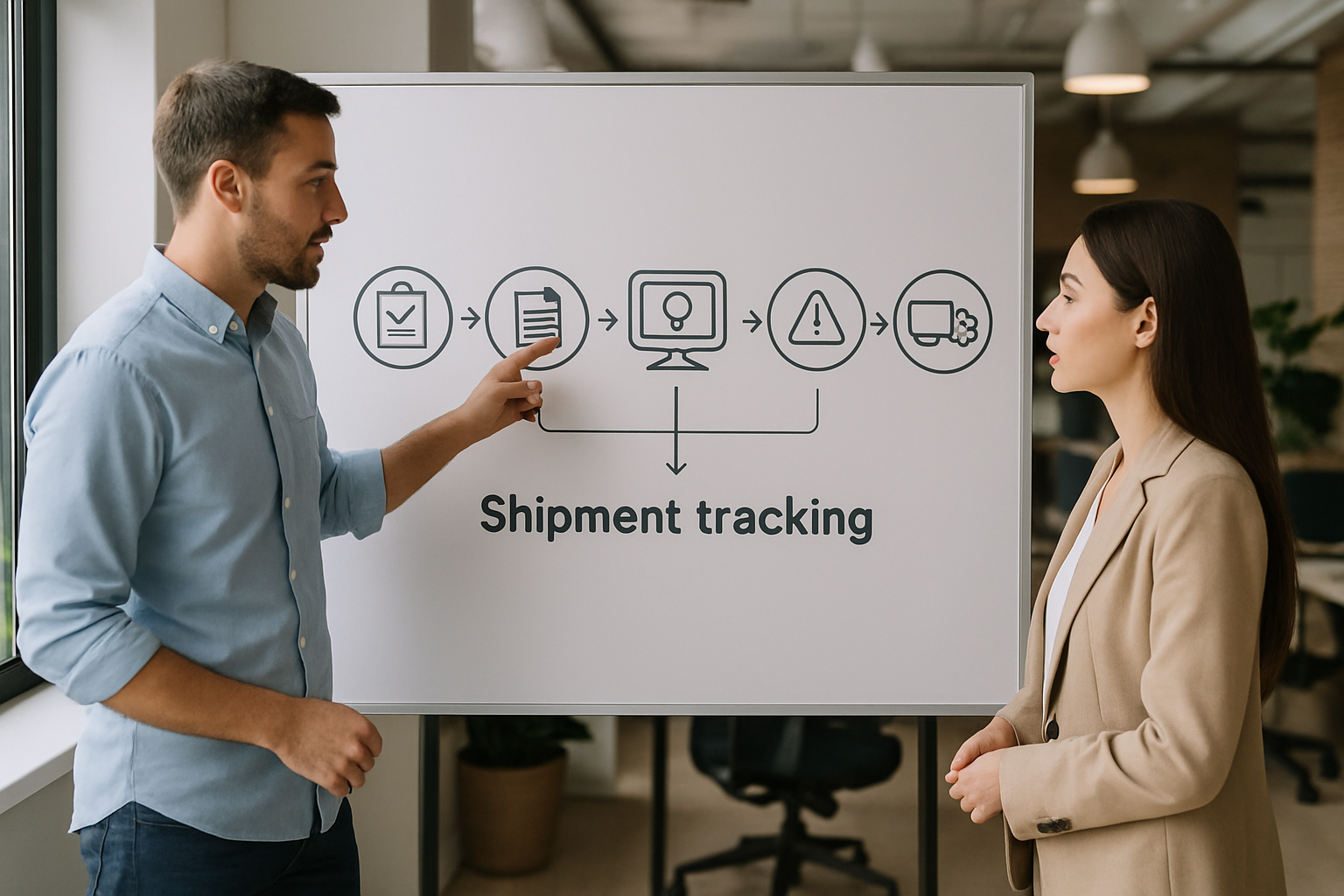
Successful integration of real-time or milestone tracking relies on a structured workflow: Booking → Documentation → Visibility → Exception Handling → Delivery Control. Visibility is a central pillar where tracking data is consumed and acted upon promptly.
This ensures that teams manage exceptions efficiently and maintain documentation and communication discipline throughout shipment life cycles, ultimately minimizing delays and controlling costs.
Technology Considerations in Tracking Choice
Freight tracking technology capabilities vary widely. Real-time systems often require GPS-enabled devices, IoT sensors, and cloud platforms that continuously pull data, whereas milestone tracking may rely on manual input or EDI messaging.
Compatibility with existing logistics tracking systems and data visibility policies must be evaluated carefully to avoid implementation delays or gaps in coverage.
Conclusion
Choosing between real-time shipment tracking and milestone tracking depends fundamentally on operational priorities like shipment complexity, risk tolerance, and cost control. Real-time tracking offers superior visibility and faster exception response, essential in dynamic supply chains with high-value cargo or tight delivery windows. Meanwhile, milestone tracking remains useful for less complex flows where detailed, continuous data may not be justified. Aligning technology capabilities with workflow discipline and vendor coordination ensures tracking systems drive informed decisions and reduce costly exceptions such as detention and demurrage. Practical adoption requires clear steps from assessment to integration, emphasizing visibility-first operation to optimize freight management. Reliable updates and structured follow-up supported by the right shipment monitoring tools increase operational clarity and strengthen customer communication. For more on optimizing shipment visibility, reliable resources include UNCTAD, FIATA, and CBP.
Get in Touch!
We'll reach out shortly with the info you need. No spam, just a helpful conversation.
Recommended Blogs
Freightstory Technologies Private Limited
A-209, Dynasty Business Park, JB Nagar,
Andheri East, Mumbai- 400059, India


For Exporters & Importers
For Freight Forwarders
© 2026 Frayto. All Rights Reserved.