


Solutions
For Exporters & Importers

For Freight Forwarders and Logistics Service Providers
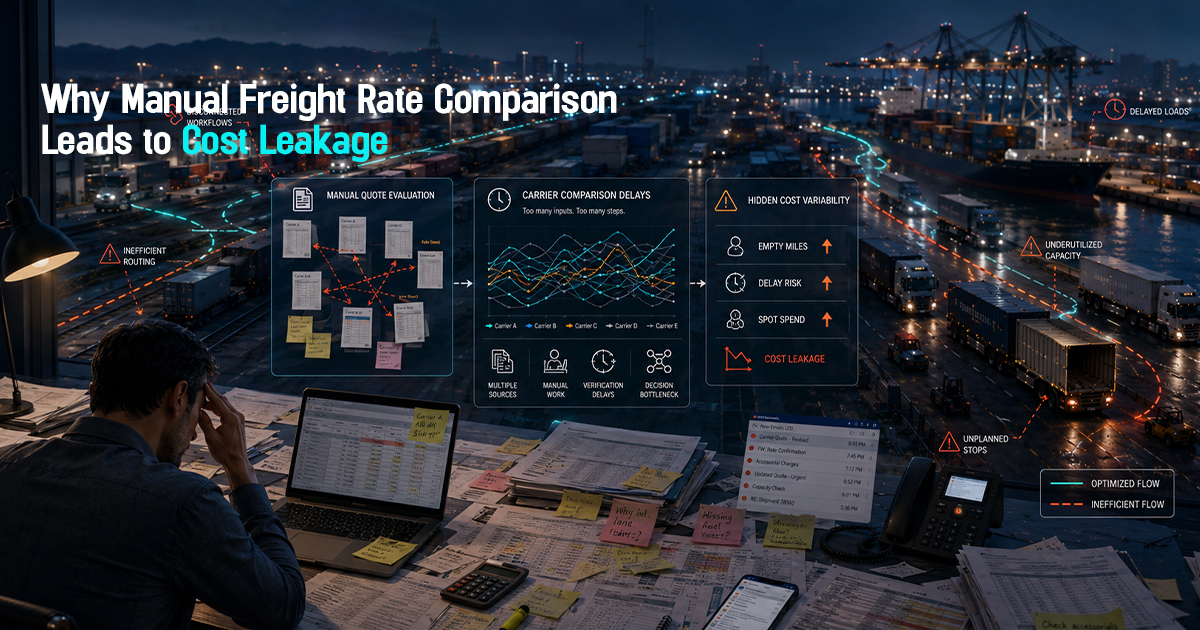
Why Manual Freight Rate Comparison Leads to Cost Leakage in Freight Procurement


4 Minutes
Freight rate comparison is a critical process in freight procurement that directly impacts logistics cost control and overall supply chain efficiency. Operationally, timely and accurate rate comparison enables teams to select the best freight vendors and avoid hidden costs. However, relying on manual freight rate comparison often leads to cost leakage, inefficiencies, and delayed decision-making that disrupt freight tendering processes and increase freight costs.
What is freight rate comparison?
Freight rate comparison is the process of evaluating freight carrier quotes or prices from various providers to select the most cost-effective and operationally suitable option. This comparison considers not only the base rates but also surcharge structures, transit times, and service reliability to ensure comprehensive cost optimization.
Accurate freight rate comparison affects shipment costs and operational workflows by informing carrier selections that balance price with service quality. Inconsistent or delayed comparisons can cause missed cost-saving opportunities and operational bottlenecks.

Challenges of manual freight rate comparison
Manual freight rate comparison often involves collecting quotes through emails, spreadsheets, or phone calls, which lacks structure and transparency. This fragmented approach can introduce data errors and slow response times, making it difficult to validate costs or compare quotes side-by-side.
The operational impact is significant: procurement teams spend excessive time gathering rates instead of evaluating them effectively, which delays tender cycles and reduces negotiation leverage. This inefficiency also increases the risk of selecting higher-cost carriers due to overlooked terms or incomplete data.
How manual processes cause freight cost leakage
Freight cost leakage occurs when hidden or untracked expenses accumulate due to gaps in operational controls. Manual rate comparison contributes by missing critical elements like fuel surcharges, detention fees, or inconsistent rate validity periods. These leaks directly inflate logistics costs without immediate visibility.
Without a centralized system, tracking these exceptions becomes reactive rather than proactive, leading to increased freight payment disputes, demurrage penalties, and budget overruns. Teams may also fail to audit freight bills rigorously, compounding cost leakage over time.
Automation reduces errors and delays, making freight rate comparison more reliable and cost-effective.
Benefits of automated freight rate comparison
Automated freight procurement tools streamline rate comparison by consolidating carrier offers into a transparent, auditable platform with standardized data formats. This enables faster, more accurate vendor evaluations with less manual intervention, reducing human error and operational delays.
Automation supports exception-first workflows where discrepancies such as expired rates or unexpected surcharges are flagged automatically. Centralized visibility accelerates tender cycles, improves freight cost optimization, and enhances contract compliance by providing clear audit trails.
Practical checklist for effective freight rate comparison
Following a structured process reduces cost leakage and improves procurement accuracy:
- Collect carrier quotes using standardized digital templates or procurement platforms
- Verify all rate components including base, surcharges, detention, and validity period
- Compare quotes side-by-side with filters for transit time, service levels, and cost
- Flag and escalate discrepancies or expired rates before bid acceptance
- Maintain comprehensive audit logs for tender decisions and approvals
- Regularly review and update carrier contracts based on performance and cost analysis
Common mistakes in freight rate comparison
Common operational pitfalls often stem from overreliance on manual methods. These include delayed follow-ups on quote validity, omission of key cost components, and inconsistent vendor communication. Such errors lead to missed savings and increased risks of freight discrepancies.
Another frequent mistake is neglecting to reconcile freight invoices against agreed rates, which allows freight cost leakage to accumulate unnoticed. Lack of real-time visibility into procurement workflows also limits proactive exception management and shipment cost control.

Integrating digital freight procurement for better control
Integrating digital freight procurement tools within existing logistics management workflows centralizes procurement data and supports transparent freight rate management. This integration enables operational teams to manage tenders, track shipment costs, and coordinate vendor communication efficiently from a single platform.
By leveraging real-time insights and structured approval workflows, companies can minimize freight cost leakage, improve compliance, and accelerate decision-making. Using solutions like Frayto's automated freight procurement platform complements operational visibility and helps enforce standardization without adding manual workload.
Comparison: Manual vs Automated freight rate comparison
Manual freight rate comparison depends heavily on human accuracy, involves scattered data sources, and lacks timely visibility, increasing chances of errors and delays. In contrast, automated methods consolidate quotes centrally, enforce consistent validation, and provide audit trails that support freight cost optimization.
While manual processes may handle small volumes, scaling freight procurement demands automation to maintain operational efficiency, reduce cost leakage, and improve responsiveness in dynamic market conditions.
Conclusion
Manual freight rate comparison introduces significant risks of freight cost leakage that weigh heavily on logistics budgets and operational timelines. By relying on scattered communications and unstructured workflows, teams face delays, missed savings, and compliance challenges. Adopting automated procurement solutions facilitates structured and auditable freight rate management that aligns with rigorous operational workflows and real-time visibility. This approach not only reduces errors and administrative overhead but also enhances decision-making agility and cost control effectiveness. For freight forwarders, supply chain managers, and operations teams, transitioning from manual to automated freight procurement is a practical step that addresses common pain points in rate comparison while improving overall freight cost optimization and vendor coordination. Embracing process discipline and digital visibility supports competitive tendering and minimizes unnecessary expenses, ensuring freight procurement is a driver of logistics efficiency rather than a source of costly leakage.
Get in Touch!
We'll reach out shortly with the info you need. No spam, just a helpful conversation.
Recommended Blogs
Freightstory Technologies Private Limited
A-209, Dynasty Business Park, JB Nagar,
Andheri East, Mumbai- 400059, India


For Exporters & Importers
For Freight Forwarders
© 2026 Frayto. All Rights Reserved.