


Solutions
For Exporters & Importers

For Freight Forwarders and Logistics Service Providers
How to Compare Freight Quotes Beyond the Lowest Rate


4 Minutes
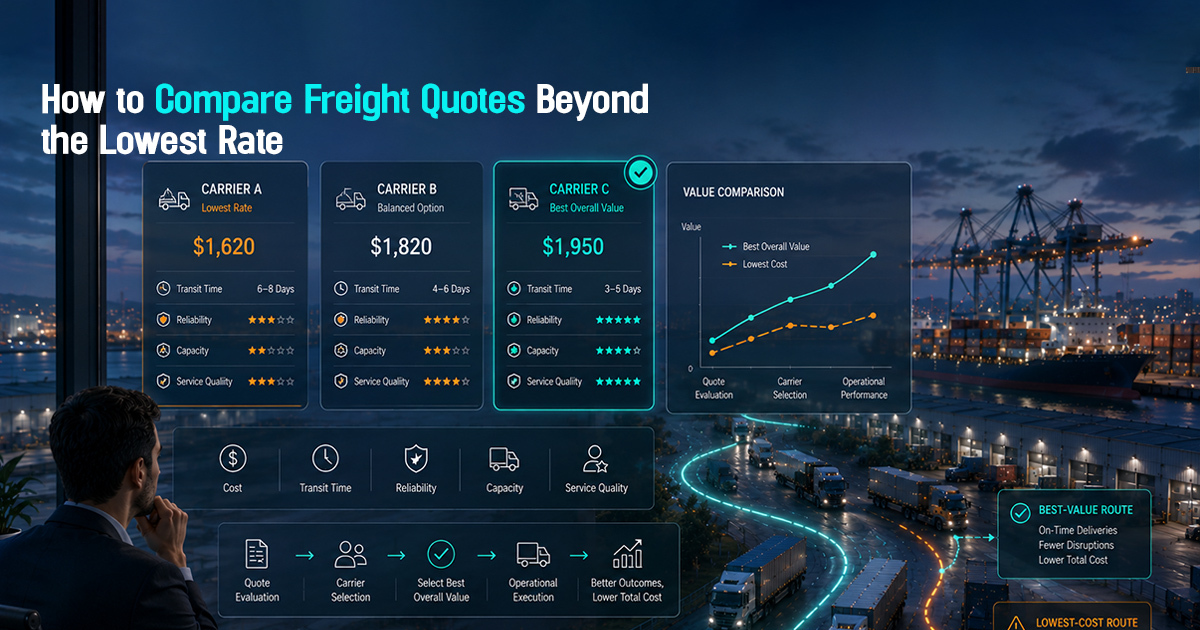
Freight quote comparison is a critical step in freight procurement, ensuring logistics teams select not just the cheapest option but the most operationally viable one. While the lowest freight rate often appears attractive, focusing only on price can lead to increased risks such as shipment delays, hidden costs, and poor service quality. Effective comparison of freight quotes helps in balancing cost, service reliability, and risk management, ultimately improving supply chain performance.
What is freight quote comparison?
Freight quote comparison involves analyzing multiple carrier or forwarder proposals beyond just their pricing to assess operational factors such as transit time, service scope, and contract terms. It ensures a holistic evaluation that supports informed procurement decisions aligned with logistics goals.
By examining quotes in detail, logistics teams can reduce risks linked to unexpected delays, additional charges, or compliance gaps. The process improves freight cost transparency and highlights value drivers beyond immediate rates, supporting sustainable cost control and shipment visibility.

Key factors to assess in freight quote comparison
Beyond the freight cost itself, it is essential to consider transit times, carrier reliability, origin and destination services, documentation handling, and penalty clauses. These operational factors impact the overall shipment workflow and total landed cost.
A quote with a marginally higher rate but better transit times and fewer exceptions often results in lower demurrage or detention risks. Similarly, clear documentation support reduces clearance delays. Evaluating these criteria ensures procurement decisions mitigate shipment disruptions while controlling costs.
Common challenges in evaluating freight quotes
Variations in quote formats and hidden fees complicate straightforward comparisons. Sometimes charges for detention, fuel surcharges, or special equipment are not fully disclosed upfront. Inconsistent detail levels cause confusion and risk underestimating true costs.
Additionally, limited visibility into carrier capacity or service quality can lead to booking risks and reactive shipment management. Lack of clarity around cancellation policies or exception handling responsibilities escalates operational challenges during disruptions.
Practical checklist
Use this checklist to compare freight quotes effectively:
- Rate components: Ensure all line items and surcharges are included for an apples-to-apples cost comparison.
- Transit time: Confirm estimated departure and arrival dates align with your shipment timelines.
- Carrier reputation: Assess reliability history and service records relevant to origins and destinations.
- Documentation support: Verify the carrier’s ability to handle customs clearance and compliance paperwork.
- Flexibility and penalties: Check cancellation terms, rebooking costs, and demurrage/detention clauses.
- Value-added services: Consider tracking options, shipment visibility tools, and customer support responsiveness.
Following these steps helps ensure a balanced evaluation emphasizing operational clarity and cost control alongside pricing.
Effective freight procurement requires evaluating service quality alongside cost for better operational control.
How to conduct freight quote comparison workflow
A structured workflow improves transparency and reduces decision errors. Begin with collecting detailed quotes, then standardize line items for direct comparison. Use spreadsheets or software tools to audit rates and conditions systematically.
Next, assess operational factors such as service capabilities, exceptions handling, and documentation readiness. Cross-check quotes with carrier capacity and historical performance to anticipate risks. This visibility-first approach supports negotiation preparedness and final freight procurement decisions.
Common mistakes
Focusing solely on the lowest rate can lead to overlooked hidden charges or service deficiencies. Neglecting transit time and carrier reliability increases the risk of detention or delays, which inflate total costs.
Another common error is comparing incomplete quotes with varying detail levels, making auditability and cost control difficult. Ignoring documentation support and exception policies leaves operations teams unprepared for disruptions.
Spot rates vs contract rates in quote comparison
Spot rates provide rapid market pricing and flexibility but can be volatile and lack service guarantees. Contract rates offer stability along with negotiated terms for volumes and service requirements. Choosing between them depends on shipment frequency, volume, and risk tolerance.
For procurement teams, assessing quotes must consider these differences in cost predictability and service discipline to optimize freight spend effectively across multiple lanes or services.
Optimizing freight procurement beyond price
Incorporating operational metrics like carrier performance, booking reliability, and exception rates into quote evaluation drives smarter decisions. Visibility into shipment milestones and freight documentation handling enhances risk anticipation and supplier accountability.
Leveraging structured workflows for procurement helps streamline your freight procurement process by improving cost transparency and reducing surprises. Engaging with carriers on clear terms for detention, demurrage, and exceptions also lowers unplanned expenses.

Conclusion
Effective freight quote comparison requires logistics teams to look beyond the lowest freight rate and assess full operational scope including transit times, carrier reliability, documentation support, and penalty clauses. Focusing solely on price often leads to hidden costs such as detention, demurrage, or delays that disrupt supply chain workflows. Implementing a structured comparison workflow and practical checklist ensures consistent evaluation across carriers and freight forwarders, reducing risk and enhancing decision clarity. This approach aligns freight procurement with logistics cost optimization goals and builds transparency critical for long-term operational success. Teams that combine rate analysis with exception-first management and auditability establish stronger vendor collaboration and control in a complex freight environment. For more detailed process improvement, consider tools that help streamline your freight procurement process while maintaining visibility and compliance. External resources like IMO guidelines and reports from Drewry provide additional context on freight rate transparency and market trends.
Get in Touch!
We'll reach out shortly with the info you need. No spam, just a helpful conversation.
Recommended Blogs
Freightstory Technologies Private Limited
A-209, Dynasty Business Park, JB Nagar,
Andheri East, Mumbai- 400059, India


For Exporters & Importers
For Freight Forwarders
© 2026 Frayto. All Rights Reserved.