


Solutions
For Exporters & Importers

For Freight Forwarders and Logistics Service Providers
Closed Bidding vs Reverse Auction in Freight Procurement: Choosing the Right Method


4 Minutes
Freight procurement methods such as closed bidding and reverse auctions play a critical role in shipping cost control and vendor selection. Understanding these methods is essential operationally because the chosen approach impacts the efficiency of the freight procurement process, visibility into bids, and ultimately the total landed cost. The key challenge is determining which method aligns best with your logistics workflows, risk appetite, and operational priorities.
Definition: Freight Procurement Methods
Freight procurement methods refer to structured approaches organizations use to solicit, evaluate, and award contracts to freight service providers. These methods vary in competitive dynamics and transparency, influencing cost negotiation, vendor performance oversight, and process efficiency.
What is Closed Bidding in Freight Procurement?
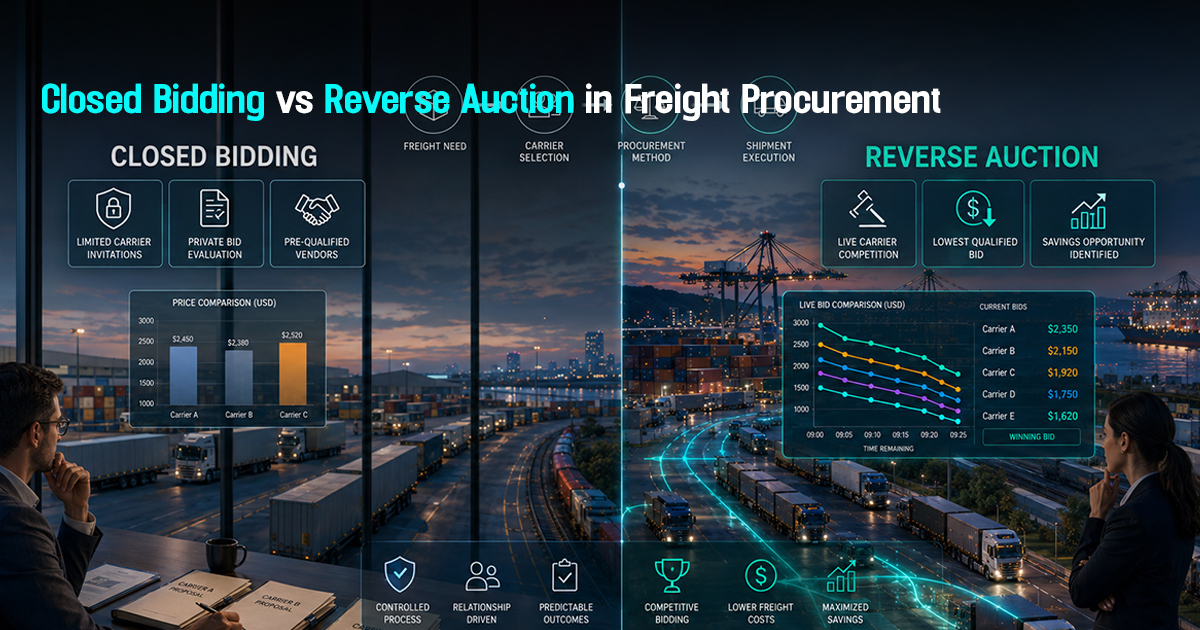
Closed bidding is a procurement process where freight forwarders or carriers submit sealed bids that are not disclosed to competitors. The logistics buyer reviews these bids privately and selects the most suitable vendor based on criteria such as price, transit time, and service reliability.
This method allows operations teams to manage supplier relationships closely and evaluate bids with discretion, providing control over the negotiation process, but it can reduce competitive pressure and limit dynamic rate discovery compared to open bidding mechanisms.

What is Reverse Auction in Logistics Procurement?
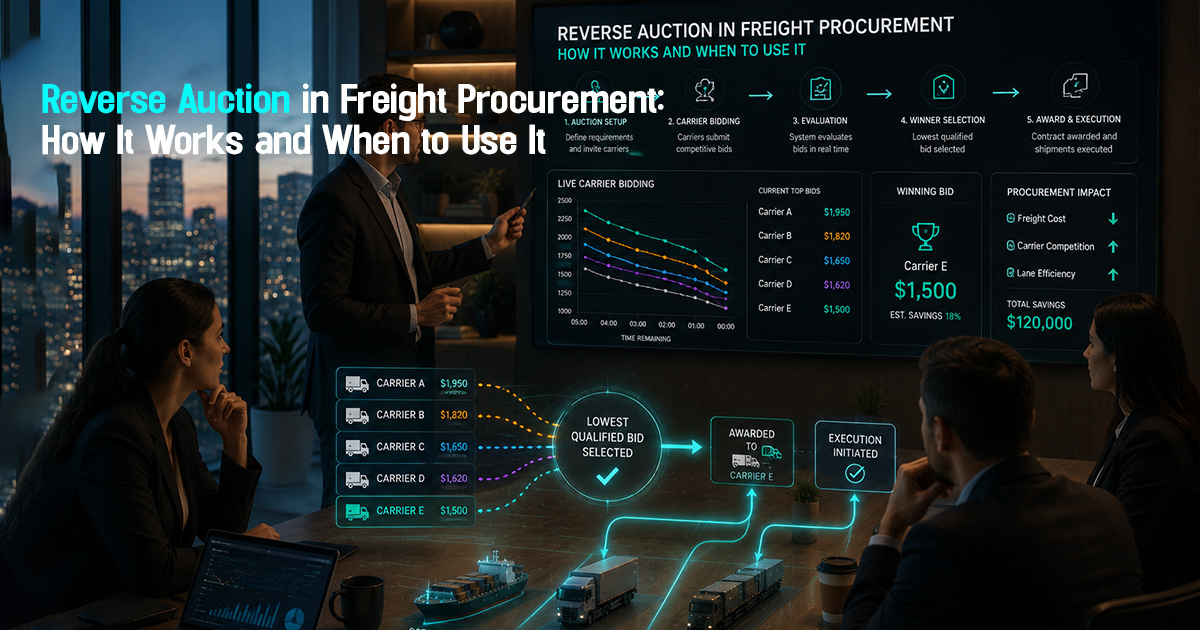
A reverse auction is a digital freight procurement method where prequalified carriers competitively bid to offer the lowest price in real time. The auction is transparent among participants, accelerating rate discovery and pushing service providers to lower costs.
Reverse auctions are operationally suited for high-volume, standardized freight lanes where cost reduction and speed are prioritized, but may not always favor complex, specialized shipments requiring negotiation beyond price.
Comparing Closed Bidding and Reverse Auction
Closed bidding emphasizes relationship management and confidentiality, enabling buyers to consider qualitative factors beyond just price. Conversely, reverse auctions leverage competitive transparency to drive rapid cost savings and simplify evaluation through automated digital workflows.
Operational teams must weigh procurement cycle time, visibility, vendor coordination, and shipment complexity when choosing between the two methods. For example, closed bidding suits sensitive lanes or new vendors, while reverse auctions fit repetitive, high volume routes.
Practical checklist
Use this checklist to determine which freight procurement method fits your operational needs:
- Shipment Complexity: Choose closed bidding for specialized or multimodal shipments requiring negotiation.
- Volume & Frequency: Reverse auctions benefit high-frequency, standardized freight lanes.
- Supplier Base: Use closed bidding to maintain vendor confidentiality and selective engagement.
- Cost Control Priority: Reverse auctions generally achieve quicker, more transparent rate discovery.
- Operational Visibility: Consider platforms that integrate tracking and exception management alongside procurement.
- Process Optimization: Ensure workflows support auditability and seamless vendor communication.
Effective freight procurement balances supplier relationships with transparent cost competition for operational success.
Common mistakes
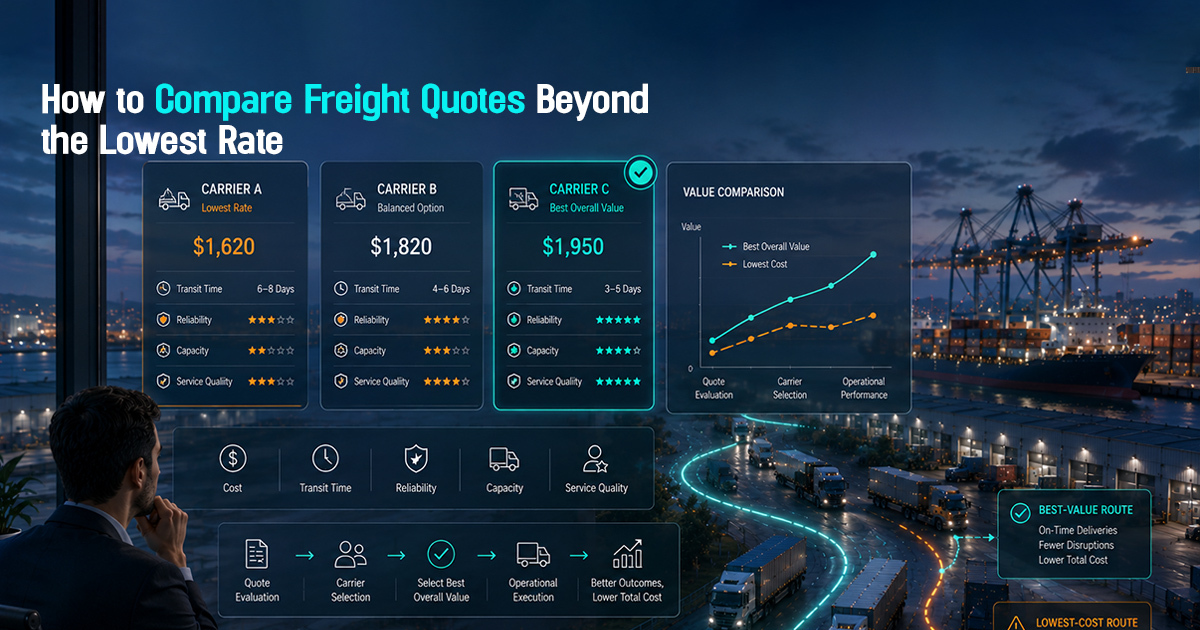
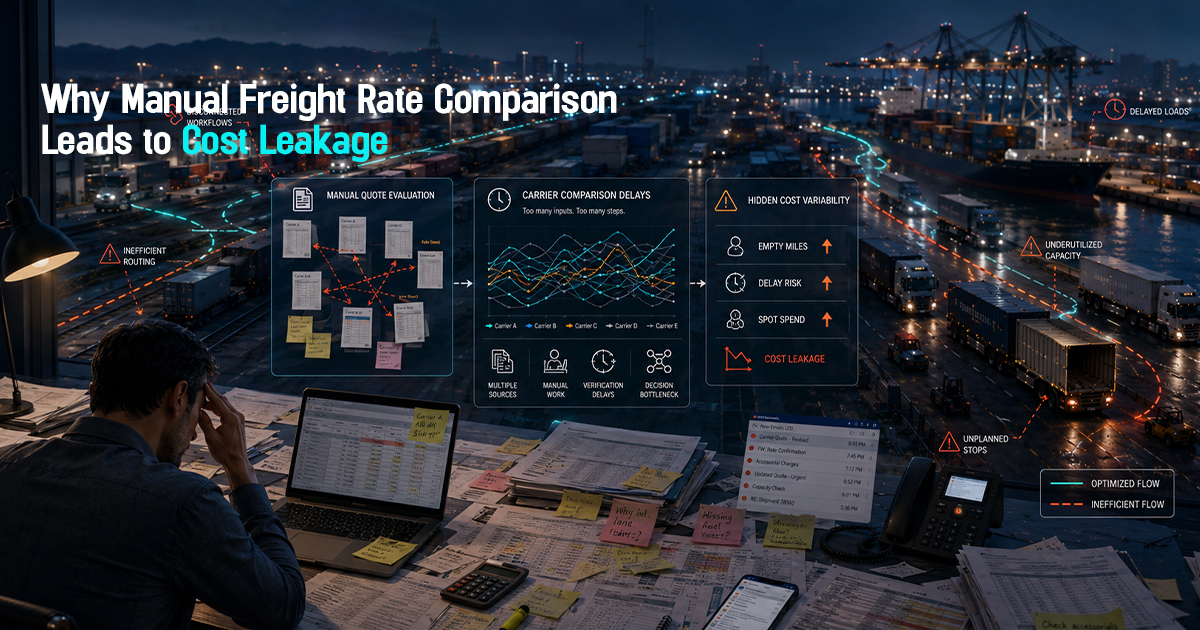
One frequent error is treating freight procurement as solely a cost exercise, neglecting service consistency and operational risks. Relying exclusively on reverse auctions can cause strained vendor relationships and reduced capacity options in peak periods.
Conversely, closed bidding without sufficient vendor competition may lead to premium pricing and slower procurement cycles. Lack of proper documentation and exception handling in either method increases the risk of delays, demurrage, and customer dissatisfaction.
Optimizing Freight Procurement Processes
Optimization involves integrating freight procurement methods with real-time shipment visibility and exception management systems. This adds operational clarity to the bidding process and supports proactive vendor follow-ups and shipment status tracking.
Digital freight procurement tools streamline workflows from bid solicitation to award, improving audit trails, compliance, and cost control. Centralized platforms facilitate collaborative decision-making between procurement and operations teams, reducing redundant communication and procurement delays.
Leveraging Digital Tools in Freight Procurement
Modern logistics procurement benefits from platforms that offer closed bidding and reverse auction capabilities combined with shipment tracking and exception handling. These systems enable teams to maintain operational visibility and quickly address shipment delays or documentation gaps.
For example, Frayto's InstaProcure freight procurement platform supports structured workflows, making it easier to evaluate bids, centralize freight management, and reduce manual follow-ups, contributing to better freight cost negotiation and procurement process optimization.

Workflow framework for freight procurement methods
A simplified procurement workflow integrates both methods while ensuring operational visibility and control:
- Bid Solicitation → Bid Submission (Closed or Reverse Auction)
- Bid Evaluation → Vendor Selection
- Contract Award → Documentation and Compliance Checks
- Shipment Tracking → Exception Handling
- Performance Review → Continuous Improvement
This structured approach reduces procurement inefficiencies and improves decision timing while maintaining freight cost control and operational discipline.
Conclusion
Choosing the right freight procurement method hinges on balancing cost control, operational complexity, and supplier dynamics. Closed bidding offers confidentiality and nuanced negotiation suitable for specialized shipments, while reverse auctions provide transparent, expedited rate discovery for high-volume lanes. Implementing either method within a structured, visible procurement workflow supported by digital tools will reduce process inefficiencies, improve vendor coordination, and minimize operational risks. Freight operations teams should focus on integrating procurement with shipment tracking and exception management to maintain end-to-end control, avoid delays and detention costs, and ensure compliance. Leveraging centralized freight management platforms fortifies these workflows with auditability and collaboration, strengthening overall logistics procurement strategy.FIATA, Drewry, and UNCTAD provide valuable frameworks and research supporting these best practices.
Get in Touch!
We'll reach out shortly with the info you need. No spam, just a helpful conversation.
Freightstory Technologies Private Limited
A-209, Dynasty Business Park, JB Nagar,
Andheri East, Mumbai- 400059, India


For Exporters & Importers
For Freight Forwarders
© 2026 Frayto. All Rights Reserved.