


Solutions
For Exporters & Importers

For Freight Forwarders and Logistics Service Providers
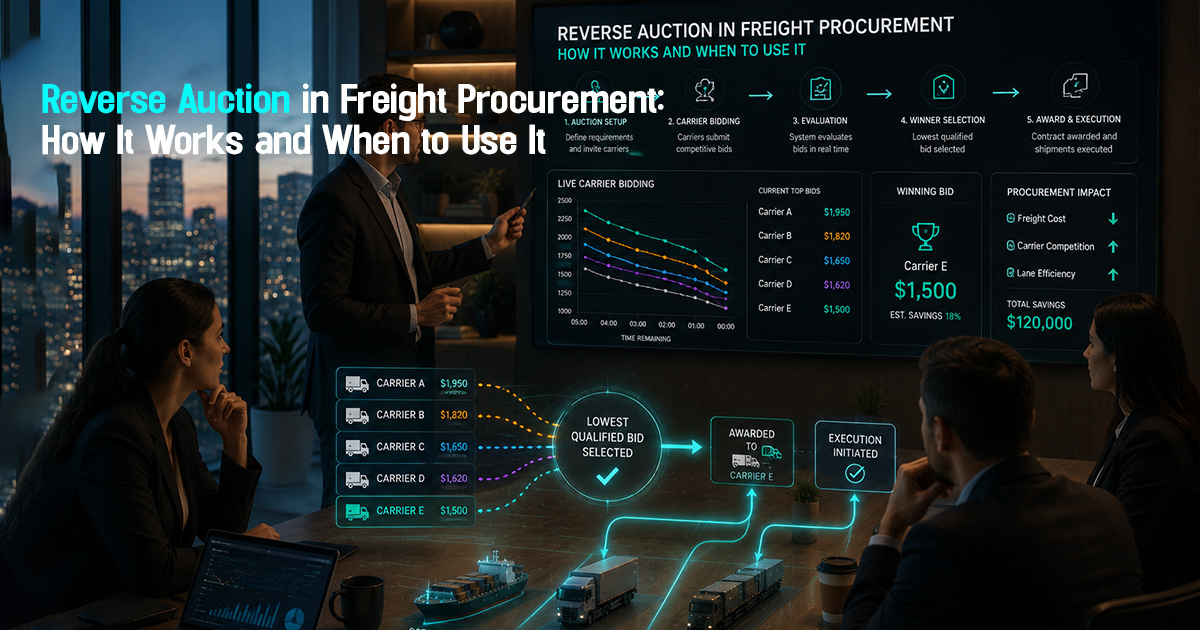
Reverse Auction Freight Procurement: How It Works and When to Use It


4 Minutes
Reverse auction freight procurement is a competitive bidding process where freight service providers bid against each other to offer the lowest cost for transporting shipments. This method matters operationally because it directly impacts cost control, supplier selection, and process efficiency within freight procurement strategies. The challenge lies in understanding when reverse auctions fit best and how to integrate them into existing workflows without sacrificing service quality or timely operations.
What is reverse auction freight procurement?
Reverse auction freight procurement is a competitive method where freight suppliers submit progressively lower bids for transport contracts, aiming to win business based on price. It contrasts traditional procurement by focusing on a dynamic, transparent bidding event rather than fixed quotes or negotiations.
This method allows shippers and freight forwarders to leverage market competition effectively, reducing costs and increasing transparency. Integrating reverse auction logistics requires clear tender specifications and structured timelines, emphasizing precise documentation and reliable supplier information.

How the reverse auction freight bidding process works
The process begins by defining detailed shipment requirements and opening the auction to qualified freight suppliers. Suppliers then submit bids in real time or within a set period, progressively undercutting prices. The auction ends when the deadline passes or no further bids improve the price.
Throughout this workflow, shipment visibility and documentation accuracy become critical to ensure all parties understand the scope and service levels expected, avoiding costly exceptions during execution. Post-auction, the winning supplier is awarded the shipment contract based on the best value proposition, balancing cost with operational reliability.
Key benefits of reverse auction in logistics procurement
Cost reduction stands out as the primary benefit since suppliers competitively lower rates to secure business. This can lead to significant freight cost savings when managed correctly. Reverse auctions also increase transparency, allowing procurement teams to benchmark supplier pricing and capabilities in real time.
Additionally, the structured and time-limited auction workflow helps streamline the freight tendering methods, reducing prolonged negotiations and administrative burden. Teams gain better control over supplier selection through a more auditable and visible bidding process, reinforcing operational discipline and accountability.
Effective reverse auctions balance cost savings with clear service expectations and operational discipline.
When to use reverse auction freight procurement
Reverse auctions are most effective for high-volume, commoditized freight lanes where service requirements are standardized and scope is well-defined. The uniformity enables fair competition strictly on pricing without excessive risk or service variability.
For complex or specialized shipments requiring nuanced service levels, dedicated carrier partnerships, or variable transit times, traditional procurement or negotiated contracts often yield better operational outcomes. Recognizing this balance is crucial to avoid compromising shipment visibility or increasing exceptions in execution.
Practical checklist for successful reverse auction freight procurement
To implement reverse auctions effectively, operations teams should follow this checklist:
- Define clear and measurable shipment requirements including volume, weight, routing, and service terms
- Prequalify suppliers based on past performance, compliance, and operational capabilities
- Use a structured digital freight procurement platform to run the auction and maintain audit trails
- Set realistic timelines for bid submissions and review to avoid rushed decisions
- Communicate expectations clearly to suppliers regarding documentation and exceptions handling
- Monitor auction progress actively to address any technical or operational queries in real time
- Evaluate bids comprehensively considering not only price but also service reliability and carrier capacity
- Formalize contracts promptly post-auction to ensure smooth execution
Following this checklist ensures operational clarity, visibility, and better risk control throughout the freight procurement cycle.
Common mistakes in reverse auction freight procurement
One frequent error is using reverse auctions for shipments with complex requirements or irregular volumes. This leads to unreliable bids and operational disruptions due to service mismatches. Another is insufficient supplier vetting, resulting in contract awards to carriers unable to meet compliance or service standards.
Overemphasizing cost reduction without monitoring service quality and execution risks can cause delays, exceptions, demurrage, and detention charges. Poor communication around auction rules and documentation timelines also creates confusion for suppliers and internal teams. Avoiding these mistakes requires disciplined processes and clear visibility on all freight operations.
Integrating reverse auctions within broader freight procurement strategies
Reverse auction logistics should complement other freight procurement strategies such as contract negotiations, rate benchmarking, and volume consolidation. They are one part of optimizing procurement cycles rather than a standalone solution.
Leveraging digital freight procurement platforms facilitates better control and auditability across bidding, tendering, and carrier selection. Teams gain operational visibility that bridges shipment tracking with cost management and vendor coordination, helping reduce delays and compliance gaps.

Conclusion
Reverse auction freight procurement provides a structured, transparent approach to managing competitive freight bidding that can deliver meaningful cost reductions when applied correctly. Its operational value lies in combining clear shipment specifications with efficient supplier vetting and auction management, supported by visibility into bidding dynamics and supplier performance. However, it is not suited for all freight types and must be integrated thoughtfully within a broader procurement strategy emphasizing service quality and risk control. By following disciplined workflows and practical checklists, logistics teams can leverage reverse auctions safely without sacrificing shipment reliability or compliance. For shippers and freight forwarders aiming to optimize freight procurement, understanding both the limits and the advantages of this method is essential to drive better decisions and operational efficiency across their supply chains.
Get in Touch!
We'll reach out shortly with the info you need. No spam, just a helpful conversation.
Recommended Blogs

Freightstory Technologies Private Limited
A-209, Dynasty Business Park, JB Nagar,
Andheri East, Mumbai- 400059, India


For Exporters & Importers
For Freight Forwarders
© 2026 Frayto. All Rights Reserved.