


Solutions
For Exporters & Importers

For Freight Forwarders and Logistics Service Providers
Real-Time Container Tracking: What Data Should You Actually Track?


7 Minutes
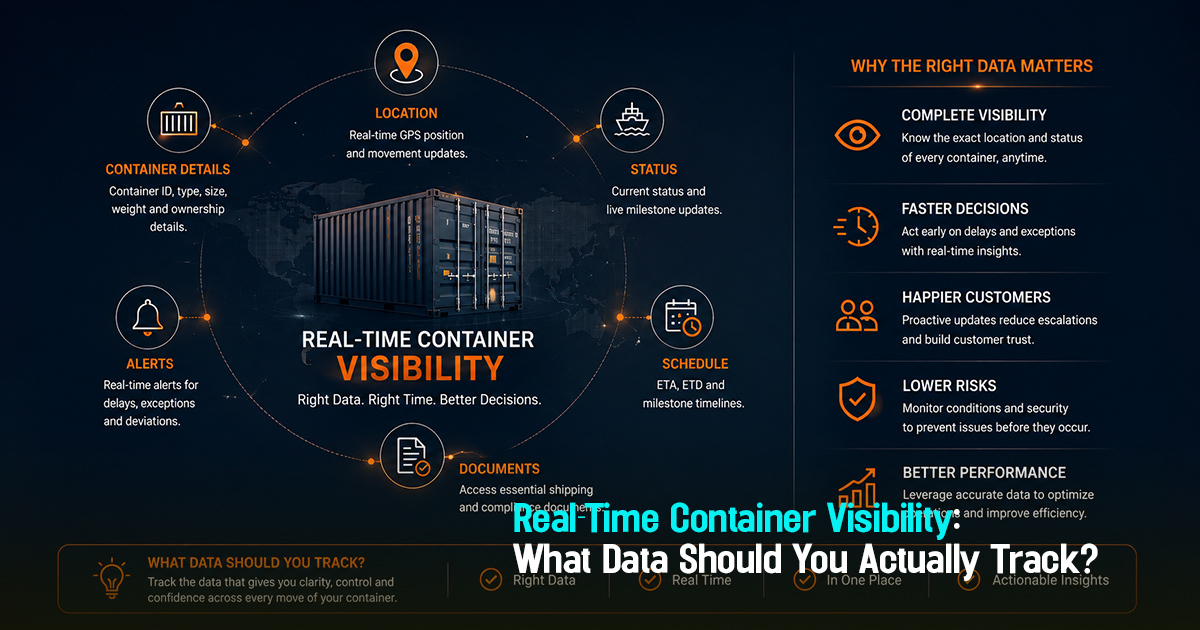
Real-time container tracking is the continuous monitoring of container location, status, and key shipment events to provide up-to-date visibility for logistics teams. Operationally, tracking the right container data points is crucial to reduce delays, avoid detention and demurrage risks, and improve customer communication. Without practical visibility, freight teams struggle with reactive firefighting rather than proactive decision-making. This article provides a focused guide on what real-time container tracking data shipping and logistics teams should track, how to centralize visibility for clarity, and actionable workflows to improve freight operations.
What Is Real-Time Container Tracking and Why It Matters?
Real-time container tracking means capturing live data about container location, status, and shipment milestones as they happen, providing freight teams and customers with instant visibility into shipment progress.
This tracking is operationally essential because it enables proactive exception handling and timely customer communication. Without accurate, actionable data, logistics teams miss crucial ETA/ETD changes and struggle to prevent costly disruptions such as detention, demurrage, and delivery delays.
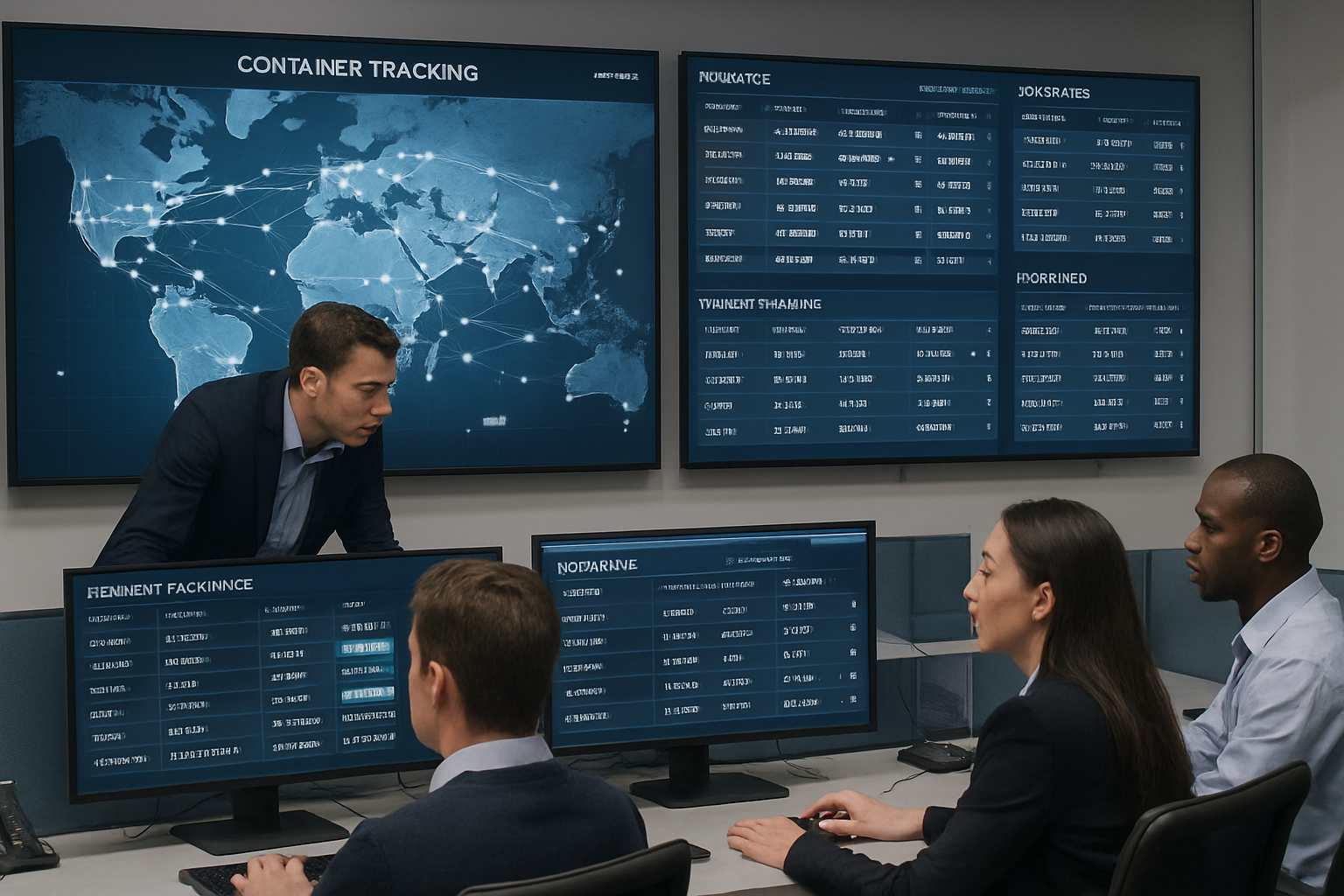
Key Data Points to Track in Real-Time Container Monitoring
Effective container tracking focuses not just on location but also on milestone events and status updates that impact operational decisions. These data points form the foundation of shipment visibility tools that empower freight teams.
Critical container tracking data includes:
- Exact container location via GPS or carrier updates
- Estimated Time of Departure (ETD) and Estimated Time of Arrival (ETA)
- Vessel arrival and departure times
- Loading and unloading status at ports
- Customs clearance checkpoints and document status
- Exception alerts such as delays, transshipment changes, or route deviations
- Carrier handoffs and container condition status
Tracking these points ensures milestone tracking and exception-first workflows.
A Practical Workflow Framework for Real-Time Container Tracking
Implementing real-time container tracking requires a structured workflow that connects all key visibility stages, empowering logistics teams to act on accurate data and clear ownership.
This framework includes:
1. Booking Confirmation and Vendor Assignment: Capture container number and assign vendors upfront for clarity.
2. Milestone Data Capture: Log ETD, vessel departure, port arrival, and customs clearance milestones in real-time.
3. Exception Detection and Assignment: Identify delays or document issues promptly and assign responsible owners.
4. Centralized Shipment Updates: Consolidate all tracking data into a unified platform for internal teams and customer visibility.
5. Customer Communication: Automate status reports and critical alert notifications.
6. Post-Delivery Audit and Feedback: Review tracked data for delays, cost impacts, and operational gaps.
A disciplined implementation of this workflow reduces manual follow-ups and boosts operational clarity.
Role-Wise Container Tracking Responsibilities
Different logistics roles need to monitor and act on specific tracking data points to ensure smooth container visibility and decision-making.
For freight forwarders, the focus is on carrier coordination, milestone verification, and exception ownership. They ensure that container GPS data and milestone events are accurate and exceptions are promptly escalated.
Importers and exporters need to monitor ETA/ETD changes, customs clearance status, and any local delivery updates. They often query vendors regarding transit deviations and document status.
Operations teams track container milestones daily, verify documentation handoffs, and follow up on exceptions to prevent demurrage and delays.
Procurement teams use container tracking data to validate service level agreements with carriers and confirm that contracted transit times are met.
Documentation teams rely on milestone data to prepare and validate handoffs for customs and regulatory checkpoints.
Before, During, and After Shipment: Tracking Process Breakdown
Dividing container tracking tasks into shipment stages helps logistics teams focus on relevant data and actions at each phase, enhancing efficiency and reducing blind spots.
Before shipment: Verify container number, assign vendors, capture ETD, and confirm document readiness.
During shipment: Monitor GPS location, track vessel and port milestones, update ETA/ETD changes, and flag exceptions such as delays or route changes.
After shipment: Confirm final container delivery status, validate POD receipt, analyze exceptions impacting cost or time, and update audit records.
This stage-wise approach supports exception-handling discipline by aligning data checkpoints with operational responsibility.
Visibility without action is just data; real-time tracking turns data into operational clarity and control.
Practical Checklist: Data to Track for Real-Time Container Visibility
Use this checklist to ensure your container tracking captures all critical data points for actionable shipment visibility. This list serves as an operational baseline for logistics teams.
1. Is container GPS data updated continuously and centrally?
2. Are ETD and ETA milestones tracked and validated across carriers?
3. Are vessel departure and port arrival timestamps logged in real-time?
4. Is customs clearance status visible with document handoff confirmation?
5. Are exception alerts—such as delays, transshipment changes, or missing documents—assigned and tracked?
6. Is container condition (sealed, damaged) status updated before and after transit?
7. Are carrier handoffs and updates coordinated with milestone data?
8. Are freight status updates sent proactively to customers and stakeholders?
9. Is detention and demurrage risk monitored based on container dwell time?
10. Are final delivery and POD receipt milestones closed promptly with visibility to all teams?
Common Mistakes in Real-Time Container Tracking and How to Fix Them
Logistics teams often face recurring errors in container tracking that lead to visibility gaps and operational disruption. Addressing these mistakes improves reliability and trust in freight operations.
Mistake 1: Tracking container locations only via carrier portals, leading to fragmented data. Fix: Centralize data from multiple carriers into a unified visibility platform to reduce manual cross-checking.
Mistake 2: Missing ETA or ETD changes results in late escalation and reactive operations. Fix: Set automated alerts for all milestone changes and assign owners for prompt follow-up.
Mistake 3: Overlooking documentation checkpoints, causing customs delays. Fix: Integrate documentation status updates with container milestones and enforce handoff discipline.
Mistake 4: Ignoring condition status of containers before delivery, risking damage disputes. Fix: Track container seal status and damages visibly at key points in the shipment.
Mistake 5: Poor customer communication due to lack of timely updates. Fix: Adopt exception-first communication protocols with automated, decision-ready status reports.

Freight Operations Examples Illustrating Effective Container Tracking
Real-world freight scenarios demonstrate the critical importance of tracking the right container data for shipment visibility and operational control.
Example 1: An importer avoided detention charges by catching an ETA delay early via GPS tracking and confirming revised port arrival, allowing timely container pickup.
Example 2: A freight forwarder reduced customer follow-ups by automating milestone updates and exception alerts, improving transparency and reducing manual load.
Example 3: An exporter identified a missing customs document early through integrated milestone and documentation tracking, preventing customs hold-up and shipment rollovers.
These examples highlight how centralized visibility and exception-first workflows translate into better freight outcomes.
A Frayto-Aligned Workflow for Container Tracking and Exception Management
Drawing from operational best practices, a structured workflow supports end-to-end container visibility and control, aligning with Frayto’s philosophy of practical freight clarity.
Workflow: Booking → Container Assignment → Milestone Tracking → Exception Detection → Owner Assignment → Customer Updates → Audit Review
This workflow ensures that from the moment a container is booked, every shipment milestone is tracked through a centralized platform. Exceptions like delays or document issues are detected early and assigned to specific owners. Timely customer updates reduce escalations, and post-delivery audits identify operational gaps. Freight teams gain visibility, control, and accountability throughout the container lifecycle.
Conclusion
In modern freight operations, real-time container tracking is not just about knowing where containers are but about capturing critical shipment milestones, exception signals, and documentation statuses that impact decision-making, cost control, and customer satisfaction. A structured and centralized visibility system integrated across roles and shipment stages transforms data into operational clarity. By focusing on actionable data points such as ETD/ETA monitoring, customs checkpoints, container condition, and exception alerts, logistics teams shift from reactive management to proactive exception handling. This discipline significantly reduces risks like detention and demurrage, drives timely customer communication, and enforces accountability across freight procurement, operations, and documentation teams. Embracing such practices helps freight forwarders, importers, exporters, and logistics managers maintain tighter control and improve overall shipment execution effectiveness.
Get in Touch!
We'll reach out shortly with the info you need. No spam, just a helpful conversation.
Recommended Blogs


For Exporters & Importers
For Freight Forwarders
© 2026 Frayto. All Rights Reserved.