


Solutions
For Exporters & Importers

For Freight Forwarders and Logistics Service Providers

Predictive ETA in Ocean Freight: Benefits and Limitations for Shipment Visibility


5 Minutes
Predictive ETA ocean freight refers to advanced estimation techniques using real-time data and analytics to forecast the arrival time of ocean shipments more accurately than traditional static ETAs. Operationally, predictive ETA matters because ocean freight schedules are prone to disruptions from weather, port congestion, and carrier delays, creating uncertainty that complicates planning and customer communication. This article demystifies how predictive ETA supports freight shipment visibility and the practical ways logistics teams can leverage it, while also addressing its limitations and risks in operational workflows.
What is Predictive ETA in Ocean Freight?
Predictive ETA in ocean freight is a shipment arrival forecasting method that combines real-time vessel data, historical performance, weather conditions, and port status to dynamically update estimated arrival times. This goes beyond fixed schedules provided by carriers to offer more actionable timing insights for operations teams.
Using predictive ETA improves shipment visibility by highlighting potential delays or early arrivals ahead of time, enabling better exception handling and customer communication. However, it depends heavily on data quality and can still be affected by unpredictable factors like sudden port strikes or mechanical failures.

A Practical Workflow Framework for Predictive ETA in Ocean Freight
Implementing predictive ETA effectively requires a structured workflow integrating data inputs and operational responses. The following framework covers key steps for freight teams:
1. Data Collection: Aggregate real-time vessel positions, AIS signals, weather forecasts, and port congestion reports from reliable sources to feed the ETA model.
2. Analytics & ETA Calculation: Apply machine learning or statistical algorithms to combine live inputs with historical transit times and carrier performance patterns.
3. Dynamic ETA Updates: Continuously revise ETA based on emerging data like new sailing schedules, delays in transit, or sudden weather events impacting ports or routes.
4. Exception Flagging and Owner Assignment: Trigger alerts when predicted ETA deviates beyond agreed thresholds, assign responsibility for root cause analysis and resolution.
5. Customer Communication: Notify customers proactively with updated arrival times and potential risks to set expectations clearly ahead of delivery.
6. Operational Decision-Making: Coordinate with carriers, warehouses, and customs ahead of arrival, adjusting resource allocation based on updated timing.
This workflow centralizes shipment visibility and creates an exception-first mindset that reduces reactive firefighting.
Role-Wise Guidance for Managing Predictive ETA
Freight forwarders should focus on integrating carrier data feeds and monitoring ETA deviations in one dashboard, coordinating with carriers to confirm changes.
Importers and exporters must track updated ETAs to plan customs clearance and inland transport without costly demurrage or detention.
Operations teams benefit by assigning clear ownership for follow-ups on exceptions and adjusting warehouse staffing or gate operations according to arrival changes.
Procurement or customer service teams should use predictive ETA signals to manage customer communication and set realistic delivery promises, preventing escalations.
Before-During-After Shipment: Applying Predictive ETA
Understanding when to use predictive ETA helps improve operational clarity. Before shipment, validate carrier schedules and identify possible transit route risks impacting ETA accuracy.
During transit, continuously track vessel movement and update predicted arrival times to catch delays early. For example, a container stuck waiting outside a congested port can have its ETA adjusted to alert inland logistics resources.
After arrival, compare predicted versus actual arrival to assess carrier reliability and recalibrate prediction models, aiding future accuracy and planning.
Practical checklist
Use this checklist to improve predictive ETA ocean freight workflows:
• Is real-time vessel tracking data integrated into your shipment visibility system?
• Are historical transit times segmented by route, carrier, and season factored into ETA calculations?
• Are weather and port congestion updates feeding automatically into ETA adjustments?
• Is there an operational protocol to flag significant ETA deviations for immediate review?
• Are exceptions assigned actionable owners with defined timelines for resolution?
• Are customers and stakeholders alerted proactively when ETAs change?
• Does your operations team adjust resource plans based on updated ETA data?
• Is arrival and delay data reviewed post-delivery to improve forecast accuracy?
• Has your team documented common sources of ETA error for continuous improvement?
Operational clarity starts with actionable ETA updates and exception ownership across freight workflows.
Common mistakes
1. Relying on static carrier ETAs without updates. This leads to blind spots in shipment status and delayed customer communication. Fix: Implement continuous ETA recalculation engines with live data feeds for proactive tracking.
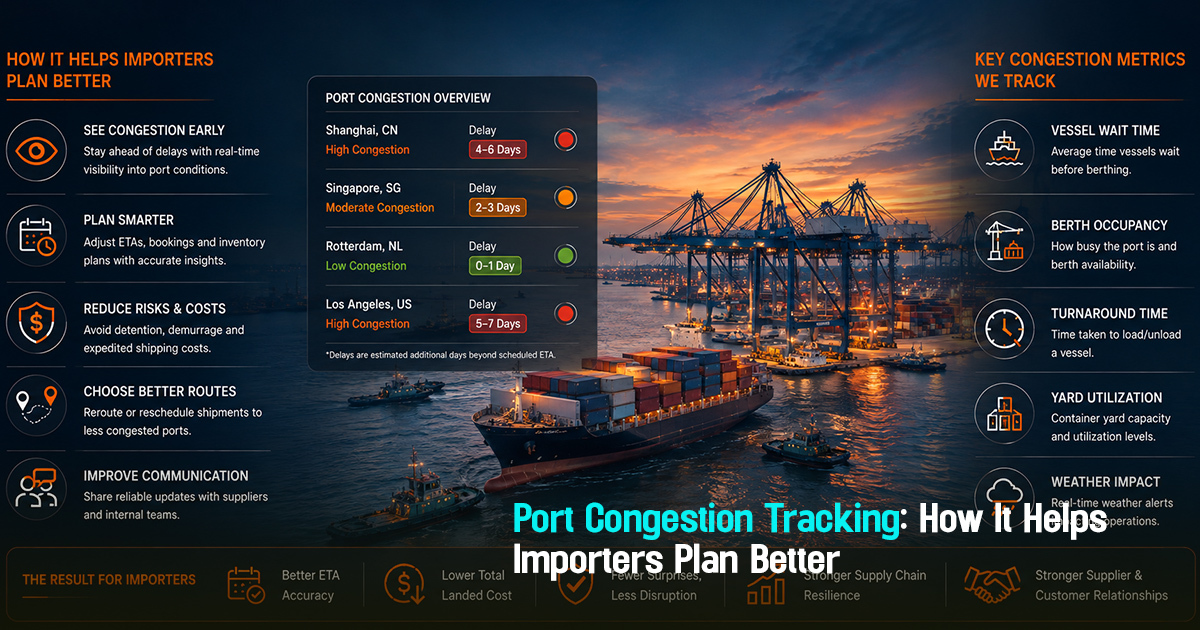
2. Ignoring vessel routing and port congestion impacts on ETA. ETA predictions fail when these real-world factors are excluded, causing surprise delays. Fix: Integrate port and route congestion data as a critical input alongside AIS positions.
3. Lack of exception ownership for ETA variations. Without clear accountability, delays go unresolved and communication lags. Fix: Assign specific teams or individuals to monitor and act on ETA exceptions.
4. Overpromising delivery times based on overly optimistic ETAs. This erodes customer trust when shipments arrive late. Fix: Use conservative ETA estimates factoring historic delay trends and communicate risks transparently.
5. Treating predictive ETA as a standalone tool, disconnected from wider shipment visibility. This reduces impact and causes fragmented operations. Fix: Embed predictive ETA within a centralized shipment tracking platform for seamless visibility and coordination.

Three Freight Operations Examples Using Predictive ETA
Example 1: A freight forwarder monitoring shipments from Asia to Europe noticed port congestion at Rotterdam and used predictive ETA to update arrivals three days late. Early exceptions allowed warehouse teams to reschedule labor, avoiding detention charges.
Example 2: An importer tracking refrigerated cargo adjusted last-mile delivery based on predictive ETA shifts caused by weather delays near the destination port. This prevented spoilage and ensured timely customer notifications.
Example 3: Operations teams at an exporter used post-shipment ETA accuracy reviews to renegotiate carrier contracts, improving SLA clauses based on realistic transit expectations.
A Frayto-Aligned Predictive ETA Workflow
Frayto’s approach to predictive ETA integrates real-time shipment tracking with exception-first workflows. From data collection, through milestone tracking and ETA adjustments, to assigning exception ownership and managing customer updates, it embodies operational clarity and centralized control. This reduces follow-ups and improves decision timing by ensuring visibility and exceptions are handled in one platform.
This framework supports daily operational cadence with structured alerts and audit trails to improve shipment schedule accuracy and reduce detention risks effectively.
Get in Touch!
We'll reach out shortly with the info you need. No spam, just a helpful conversation.



For Exporters & Importers
For Freight Forwarders
© 2026 Frayto. All Rights Reserved.