


Solutions
For Exporters & Importers

For Freight Forwarders and Logistics Service Providers
Logistics Software for Freight Teams: What to Digitize First


7 Minutes
Logistics software for freight teams refers to digital tools designed to streamline freight operations through centralized tracking, procurement control, vendor coordination, and exception handling. Digitizing these functions matters operationally because freight processes are complex, involve multiple stakeholders, and suffer costly delays without visibility and control. Many teams struggle with scattered information, manual follow-ups, and inconsistent updates, leading to missed ETAs, documentation errors, and rising costs. This article offers a practical guide on what freight teams should digitize first to build a structured, transparent, and efficient logistics operation.
What Is Logistics Software for Freight Teams and Why Focus on It First?
Logistics software for freight teams centralizes and automates core freight workflows like shipment visibility, procurement, and documentation. By digitizing these, teams gain structured operational clarity and reduce reliance on manual communication. It also supports better customer updates and audit-ready processes.
For example, a freight forwarder managing multiple ocean shipments can lose hours daily chasing milestone updates across carrier portals. A logistics software platform centralizes these updates, enabling earlier exception detection and faster carrier follow-ups — a practical foundation for improving efficiency and reducing demurrage risk.

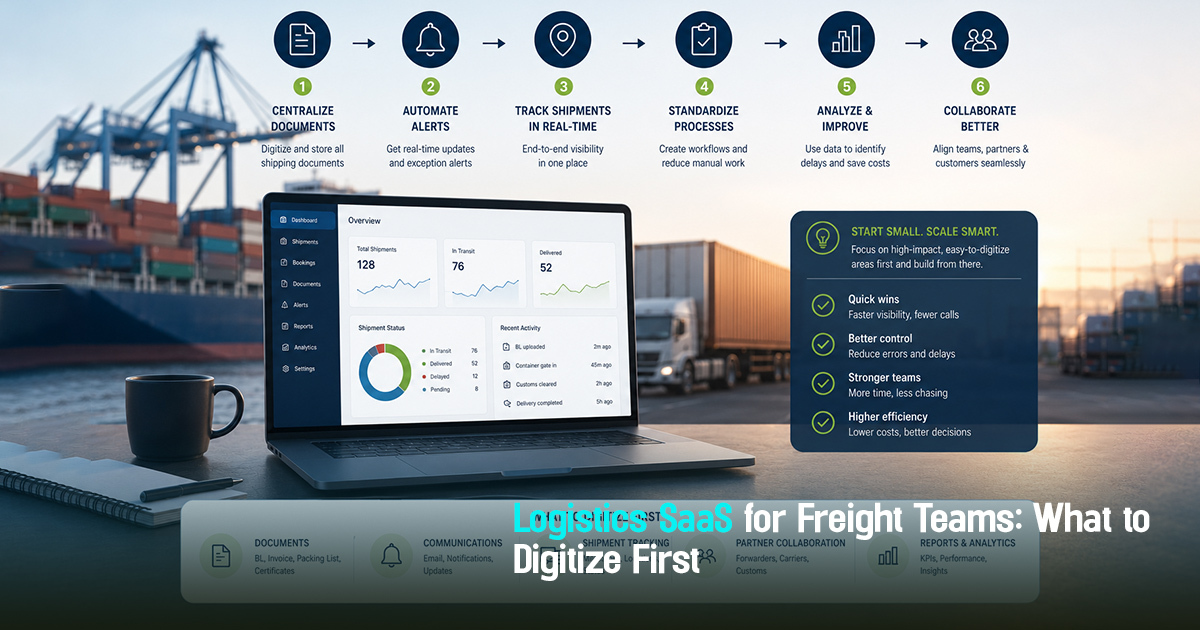
A Practical Freight Team Workflow Framework for Digitization
Digitization should follow a workflow that mirrors freight operations. This ensures tools address real pain points. A recommended framework to digitize first includes:
1. Structured Freight Procurement → 2. Centralized Shipment Tracking → 3. Exception-First Handling → 4. Documentation Control → 5. Carrier and Vendor Coordination → 6. Customer Communication → 7. Operational Audit and Reporting.
Each stage reduces operational friction. For instance, starting with procurement digitization prevents rate leakage and untracked costs. Centralized tracking replaces manual milestone updates with visible ETAs/ETDs. Exception workflows target delays proactively, while documentation control avoids customs and clearance hold-ups. Coordination tools ensure clear ownership, and communication modules improve customer trust. Finally, audit features allow cost and performance reviews.
Role-Wise Digitization Priorities for Freight Teams
Different freight team roles have distinct digital needs to improve their workflows and reduce operational bottlenecks.
- Freight Forwarders: Prioritize centralized shipment tracking dashboards and exception handling workflows to reduce costly follow-ups and ensure timely carrier coordination.
- Importers & Exporters: Focus on visibility into ETD/ETA changes, document submission workflows, and real-time customer communication to anticipate potential delays and customs issues.
- Operations Teams: Need comprehensive control towers combining procurement status, shipment milestones, and exception alerts for daily decision-making and risk monitoring.
- Procurement Teams: Require digital freight procurement workflows emphasizing vendor comparison, quote validation, and audit trail for cost control and compliance.
For example, a procurement team digitizing their RFQ to booking workflows can cut down approval delays and reduce overpaying for accessorial charges that frequently slip through manual comparison processes.
Stage-Wise Digitization Plan: Before, During, and After Shipment
A stage-wise approach enables logical, phased adoption of logistics software, focusing on key pain areas per shipment phase.
Before Shipment: Digitize rate management, vendor comparison, and booking approvals. Standardize document collection to avoid last-minute surprises. This reduces booking errors and documentation delays.
During Shipment: Focus on centralized milestone tracking with ETA/ETD monitoring and exception-first alerts that assign ownership. Automated carrier follow-ups at delay points reduce blind spots.
After Shipment: Implement documentation handoffs, delivery confirmation, and freight invoice reconciliation digitally to catch cost leakages and ensure audit readiness.
Practical checklist
This checklist helps teams identify immediate digitization opportunities to improve freight operations.
1. Are all vendor quotes compared using standardized digital templates ensuring apples-to-apples evaluation?
2. Is there a centralized dashboard to track ETD and ETA updates across all active shipments daily?
3. Are exceptions automatically flagged and assigned to owners for rapid resolution?
4. Is documentation collection linked with shipment stages to reduce customs clearance delays?
5. Are transport milestones visible to customer service teams for proactive communication?
6. Is a procurement audit trail maintained digitally to ensure compliance and control?
7. Do carrier coordination tasks use shared platforms avoiding lost follow-ups through email?
8. Are detention and demurrage risks tracked with alerts for eligible shipments?
9. Are customer updates standardized with exception-first communication templates to reduce escalations?
10. Is operational data integrated into reports providing actionable insights rather than raw data dumps?
Operational clarity starts when exceptions are visible and owned, not hidden in spreadsheets or emails.
Common mistakes
Recognizing and fixing common pitfalls is key to successful digitization.
Mistake 1: Digitizing only shipment tracking without integrating procurement and documentation. It creates siloed data, causing coordination gaps and duplicated work. Fix: Adopt integrated software covering procurement, tracking, and documentation workflows to unify information and accelerate handoffs.
Mistake 2: Ignoring exception handling workflows, leading to reactive firefighting and missed ETA updates. This causes increased detention risks and customer escalations. Fix: Implement exception-first workflows where delays trigger automatic alerts and assigned ownership for proactive resolution.
Mistake 3: Lack of digital approval discipline in procurement causing uncontrolled bookings and unexpected costs. This undermines cost control efforts. Fix: Enforce digital approval gates with audit trails before finalizing bookings or contracts.
Mistake 4: Dependence on emails and multiple carrier portals for shipment updates, causing manual errors and delay in information consolidation. Fix: Centralize shipment visibility in a unified platform aggregating carrier data and automating updates to reduce manual intervention.
These fixes provide operational clarity and avoid expensive complications common in fragmented freight operations.

Frayto-Aligned Digitization Workflow Example
A practical example of a digitization workflow aligned with freight operational needs is:
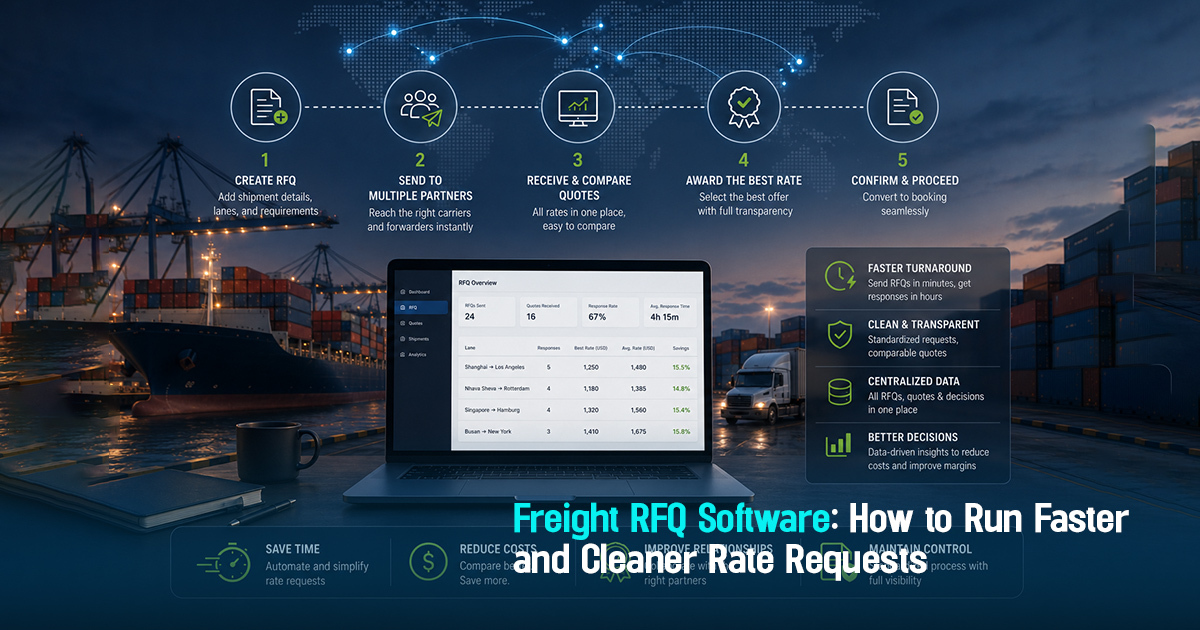
Rate Request → Vendor Comparison → Quote Validation → Approval → Booking → Centralized Shipment Tracking → Exception Follow-up and Closure
This workflow ensures procurement discipline through transparent rate requests, comparison, and digital approvals. Booking clearly marks shipment ownership. Centralized tracking brings all shipment milestones and ETAs into one view for operations teams. Exception follow-up guarantees proactive risk management. This structured flow creates auditability, cost control, and timely customer communication—critical to smooth freight operations.
Real-World Freight Operations Examples Highlighting Digitization Priorities
Example 1: A freight forwarder relied on manual rate spreadsheets and email approvals, leading to untracked accessorial charges and frequent budget overruns. Digitizing procurement with freight operation digitization tools enabled standardized quotes, digital approvals, and audit trails reducing cost leakage.
Example 2: An importer missed critical ETA updates due to scattered carrier tracking across portals. Implementing centralized shipment visibility gave real-time milestone updates and alerts, enabling timely carrier follow-ups and avoided demurrage charges.
Example 3: A documentation team faced customs clearance delays because documents were collected via WhatsApp and email. Introducing documentation control software streamlined validation and customs checkpoint handoffs, improving clearance times and reducing exception handling effort.
How Logistics Teams Can Digitize Effectively Without Overwhelm
Adopting logistics software progressively prevents disruption and maximizes ROI. Start with procurement digitization to control costs and standardize rate approvals. Next, centralize shipment tracking to gain operational visibility. Follow with exception management workflows to act proactively on delays and risks.
Documentation control and carrier coordination tools should come next, ensuring smooth customs clearance and reducing manual follow-ups. Customer communication modules should be the last step to close the loop and build trust through timely, transparent updates. This phased approach respects freight team capacity and delivers visible operational improvements at each stage.
Why Digitizing Procurement First Provides Operational Clarity
Freight procurement digitization sets the foundation for operational clarity and cost control. It ensures every vendor quote is evaluated on uniform terms, accessorial charges are reviewed, and approvals are digitally validated before booking. This discipline reduces the risk of unapproved freight costs and ensures auditability.
For example, a procurement team using digital procurement workflows avoided costly last-minute carrier changes that typically occurred due to lost email approvals. Having a documented approval trail also facilitated vendor performance reviews, helping future negotiations. Thus, freight operation digitization starts by eliminating procurement bottlenecks that ripple downstream into shipment delays and cost overruns.
Conclusion
Digitizing freight operations begins effectively by focusing on structured procurement, centralized shipment visibility, and exception-first management workflows. These areas address the most immediate pain points related to cost control, risk reduction, and operational clarity. Freight teams must move beyond managing scattered data and manual communications to adopting solutions that support exception ownership, milestone tracking, and documentation discipline. Through these steps, logistics teams can reduce costly delays, improve customer communication, and maintain robust audit trails essential for compliance and continuous improvement. A practical, phased digitization strategy that aligns with daily freight workflows empowers teams to build scalable, sustainable operations controlled from a single source of truth. This operational clarity is the cornerstone of modern freight management, helping teams stay ahead of complexities without unnecessary system overload.
Get in Touch!
We'll reach out shortly with the info you need. No spam, just a helpful conversation.
Recommended Blogs
Freightstory Technologies Private Limited
A-209, Dynasty Business Park, JB Nagar,
Andheri East, Mumbai- 400059, India


For Exporters & Importers
For Freight Forwarders
© 2026 Frayto. All Rights Reserved.