


Solutions
For Exporters & Importers

For Freight Forwarders and Logistics Service Providers
Freight RFQ Software: How to Run Faster and Cleaner Rate Requests


5 Minutes
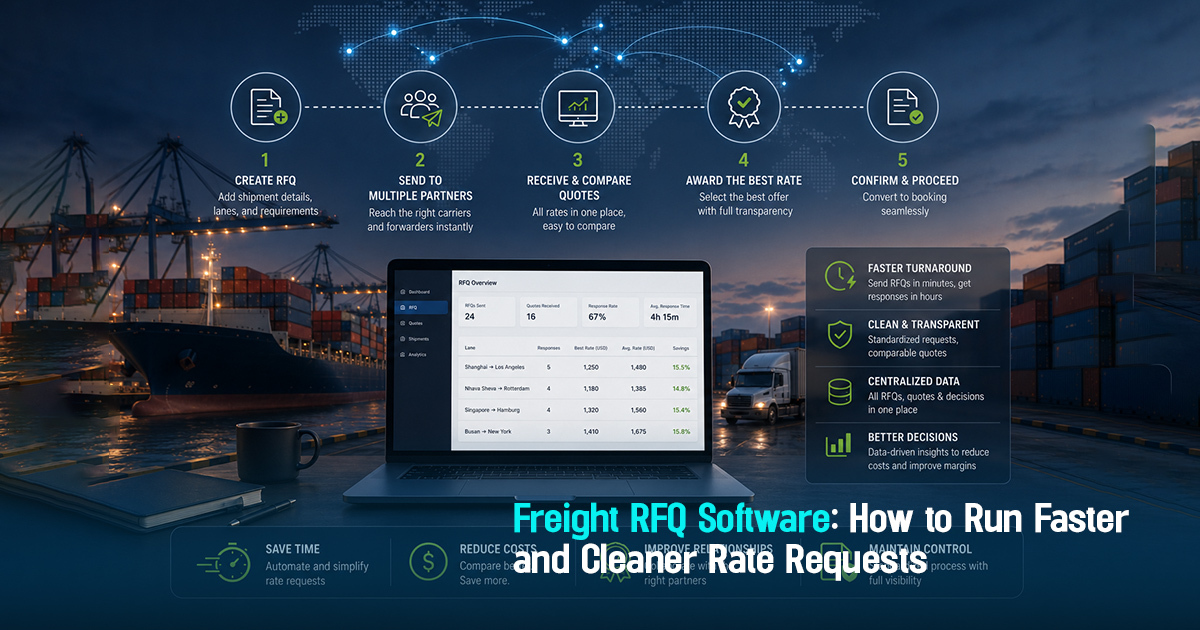
Freight RFQ software is a specialized logistics procurement tool that automates and structures the process of requesting freight rates from multiple vendors. Efficient use of such software matters operationally because it reduces manual errors, accelerates decision-making, and improves cost control during freight procurement cycles. Many logistics teams struggle with fragmented rate requests, inconsistent vendor comparisons, and lack of audit trails, which delay bookings and increase freight spend. This article explores a practical approach to running faster and cleaner freight RFQ processes using software, boosting operational clarity, compliance, and cost efficiency.
What Is Freight RFQ Software and Why It Matters
Freight RFQ software is a platform that standardizes and automates the collection, comparison, and approval of freight rate quotes from carriers and vendors. It centralizes the request for quotation (RFQ) process and ensures consistent data entry, trackable approvals, and transparent vendor selection.
By replacing spreadsheet emails and informal chats with structured workflows, freight RFQ software reduces errors such as inconsistent quotes, missed follow-ups, or invalid assumptions on accessorial charges. This leads to faster decision-making and reliable freight procurement records for audits and reviews.

A Practical Workflow Framework for Clean Freight Rate Requests
Following a structured RFQ workflow helps logistics teams run clean, auditable rate requests and avoid last-minute surprises. This framework includes:
1. Scope Definition: Clarify shipment details, volume, timeline, and special requirements with internal stakeholders before requesting rates.
2. Vendor Selection: Shortlist carriers or brokers based on past performance, service fit, and capacity.
3. Rate Request Dispatch: Send standardized RFQ templates to vendors via the freight RFQ software, ensuring consistent quote parameters.
4. Quote Collection and Validation: Collect vendor quotes centrally, check for completeness, accessorial charges, transit times, and terms consistency.
5. Comparison and Analysis: Use freight rate comparison tools within the platform to evaluate quotes side-by-side including hidden costs.
6. Approval and Notification: Obtain internal approval with documented justification, then confirm bookings with the selected vendor.
7. Audit and Record Keeping: Archive all quotes, communications, and approvals for future reference and compliance checks.
Role-Wise Responsibilities in Freight RFQ Management
Freight Forwarders must ensure timely sending of rate requests, clarify vendor queries swiftly, and monitor response consistency. They serve as the communication bridge between procurement teams and carriers.
Importers and Exporters should provide accurate shipment data early, set budget limits, and verify that bids meet their contractual and scheduling needs to avoid downstream delays.
Operations Teams track the RFQ progress daily, identify missing responses, manage internal clarifications on scope, and ensure all approvals are in place before final booking.
Procurement and Documentation Teams are responsible for systematic quote validation including accessorial charges, audit trail maintenance, and compliance with procurement policies to minimize financial risks.
Stage-Wise Breakdown of Running RFQ with Freight Software
Before RFQ Dispatch: Confirm shipment scope, vendor shortlist, and RFQ template details with internal teams. Prepare clear bidding timelines and criteria.
During RFQ Process: Track incoming vendor quotes via the centralized system. Flag anomalies such as incomplete charges or transit time mismatches. Coordinate clarifications and update teams regularly.
After Quote Collection: Conduct side-by-side rate comparisons factoring in all costs and service metrics. Route options for approval and document decision rationale.
Post Approval: Confirm bookings, update shipment tracking systems, and archive RFQ data for audit. Apply learnings to future procurements to refine vendor lists and templates.
Examples of Freight RFQ Process Challenges and Resolutions
Example 1: A forwarder received freight quotes via email but failed to check accessorials leading to unexpected surcharges post booking. Fix: Use RFQ software's validation rules to flag missing or inconsistent charges before approvals.
Example 2: An importer struggled with fragmented vendor responses causing delayed rate comparisons and shipment booking. Fix: Centralize rate submissions with freight RFQ software for real-time visibility and faster decision-making.
Example 3: The procurement team lacked an audit trail of vendor quotes and internal approvals, complicating financial reconciliation. Fix: Maintain all RFQ communications and approvals electronically within the platform for complete auditability.
Visibility and control in freight RFQs accelerate decisions and prevent costly procurement errors.
Practical checklist
Use this checklist to run cleaner freight RFQs and boost rate management:
1. Is shipment scope clearly documented before sending RFQs?
2. Are vendor lists updated based on performance and capacity?
3. Are RFQ templates standardized for transparent vendor comparison?
4. Are quotes collected and tracked centrally to avoid email scatter?
5. Are accessorial charges and transit times validated against shipment needs?
6. Is there a defined internal approval workflow with proper documentation?
7. Are booking confirmations and vendor communications logged within one system?
8. Is the audit trail maintained for compliance and future review?
9. Are exceptions such as missing quotes or inconsistent rates flagged early?
10. Are procurement decisions linked with shipment execution plans?
Common mistakes
Mistake 1: Sending unstructured rate requests via email leads to inconsistent responses and manual tracking errors. Fix: Use freight RFQ software to submit standardized forms and centralize quote records.
Mistake 2: Ignoring accessorial charges during quote comparison causes cost overruns. Fix: Validate all quoted charges against shipment requirements before approval.
Mistake 3: Lack of internal approval discipline means bookings go ahead without documented authorization, raising audit risks. Fix: Implement mandatory approval workflows captured in the software.
Mistake 4: Allowing late or incomplete quotes to delay bookings and cause operational disruption. Fix: Set clear RFQ deadlines and use automated reminders within the platform.
Mistake 5: Overlooking vendor performance data during selection leads to unreliable service and follow-ups. Fix: Integrate vendor scorecards into RFQ processes for informed decisions.

Frayto-Aligned Freight RFQ Workflow Example
A Frayto-aligned RFQ workflow typically follows: Rate Request → Vendor Comparison → Quote Validation → Approval → Booking → Tracking → Exception Closure. This means the procurement team sends structured rate requests through a platform, receives quotes centrally with all cost components visible, validates and compares thoroughly, secures approvals electronically, confirms bookings in one system, monitors shipping milestones with shipment tracking integration, and promptly resolves any exceptions flagged during the process.
Such an approach ensures every freight RFQ is transparent, auditable, and actionable, drastically reducing manual errors and speeding up freight procurement while maintaining cost discipline.
Get in Touch!
We'll reach out shortly with the info you need. No spam, just a helpful conversation.
Freightstory Technologies Private Limited
A-209, Dynasty Business Park, JB Nagar,
Andheri East, Mumbai- 400059, India


For Exporters & Importers
For Freight Forwarders
© 2026 Frayto. All Rights Reserved.