


Solutions
For Exporters & Importers

For Freight Forwarders and Logistics Service Providers
How to Create a Digital Freight Control Tower Without Replacing Your ERP


7 Minutes
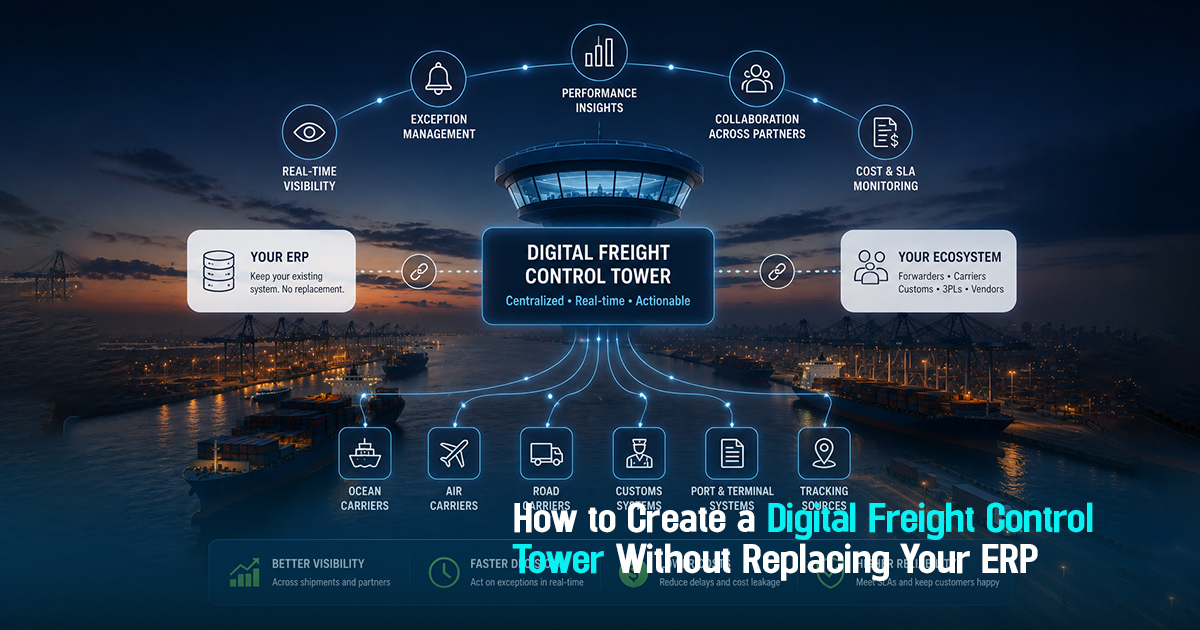
A digital freight control tower is a centralized system enabling comprehensive visibility and management of freight operations without the need to replace your existing ERP. This approach matters because most logistics teams struggle with siloed data, fragmented vendor coordination, and documentation delays, which hamper timely decisions and operational clarity. This article explores how to implement a digital freight control tower layered on top of existing ERP systems to improve freight visibility, structured procurement, shipment tracking, and exception handling while maintaining your current infrastructure.
What is a Digital Freight Control Tower and Why It Matters
Digital freight control tower refers to a centralized operational platform that consolidates shipment visibility, vendor coordination, documentation flow, and exception management into one view, independent from ERP constraints. This setup provides real-time insight and control over freight workflows without disrupting existing IT systems.
Operationally, it addresses key pain points like delayed ETA updates, poor coordination between carriers and vendors, and cumbersome manual tracking. By bridging visibility gaps and automating follow-ups, teams gain clarity and reduce costly exceptions, improving both efficiency and customer communication through consistent, structured updates.
A Practical Digital Freight Control Tower Workflow Framework
Implementing a digital freight control tower without replacing your ERP involves a focused workflow to integrate visibility, coordination, and exception handling effectively. Here is a practical 6-step framework to follow:
- Data Aggregation: Pull shipment and vendor data from ERP, carrier portals, and manual sources into one centralized system for unified visibility.
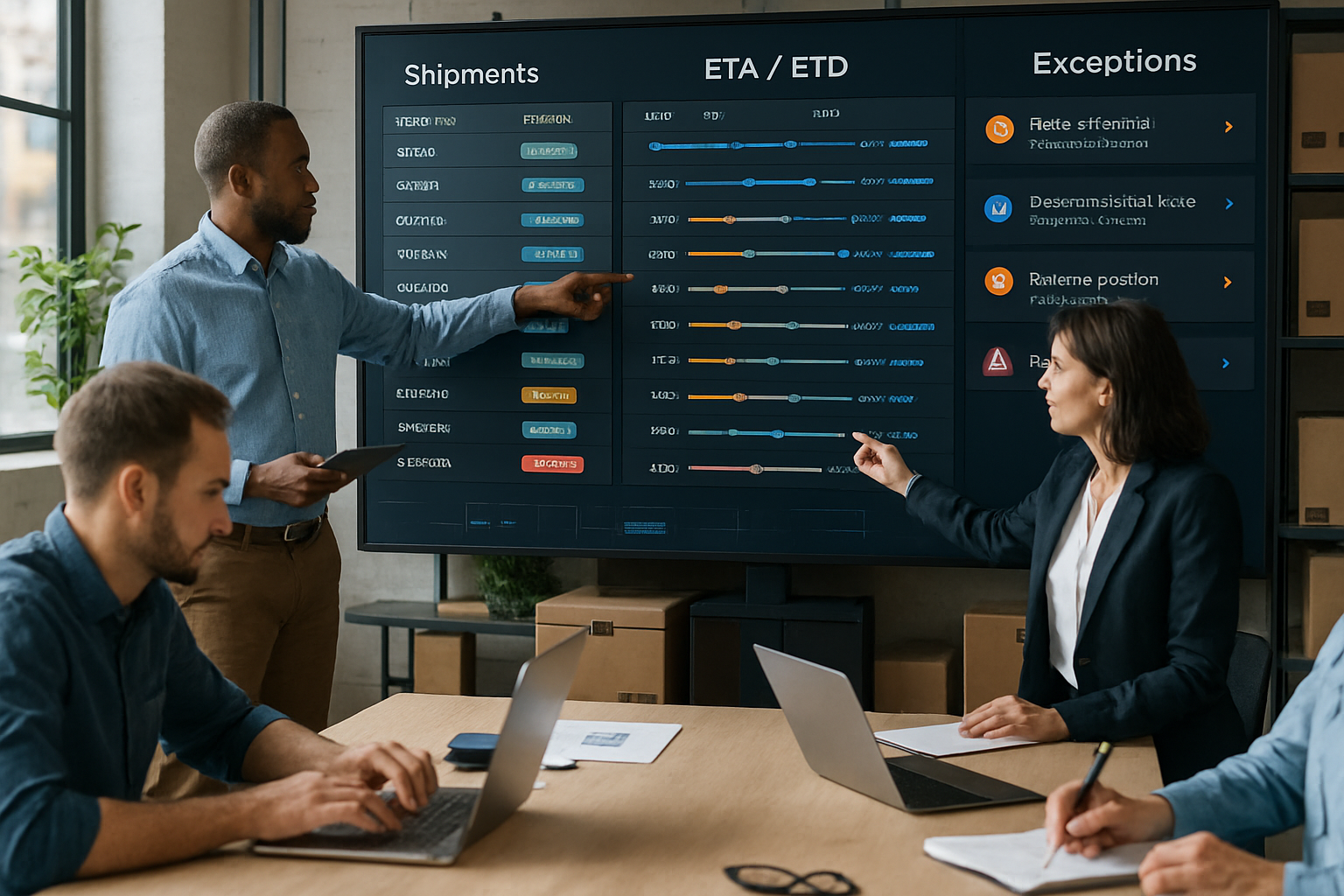
- Milestone Tracking: Monitor ETD/ETA and key shipment events through standardized status updates linked back to the shipment records.
- Exception Identification: Set rules for milestones that trigger alerts for delays, documentation issues, or demurrage risks to catch problems early.
- Owner Assignment and Follow-up: Allocate exceptions to specific team members or vendors with clear deadlines for resolution and escalation paths.
- Customer Communication: Automate proactive updates based on milestone changes or exceptions, reducing reactive inquiries and building trust.
- Post-Shipment Review: Analyze exceptions, vendor performance, and workflow gaps to improve future freight procurement and operational discipline.
This framework integrates with existing ERP functions by augmenting rather than replacing them, allowing logistics teams to maintain their transactional systems while gaining operational clarity and control on top.
Role-Wise Guidance on Implementing a Freight Control Tower
Different stakeholders need to focus on specific areas when adopting a freight control tower layered on existing ERP systems. Understanding their roles ensures smoother implementation and operational success.
Freight Forwarders: Coordinate carrier updates and documentation workflows in the centralized system. Ensure milestone tracking is accurate and exceptions are flagged quickly for immediate follow-up.
Importers and Exporters: Monitor ETA/ETD changes and shipment milestones in real-time to plan cargo handling and customs preparation. Use control tower insights to reduce detention and demurrage risks.
Operations Teams: Track daily shipment status, manage exception ownership, and oversee customer communication pipelines. Use the control tower for consolidated visibility to prevent last-minute delays.
Procurement Teams: Compare vendor performance metrics and exceptions history within the control tower to make informed freight buying decisions. Validate quotes and monitor contract compliance using centralized data.
Documentation Teams: Manage document collection and validation workflows digitally, ensuring customs checkpoints and handoffs reflect the latest shipment data and avoid clearance delays.
Process-Wise Implementation: Before, During, and After Shipment
Before Shipment: Verify vendor quotes, validate routing, and confirm document readiness. Use the freight control tower to flag missing inputs and ensure approval discipline before booking.
During Shipment: Continuously track shipment milestones and ETA/ETD through the control tower dashboard. Monitor exceptions and assign ownership for timely follow-ups and customer alerts.
After Shipment: Conduct exception closure reviews and vendor performance assessments. Feed insights back to procurement teams to improve future carrier selection and negotiation strategies.
For example, a freight forwarder detected a customs document delay early in the transit stage via exception alerts, enabling timely intervention that prevented demurrage charges. Similarly, procurement teams avoid repeating mistakes by reviewing post-shipment reports on accessorial charges and delivery performance.
Practical checklist
Use this checklist to ensure your digital freight control tower implementation covers essential visibility, coordination, and operational control aspects:
- Is shipment and vendor data aggregated centrally from ERP and external sources?
- Are ETD/ETA and key milestones updated and tracked daily?
- Are exceptions such as delays, documentation gaps, or demurrage risks automatically identified?
- Is every exception assigned a clear owner with deadlines for resolution?
- Are customer updates automated based on milestone changes and exceptions?
- Are procurement decisions linked to vendor performance data from freight operations?
- Are documentation workflows digital with audit trails for customs checkpoints?
- Is there a post-shipment review process to capture lessons and improve workflows?
- Are cross-team handoffs and responsibilities clearly defined and enforced?
- Is the system layered on, not replacing, your existing ERP environment for smooth adaptation?
Centralizing shipment visibility and assigning clear exception ownership produces faster decisions and fewer operational surprises.
Common mistakes
1. Treating the control tower as an ERP replacement rather than a complementary layer. This causes implementation delays and resistance. Fix: Focus on integrating and augmenting existing ERP data instead of replacing core systems.
2. Poor exception ownership leads to unresolved shipment issues. Without dedicated owners, alerts become noise and problems escalate. Fix: Assign specific team members accountability and establish clear follow-up workflows.
3. Ignoring documentation workflow in control tower setup. This results in customs delays and blind spots. Fix: Include digital document validation and handoff milestones linked to shipment events.
4. Over-reliance on manual email or spreadsheet tracking alongside the control tower. This creates data silos and duplicate work. Fix: Use integrated dashboards for real-time updates, reducing manual follow-ups and consolidating information.
5. Lack of structured vendor comparison due to missing operational data. Procurement decisions become subjective, risking higher costs. Fix: Link freight performance and exception histories directly to vendor evaluation tools in the control tower.
Freight Management Workflow Aligned with Frayto Principles
A practical workflow that aligns with Frayto’s approach to digital freight control towers includes:
- Rate Request: Initiate quote requests via a structured platform ensuring standard terms across vendors.
- Vendor Comparison: Evaluate quotes considering base rates, accessorials, and historical performance.
- Approval and Booking: Capture approvals digitally before booking shipments, reducing errors and delays.
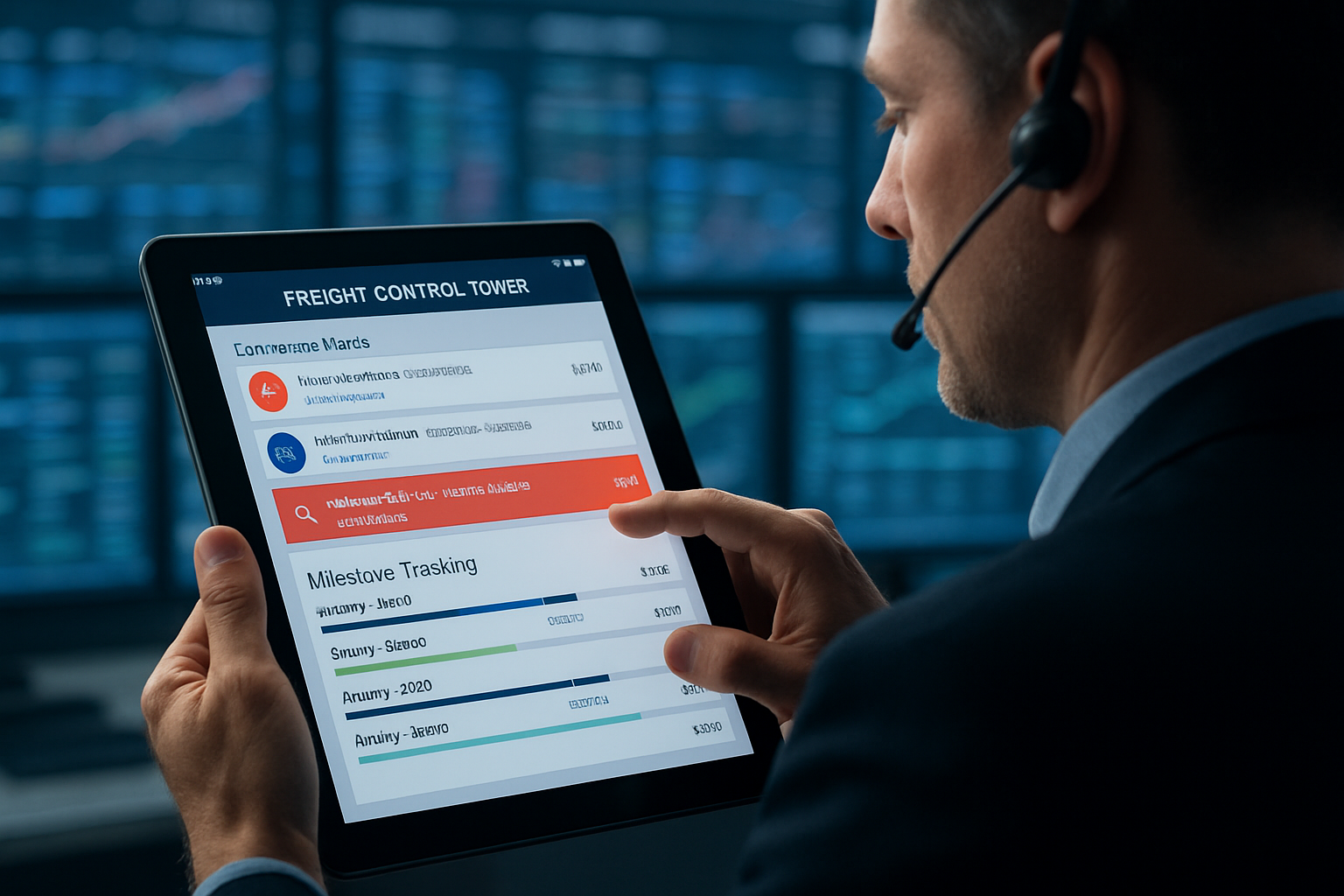
- Centralized Tracking: Monitor shipment milestones and ETA/ETD updates in one dashboard regardless of ERP limits.
- Exception Handling: Detect delays or documentation issues early, assigning owners for resolution and escalation.
- Customer Updates: Automate communication to customers based on milestone progress and exception status.
- Audit and Review: Post-shipment evaluation ensures transparency and continuous improvement in freight procurement and operations.
This workflow balances procurement discipline, shipment visibility, and operational control, demonstrating how a digital freight control tower can fit seamlessly into current freight management ecosystems.
Real Freight Operations Examples
Example 1: A freight forwarder integrated carrier milestone data and customs document status in a control tower layer over their ERP, which helped identify and escalate a container clearance delay two days earlier, avoiding demurrage risk.
Example 2: An importer used a digital freight control tower to compare vendors not only on rates but also on exception frequency and shipment adherence, leading to renegotiated contracts and improved delivery reliability.
Example 3: Operations teams managing multiple shipments across ocean and air freight avoided last-minute disruptions by using automated alerts and customer updates from the control tower, reducing inbound calls by 30% and improving customer satisfaction.
Conclusion
Creating a digital freight control tower without replacing your ERP empowers logistics teams with operational clarity and centralized visibility while preserving existing investments. Layering a control tower enables structured procurement, real-time milestone tracking, exception ownership, and consistent customer communication—all crucial for reducing costs and preventing delays. Leveraging such a system allows teams to bridge data silos, enforce process discipline, and coordinate vendors and carriers more effectively. As freight operations continue to grow in complexity, adopting this connected, exception-first, and audit-ready approach is a practical step that supports improved logistics outcomes and builds trust across stakeholders. For supply chain professionals seeking efficiency and control, embracing a digital freight control tower alongside your ERP is a key operational strategy, not just a technology upgrade.
Get in Touch!
We'll reach out shortly with the info you need. No spam, just a helpful conversation.
Recommended Blogs
Freightstory Technologies Private Limited
A-209, Dynasty Business Park, JB Nagar,
Andheri East, Mumbai- 400059, India


For Exporters & Importers
For Freight Forwarders
© 2026 Frayto. All Rights Reserved.