


Solutions
For Exporters & Importers

For Freight Forwarders and Logistics Service Providers
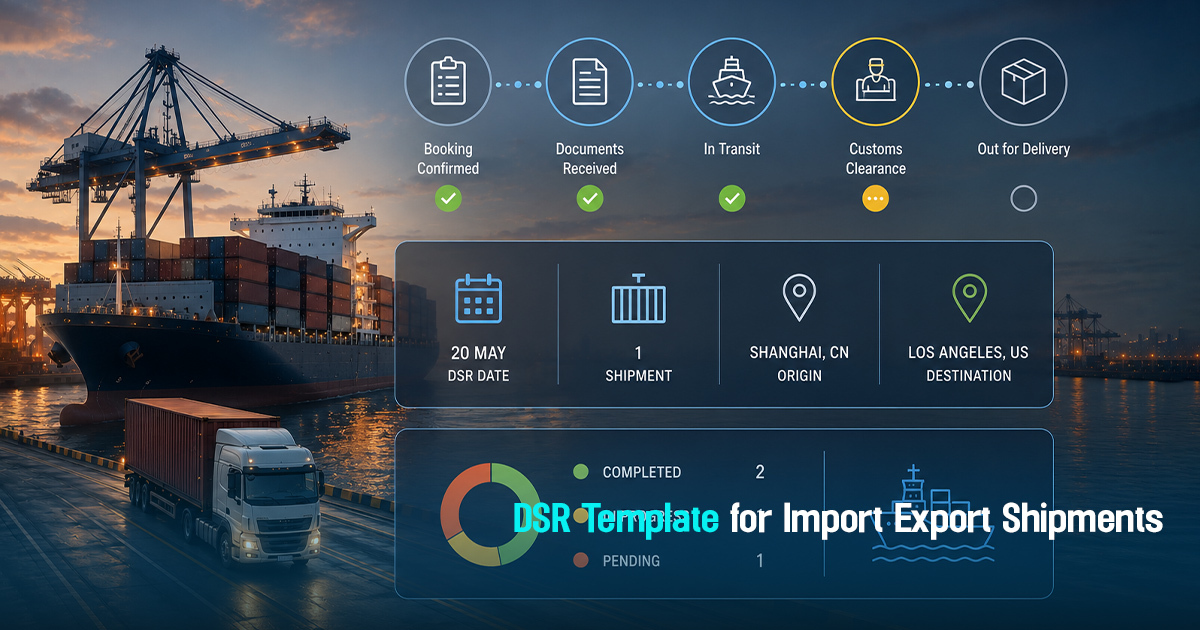
DSR Template for Import Export Shipments: A Practical Guide for Freight Operations


6 Minutes
A DSR template for import export shipments is a structured document used by logistics teams to capture daily shipment status, track milestones, monitor exceptions, and maintain documentation flow. It matters operationally because freight operations hinge on timely, actionable updates that enable risk mitigation, compliance assurance, and smooth customer communication. Without a disciplined DSR (Daily Shipment Report) process, teams face visibility gaps, uncontrolled exceptions, delayed customs clearance, and increased demurrage risk. This article offers a practical guide to creating and using a robust DSR template tailored for import-export workflows, helping freight forwarders, importers, exporters, and logistics managers improve operational clarity and control.
What is a DSR Template for Import Export Shipments?
A DSR template is a standardized logistics report format capturing shipment milestones, document status, carrier updates, and exceptions for import and export cargos. It consolidates critical data daily, enabling centralized visibility and decision-ready communication.
The template typically includes fields like shipment reference, booking details, Commodity HS code, ETD/ETA, key milestones, customs clearance status, pending documentation, and exception notes. Having this information systematically collected reduces operational chaos by closing visibility gaps that delay customs clearance or cause detention and demurrage charges.

A Practical Workflow for Using DSR Templates in Freight Operations
Integrating a DSR template into daily freight management involves multiple closely linked steps that promote structured procurement, centralized tracking, and documentation discipline.
Here is a practical 6-step framework that teams can implement:
1. Data Collection: Pull shipment data from booking systems, carrier portals, and customs to populate the DSR.
2. Milestone Update: Review ETD, ETA, and shipment events; log any deviations.
3. Documentation Status: Update pending and received documents related to customs clearance.
4. Exception Identification: Flag delays, demurrage risks, or customs holds.
5. Carrier and Vendor Coordination: Assign follow-up owners and track resolution progress.
6. Customer and Internal Communication: Share decision-ready reports highlighting critical shipment status and next steps.
This workflow brings operational clarity by linking visibility with action. For example, if a customs document is delayed, that is immediately flagged and coordinated with the responsible vendor and customs broker — preventing unplanned demurrage costs.
Role-Wise Responsibilities in Managing DSR Templates
Freight forwarders must ensure complete and timely input of shipment milestones and exceptions, coordinating with carriers and customs brokers to update the status.
Importers and exporters should monitor DSR reports for any delays in custom clearances or documentation requirements. They need to ensure timely submission of regulatory documents and respond promptly to document queries.
Operations teams are responsible for daily tracking of shipment milestones, flagging exceptions early, and owning communication with carriers/vendors to resolve issues quickly.
Procurement and documentation teams must validate vendor performance by comparing planned vs actual execution captured in the DSR and ensure all required documents are handed off accurately to customs and freight partners.
Before, During, and After Shipment: The DSR Implementation Breakdown
Implementing DSR templates effectively requires breaking down activities into shipment stages with targeted inputs and controls:
Before Shipment: Capture booking details, confirm cargo specifications, validate regulatory documents, and define expected ETD/ETA. The DSR sets the baseline for tracking.
During Shipment: Update milestones such as vessel departure, transshipment events, customs clearance progress, and any deviations. Flag exceptions like delays or missing documents.
After Shipment: Record final delivery confirmation, document handoffs such as POD (Proof of Delivery), and closure of exceptions. Perform post-shipment vendor performance review using DSR data.
Concrete Freight Operations Examples Using DSR Templates
Example 1: An importer’s shipment suffered customs holdup due to incomplete HS code declaration. A well-maintained DSR flagged the issue on Day 2, enabling prompt document correction and avoiding extended demurrage.
Example 2: A freight forwarder tracking multiple carriers used a consolidated DSR template to highlight that a transshipment delay affected ETA by 48 hours, triggering timely customer communication and alternative planning.
Example 3: A procurement team leveraged DSR reports to identify recurring delays by a specific carrier handling export shipments, leading to a strategic vendor review and better procurement decisions.
Decision-ready shipment updates reduce risks by prioritizing exceptions and centralizing operational control.
Practical checklist
This checklist helps ensure your DSR template and process cover all critical aspects for import export shipments:
- 1. Does the DSR capture shipment references, booking number, and commodity HS codes consistently?
- 2. Are ETD and ETA dates updated daily based on carrier and terminal inputs?
- 3. Is document submission status (invoice, packing list, BL, customs forms) tracked with deadlines?
- 4. Are shipment milestones (loading, departure, arrival, unloading) recorded with timestamps?
- 5. Are exceptions such as customs holds, late documents, and delays flagged and assigned owners?
- 6. Does the DSR reflect detention and demurrage risk assessments for pending exceptions?
- 7. Is a follow-up plan with vendors and carriers included where exceptions occur?
- 8. Are customer communication notes or alerts linked with shipment status changes?
- 9. Is DSR data centralized for review by all relevant teams (operations, procurement, documentation)?
- 10. Are historical DSRs archived for audit trail and performance analysis?

Common mistakes
Mistake 1: Inconsistent data entry in DSR leads to incomplete shipment visibility and delayed exception detection. Fix: Enforce mandatory fields and standardize updates with version control to ensure data accuracy.
Mistake 2: Delayed milestone updates cause late customer notifications and higher escalations. Fix: Implement a daily status review routine with designated owners responsible for updates.
Mistake 3: Missing exception ownership assignment results in follow-up failures and increased demurrage risk. Fix: Include clear owner fields in the DSR to drive accountability and resolution timelines.
Mistake 4: Lack of documentation tracking often causes customs clearance delays. Fix: Integrate document status checks in the DSR and flag pending submissions as priority items.
Mistake 5: Not linking DSR reports to customer communications causes trust gaps and escalations. Fix: Use the DSR as a source for proactive, exception-first customer updates.
A Frayto-Aligned DSR Workflow for Import Export Shipments
A practical DSR workflow aligned to operational clarity includes:
- Rate Request & Booking Capture: Incorporate procurement details to link booked shipments with vendor performance.
- Milestone & ETA Tracking: Update shipments daily with carrier milestones and monitor ETD/ETA changes to identify risks early.
- Exception Handling & Owner Assignment: Flag deviations immediately and assign resolution owners.
- Documentation Validation & Clearance Status: Log customs and regulatory documents and their clearance stages to anticipate delays.
- Customer & Internal Updates: Generate decision-ready status reports to communicate exceptions and ETA revisions proactively.
- Shipment Closure & Audit Readiness: Confirm POD receipt, document handoffs complete, and archive DSRs for audit trail and performance insights.
This workflow supports centralized control, timely decisions, and auditability without adding redundant tasks. It bridges freight procurement, shipment visibility, documentation discipline, and customer communication into one cohesive process.
FAQs about DSR Templates for Import Export Shipments
Get in Touch!
We'll reach out shortly with the info you need. No spam, just a helpful conversation.


For Exporters & Importers
For Freight Forwarders
© 2026 Frayto. All Rights Reserved.