


Solutions
For Exporters & Importers

For Freight Forwarders and Logistics Service Providers
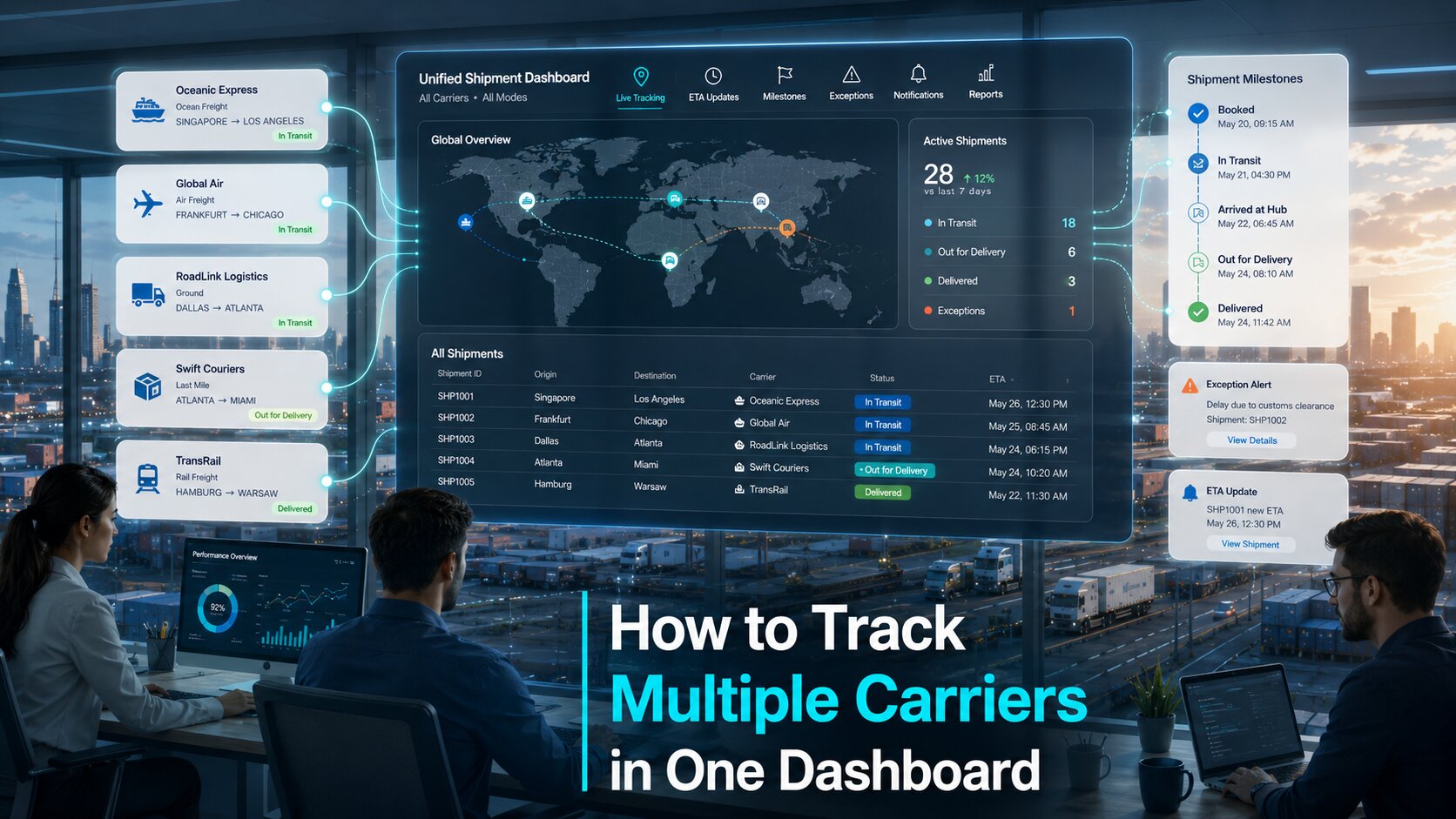
How to Track Multiple Carriers in One Dashboard for Improved Shipment Visibility


4 Minutes
A multi-carrier shipment tracking dashboard is a centralized platform that consolidates shipment status updates from multiple freight carriers into a single interface. Operationally, this matters because managing freight across various carriers and transport modes often leads to fragmentation and visibility gaps, hampering timely decision-making and proactive exception management. The core challenge many logistics teams face is how to streamline real-time shipment tracking across carriers to improve operational clarity and reduce delays.
What is a multi-carrier shipment tracking dashboard?
Definition: A multi-carrier shipment tracking dashboard integrates tracking data from various freight carriers — including ocean, air, road, and rail — and displays consolidated shipment status updates in real time. This helps operations teams monitor shipments consistently, without switching between multiple carrier platforms.
Using such a system supports operational workflows by providing comprehensive shipment visibility, enhancing the ability to detect exceptions early and coordinate vendor follow-ups efficiently. It reduces manual status checks and streamlines communication internally and with customers.

Why multi-carrier tracking is critical for logistics teams
Multiple carriers are often involved in a single supply chain, especially in global shipments spanning ocean, air, and land transport. Lack of shipment status consolidation means operations managers must juggle different portals, formats, and update frequencies, which increases the risk of missing key milestones or exceptions.
This fragmentation leads to reactive management practices, delays in exception handling, and higher chances of demurrage or detention charges due to missed deadlines. A unified dashboard enables proactive decision-making by making all relevant tracking information accessible in one place.
How to build a multi-carrier shipment tracking workflow
Creating an effective tracking dashboard starts with integrating carrier data through either API connections or EDI feeds. These inputs feed into a centralized platform that normalizes tracking events into standardized shipment milestones.
The workflow involves: Booking → Carrier Integration → Real-Time Status Updates → Exception Alerts → Reporting and Communication. Each step must support timely data refreshes and enable quick visibility of exceptions for prompt operational response.
Practical checklist
To implement a multi-carrier shipment tracking dashboard effectively, logistics teams should follow these steps:
- Identify all carriers and transport modes involved across your shipments
- Secure access to carrier tracking data via APIs, EDI, or other integration means
- Establish a data normalization process to unify status updates into standard milestones
- Set up automated alerts for exceptions like delays, customs holds, or vessel changes
- Integrate the dashboard into daily operational workflows for continuous monitoring
- Train operations and customer service teams on using the dashboard for proactive updates
- Regularly review data accuracy and update carrier connections as needed
Centralizing shipment tracking across carriers reduces manual follow-ups and improves proactive exception response.
Common mistakes
One frequent error is relying on manual status checks from individual carrier portals, which creates delays and data inconsistency. Another is neglecting to establish standardized shipment milestones across carriers, making comparisons and consolidated visibility difficult.
Ignoring exception alerts or not integrating them into operational workflows can lead to missed disruptions and higher detention or demurrage risks. Also, insufficient coordination and communication protocols between carriers and internal teams often delay issue resolution.
Comparison insight: Multi-carrier dashboard vs individual carrier portals
While individual carrier portals provide detailed tracking data for specific shipments, they require separate logins and manual aggregation, resulting in inefficient workflows. A multi-carrier shipment tracking dashboard consolidates this data, enabling real-time freight tracking across carriers and reducing the operational burden of switching between systems.
This consolidation supports better exception handling and reduces time wasted on vendor follow-ups, fostering a more structured and centralized freight management process.
How integrated dashboards impact customer communication
A unified tracking dashboard improves transparency by enabling operations teams to provide timely, accurate shipment updates to customers. This reduces inquiries and builds trust through consistent, proactive communication.
Real-time shipment visibility also helps logistics teams flag potential exceptions early, allowing for preemptive customer notifications and mitigating dissatisfaction caused by unexpected delays or documentation issues.
Selecting the right freight tracking software for multi-modal visibility
When evaluating freight tracking software, prioritize platforms that offer comprehensive carrier integration platforms supporting various modes—sea, air, road, and rail—and robust real-time data updates.
Look for solutions with customizable dashboards, automated alert systems, and easy user interfaces that align with your operational workflows. This ensures faster adoption among operations teams and maximizes the value of consolidated shipment visibility.

Conclusion
Implementing a multi-carrier shipment tracking dashboard is essential to overcome visibility fragmentation in today’s complex freight environments. By consolidating status updates from multiple carriers into a single, real-time platform, teams gain the ability to identify exceptions early, coordinate vendor follow-ups efficiently, and communicate proactively with customers. This leads to fewer operational disruptions, reduced detention and demurrage risks, and overall better cost control. The shift from reactive status checks to structured, exception-first workflows significantly improves logistics performance and operational clarity. Integrating these dashboards with your existing transportation management system tracking or leveraging dedicated freight tracking software tailored for multi-modal shipment visibility ensures your logistics teams stay informed and agile in managing global freight flows with confidence and precision. For operational teams managing complex shipments, solutions like Frayto's Instatrac shipment tracking platform demonstrate how streamlined integration and visibility empower more effective shipment control and exception handling.
Get in Touch!
We'll reach out shortly with the info you need. No spam, just a helpful conversation.
Recommended Blogs

Freightstory Technologies Private Limited
A-209, Dynasty Business Park, JB Nagar,
Andheri East, Mumbai- 400059, India


For Exporters & Importers
For Freight Forwarders
© 2026 Frayto. All Rights Reserved.