


Solutions
For Exporters & Importers

For Freight Forwarders and Logistics Service Providers
How to Choose the Right Freight Tech Platform for Your Business


5 Minutes
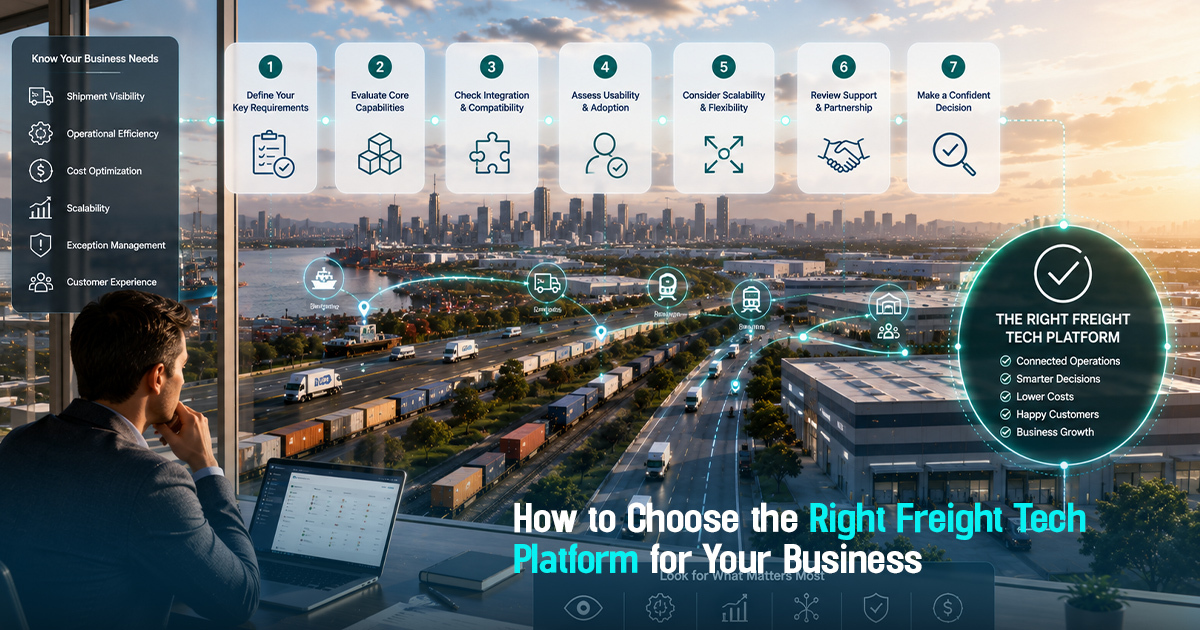
Freight tech platform selection is a critical process for freight forwarders, supply chain managers, and operations teams aiming to enhance freight procurement and overall logistics efficiency. Choosing the right platform directly impacts operational workflows like rate discovery, vendor coordination, shipment tracking, and cost control. Without a clear approach, teams risk adopting unsuitable technology that complicates processes and fails to deliver visibility and control.
What is Freight Tech Platform Selection?
Freight tech platform selection refers to the process of evaluating and choosing digital systems designed to manage freight procurement, shipment visibility, and freight operations. These platforms automate traditionally manual workflows involved in sourcing, booking, tracking, and managing global shipments. This choice matters operationally because the right platform ensures centralized control and real-time decision-making.
Optimizing freight tech platform selection helps reduce manual follow-ups, improve data accuracy, and enhance supplier collaboration. It also supports faster exception handling and better audit trails for compliance and cost control. Picking the wrong platform creates bottlenecks that affect shipment timelines, visibility gaps, and operational costs.
Key Considerations Before Choosing a Freight Tech Platform
Before evaluating software options, teams must identify their core freight process needs, such as rate discovery, carrier coordination, and shipment tracking. Understanding specific operational pain points ensures the platform supports essential workflows without unnecessary complexity. Scalability and integration capabilities are equally important for future-proofing technology investments.
Teams should also assess compliance requirements, documentation management, and exception handling needs upfront. The platform must enable centralized data visibility, clear handoffs, and auditability to minimize shipment delays and improve communication with vendors and customers.

Practical Steps for Freight Tech Platform Selection
A structured workflow for selecting a freight tech platform starts with requirement gathering and market research. Teams should rank needs for freight procurement software, shipment visibility, and operational control. Prioritize platforms offering automated workflows and centralized dashboards to streamline shipment execution and vendor follow-up. Involving cross-functional teams ensures all process perspectives are covered.
Next, conducting vendor demos and requesting trial periods helps evaluate usability and integration readiness. Assess how well the platform supports rate comparisons, booking workflows, document handling, and real-time shipment tracking. Check for features that reduce manual data entry and improve exception management. Finalize decisions based on technology fit, cost-effectiveness, and user feedback.
Selecting freight tech should focus on operational fit and integration, not just features or vendor promises.
Freight Tech Workflow Framework for Evaluation
A practical evaluation follows this workflow: Requirement Definition → Vendor Screening → Demo & Trial → Integration Check → User Feedback → Final Selection. Each step focuses on assessing how the platform enhances rate discovery, vendor coordination, booking accuracy, shipment milestone tracking, and exception handling. This ensures the platform supports end-to-end freight procurement and operational clarity.
This framework aligns with how logistics teams control workflows daily, reducing delays and costly errors. Consistent decision criteria and trial validations minimize adoption risks. Confirm that the platform’s reporting and audit capabilities meet compliance and financial oversight needs.
Common Mistakes in Freight Tech Platform Selection
One common mistake is focusing too much on vendor promises without validating if the software fits existing operational workflows. This leads to low user adoption and process disruptions.
Ignoring integration with current systems causes data siloes and increases manual effort. Another frequent error is skipping rigorous vendor trials or neglecting to involve operations teams in the evaluation. Overlooking exception management and real-time shipment visibility features reduces the platform’s value in daily freight operations and cost control.
How to Compare Freight Tech Platforms Effectively
When comparing freight management systems, distinguish between platforms specializing in procurement versus those focusing on shipment tracking and operations. Freight procurement software emphasizes rate discovery, bidding, and vendor auditability. In contrast, shipment visibility platforms prioritize ETD/ETA monitoring, milestone tracking, and carrier follow-ups. This comparison clarifies trade-offs and selection focus areas.
Cost models also vary—some offer subscription-based pricing while others charge per shipment or user. Factor in total cost of ownership including integration expenses and ongoing support. An ideal platform balances core feature sets with operational automation and centralized control.
Practical Checklist for Choosing a Freight Tech Platform
Use this checklist to guide your selection process:
- Define key freight procurement and shipment visibility needs
- Ensure platform supports centralized rate comparison and vendor management
- Verify seamless integration with existing ERP, TMS, and tracking tools
- Confirm capabilities for real-time shipment milestone tracking and exception alerts
- Evaluate auditability and compliance reporting features
- Assess ease of use and user training support
- Test vendor responsiveness and support services during trial
- Analyze pricing model and total cost of ownership
- Check for automation options reducing manual workflows
- Validate scalability for changing shipment volumes and business needs
Using structured checklists improves decision discipline and helps teams eliminate subjective bias for better procurement and operational outcomes.
Integrating Freight Tech Platforms with Daily Operations
Once chosen, the platform must fit into existing freight workflows like booking, documentation, and carrier coordination. Effective integration reduces shipment delays and boosts visibility over ETAs and handoffs. Automated alerts and milestone tracking help operations teams preempt exceptions and improve customer communication.
Proper onboarding helps users leverage the platform features for freight procurement audits, freight cost control, and exception resolution. Cross-team collaboration and standardized processes ensure sustained benefits and operational clarity.
Conclusion
Selecting the right freight tech platform is a foundational step towards operational excellence in freight procurement and shipment management. By aligning platform capabilities with clear process needs and prioritizing integration, user experience, and automation, logistics teams can enhance control over shipments, reduce manual effort, and improve cost visibility. Avoiding common pitfalls like inadequate trials or ignoring exception management features prevents costly disruptions. Embracing a structured evaluation workflow and practical checklists ensures the chosen technology supports both procurement discipline and real-time shipment visibility. Ultimately, a well-selected freight tech system enables supply chain teams to focus on timely decisions, vendor coordination, and compliance without being bogged down by fragmented tools or poor data. This operational clarity becomes the competitive advantage for managing global freight efficiently in today’s complex trade environment.
Get in Touch!
We'll reach out shortly with the info you need. No spam, just a helpful conversation.
Recommended Blogs
Freightstory Technologies Private Limited
A-209, Dynasty Business Park, JB Nagar,
Andheri East, Mumbai- 400059, India


For Exporters & Importers
For Freight Forwarders
© 2026 Frayto. All Rights Reserved.