


Solutions
For Exporters & Importers

For Freight Forwarders and Logistics Service Providers
Best Container Tracking Software Features for Freight Forwarders


6 Minutes
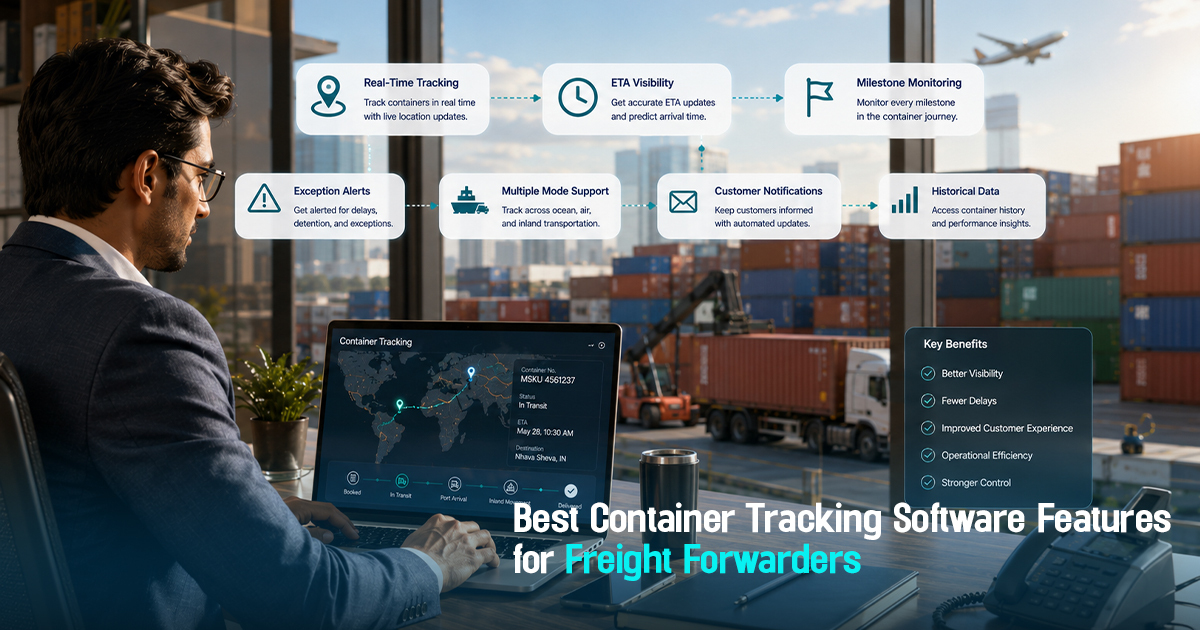
Container tracking software refers to digital platforms that provide freight forwarders and logistics teams with real-time visibility and control over shipping containers during transit. Operationally, having this software is critical because it helps reduce shipment delays, manage exceptions promptly, coordinate with carriers, and provide reliable customer communication. Without structured container tracking, freight teams often face information gaps, missed ETAs, and costly detention or demurrage. This article offers a practical exploration of the best container tracking software features freight forwarders need for streamlined operations and shipment clarity.
Key Features That Define the Best Container Tracking Software
Essential features in container tracking software include real-time updates, milestone tracking, exception alerts, centralized visibility, and documentation workflows. These functionalities ensure freight teams are consistently informed and able to act proactively.
Real-time container tracking minimizes uncertainty, while milestone tracking provides structured operational checkpoints. Exception alerts highlight deviations, enabling immediate follow-up. Centralized visibility eliminates siloed information, and integrated documentation control enhances compliance. Together, these features translate into faster decisions and cost risk reduction.
A Practical Workflow Framework for Container Tracking
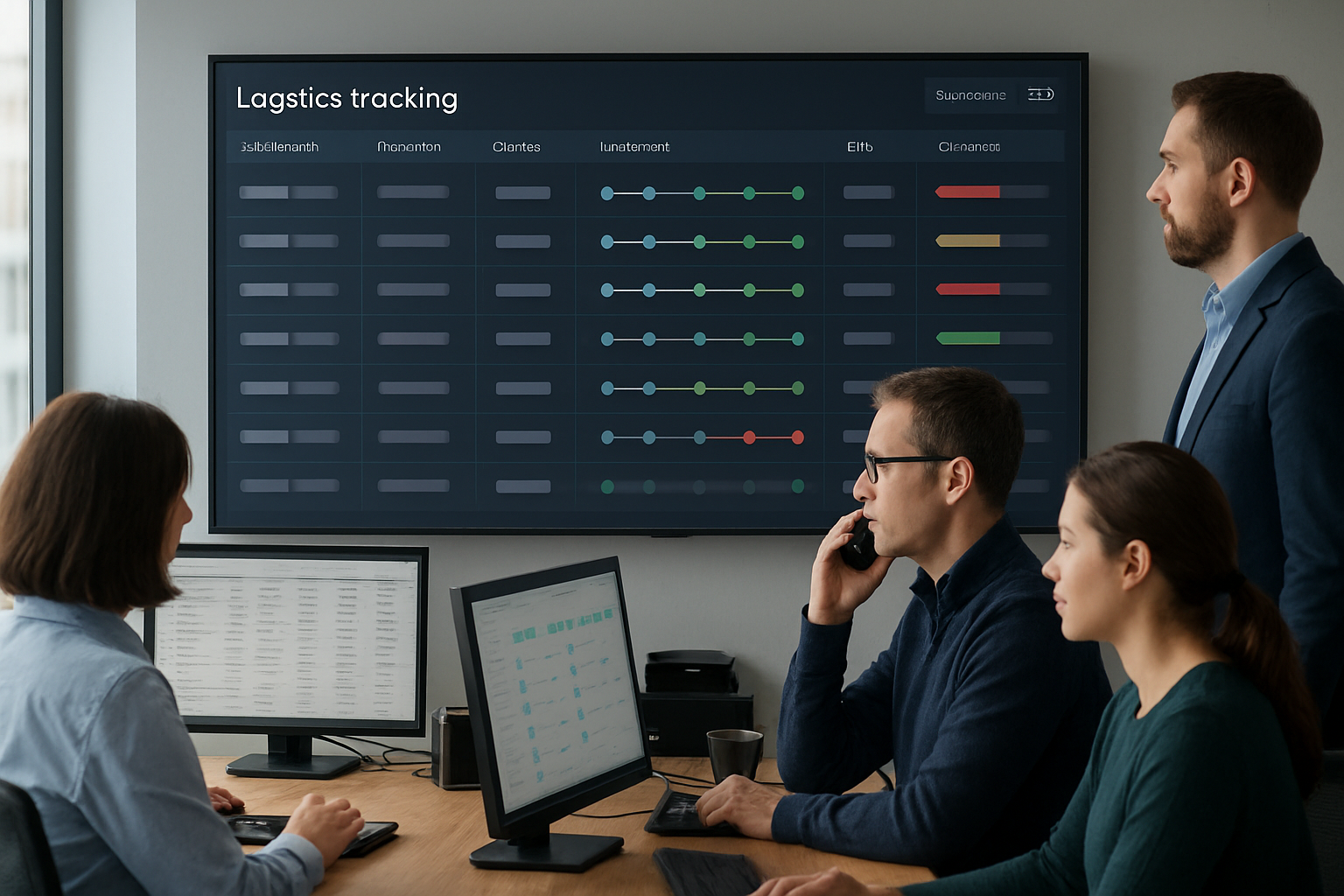
Implementing container tracking software effectively revolves around a clear workflow that combines coordination, visibility, and control. The workflow includes:
- 1. Booking Confirmation: Capture container details and booking references immediately after vendor confirmation.
- 2. Milestone Tracking: Define and monitor key shipment events: gate-in, vessel sailing, transshipment, discharge, customs clearance, and delivery.
- 3. ETA/ETD Monitoring: Track estimated times closely and update teams on changes promptly to mitigate risks.
- 4. Exception Handling: Detect delays, shipment damage, or documentation gaps early and assign owners for resolution.
- 5. Carrier and Vendor Coordination: Centralize communication through the platform for faster issue resolution and vendor comparison.
- 6. Documentation Control: Integrate document uploads, validation, and handoffs to customs or receivers as part of shipment milestones.
- 7. Customer Updates: Automate notifications and status reports, ensuring consistent transparency and reducing follow-up workloads.
Each step builds operational clarity and reduces manual errors, aligning daily execution to shipment realities while cutting unnecessary delays and cost overruns.
Role-Wise Container Tracking Responsibilities
Freight forwarders must control vendor selection and centrally track container status across carriers, ensuring milestones and ETAs are recorded accurately. Operations teams focus on monitoring shipment progress, managing exceptions, and coordinating updates with carriers and customers. Procurement teams leverage visibility tools to validate contracted rates against actual routing and transit times, preventing cost leaks. Documentation teams handle the timely collection, validation, and handoff of shipping documents linked to container milestones. Customer service teams depend on accurate tracking data to provide timely and actionable customer updates, reducing inquiries and improving satisfaction.
For example, a documentation team might detect missing customs paperwork at the discharge milestone through the software, prompting immediate correction. Simultaneously, customer service can automate alerts on ETD changes, minimizing escalations. This cross-role visibility fundamentally improves shipment flow and accountability.
Container Tracking Software Implementation: Before, During, and After Shipment
Before Shipment: Configure container details, upload booking documents, and establish baseline ETAs and vendor contacts. Validate carrier responsibilities and communicate expectations for milestone updates.
During Transit: Monitor container location and status via GPS or carrier data, track all shipment milestones, and address exceptions such as delays or documentation issues promptly. Keep customers informed proactively and coordinate carrier follow-ups centrally.
After Delivery: Confirm final delivery and document receipt, review any exception reports including detention or demurrage risks, and conduct vendor performance assessments. Ensure audit trails are complete for compliance and future planning.
This structured approach limits visibility gaps and operational silos, ensuring every team member knows what to track and when to act.
Visibility without structure leads to noise; structured container tracking drives actionable control and timely decisions.
Practical checklist
Use this checklist to evaluate or enhance your container tracking software capabilities and usage:
- Are all container movements tracked with timestamped milestones in the system?
- Is real-time GPS or carrier data integrated for location updates?
- Are ETD and ETA changes captured and flagged for review immediately?
- Are exceptions automatically alerted and assigned to a responsible owner?
- Is documentation uploading and validation linked to shipment milestones?
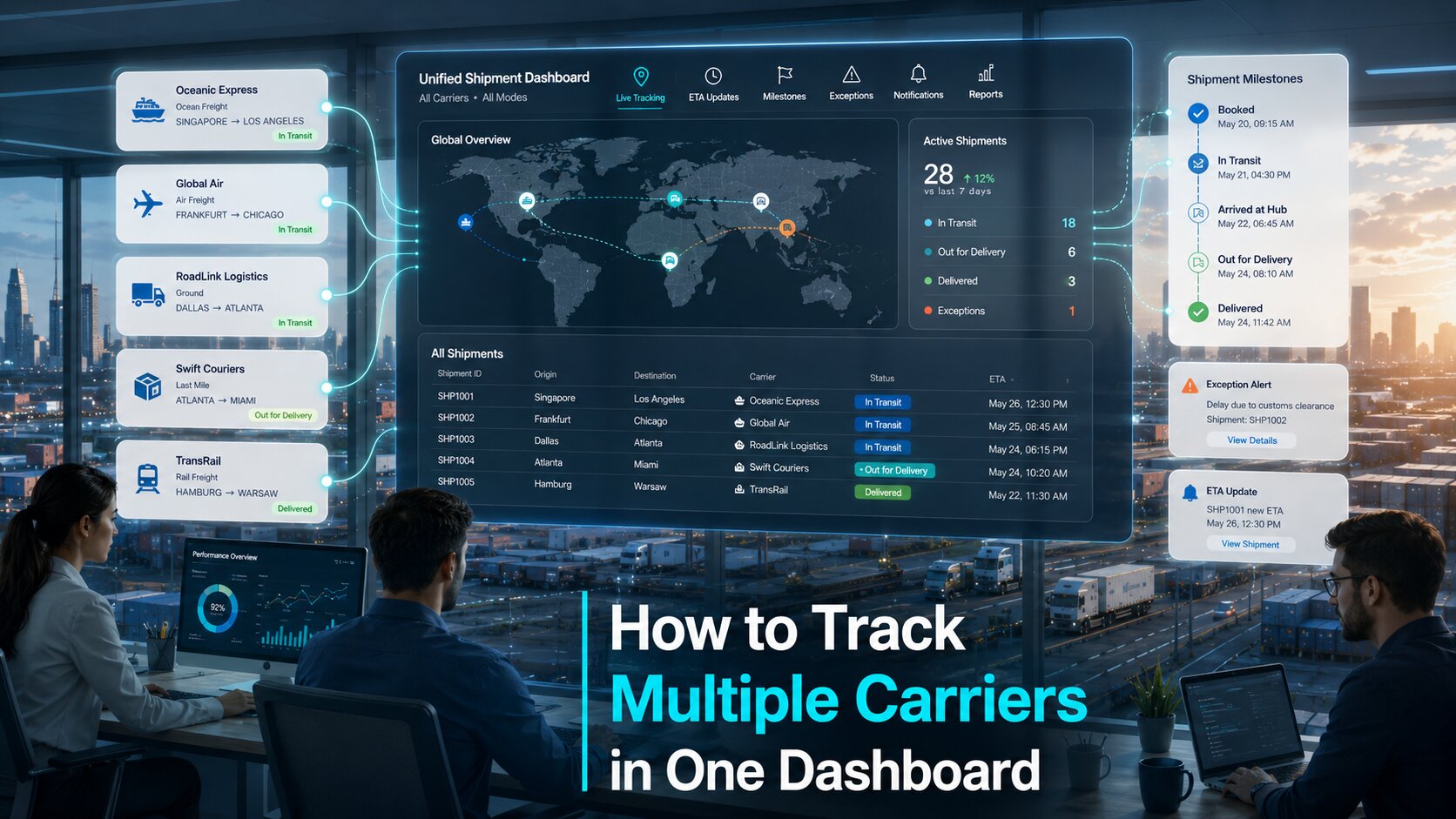
- Can the software consolidate information across multiple carriers and vendors in one dashboard?
- Are customer updates automated and generated based on shipment status and exceptions?
- Is auditability maintained through timestamped actions and visibility logs?
- Is there a workflow for exception resolution that includes root cause analysis and closure?
- Can the software generate performance reports for carriers and vendors based on tracking data?
These checkpoints help freight forwarders ensure their software supports operational control rather than just passive visibility.
Freight Operations Examples Illustrating Container Tracking Software Benefits
In one case, a freight forwarder avoided demurrage charges because their container tracking software immediately flagged a port congestion delay and routed an alternate carrier. Without real-time tracking, the delay would have been detected too late, resulting in extra costs.
Another team efficiently handled a missed transshipment milestone by assigning exception ownership through the platform, enabling clear communication with the customer and prompt carrier follow-up, thereby reducing escalation and financial impact.
An importer improved customs clearance timing after the documentation team used the integrated document validation feature to detect incomplete paperwork before the shipment arrived, preventing last-minute delays. This showed how software discipline directly affects shipment velocity.

Common mistakes
Neglecting milestone standardization: When shipment milestones vary or are inconsistently recorded, visibility is fragmented. Fix: Adopt a standard milestone set across all carriers to maintain clarity and comparability.
Ignoring exception alerts: Failing to act on exception notifications leads to unmanaged delays. Fix: Enforce an exception-first workflow where alerts trigger immediate ownership and resolution steps.
Fragmented carrier data sources: Using multiple disconnected platforms for different carriers creates siloed information. Fix: Centralize carrier data within one system or dashboard for unified tracking and simpler coordination.
Manual updates and follow-ups: Relying on emails and phone calls leads to delays and lost information. Fix: Automate status updates and carrier follow-ups through the tracking software to reduce manual work and errors.
Overlooking documentation links: Without associating documents to container events, compliance risks and customs delays increase. Fix: Integrate document workflows into shipment milestones with validation and handoffs tracked in the system.
Poor customer communication: Delayed or inconsistent shipment updates cause escalations and lost trust. Fix: Set up automated customer notifications tied to shipment visibility and exceptions for consistent transparency.
Frayto-Aligned Container Tracking Workflow
Booking Capture → Milestone Tracking → Exception Ownership → Carrier Coordination → Documentation Handoff → Customer Updates → Audit Review is a practical workflow aligned with Frayto’s approach. It emphasizes structured freight visibility, operating under the principle that every shipment event tracked must lead to clear ownership and timely action. This flow helps freight forwarders move from passive tracking to active shipment management.
By applying this framework to container tracking software, teams avoid the typical bottlenecks—manual follow-ups, data silos, and poor communication—that undermine shipment execution quality and increase cost exposure.
FAQ
Get in Touch!
We'll reach out shortly with the info you need. No spam, just a helpful conversation.
Recommended Blogs

Freightstory Technologies Private Limited
A-209, Dynasty Business Park, JB Nagar,
Andheri East, Mumbai- 400059, India


For Exporters & Importers
For Freight Forwarders
© 2026 Frayto. All Rights Reserved.