


Solutions
For Exporters & Importers

For Freight Forwarders and Logistics Service Providers
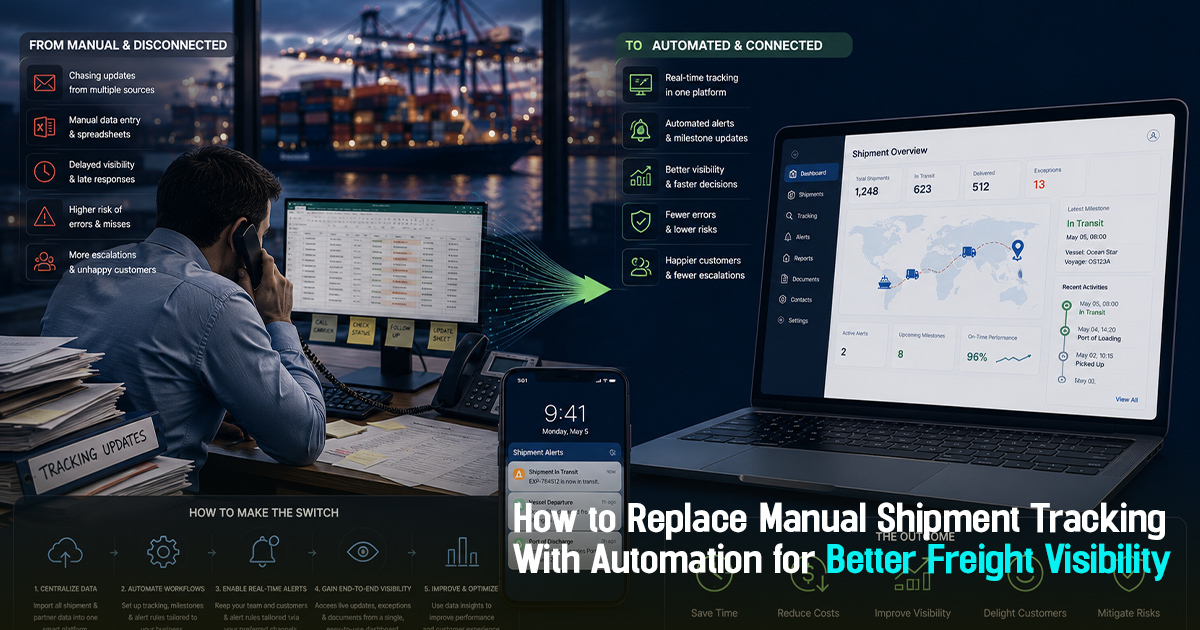
How to Replace Manual Shipment Tracking With Automation for Better Freight Visibility


7 Minutes
Automated shipment tracking refers to the use of technology platforms to capture, consolidate, and report shipment status updates without manual intervention. It matters because manual shipment tracking often leads to delayed updates, increased follow-ups, and visibility gaps that complicate freight operations. This article offers a practical guide to replacing manual shipment tracking with automation, focusing on workflow improvements, operational clarity, and real-time shipment visibility for freight forwarders, supply chain managers, and operations teams.
Why Manual Shipment Tracking Challenges Freight Operations
Manual shipment tracking often relies on emails, phone calls, and spreadsheets that create fragmented visibility gaps. These gaps hinder timely decision-making and increase the risk of missed ETAs or demurrage charges.
When teams track shipments manually, status updates are delayed, requiring repetitive follow-ups with carriers. This workload causes inefficiencies and increases operational costs due to slow exception resolution and poor customer communication.

A Practical Workflow for Automated Shipment Tracking
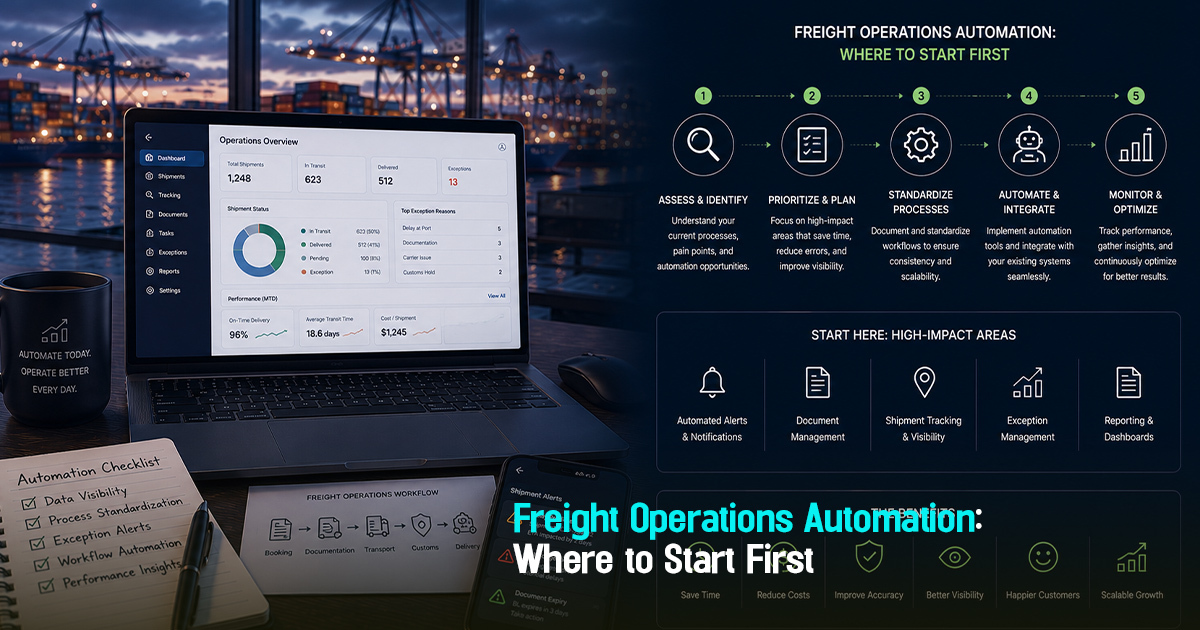
Implementing automation in shipment tracking requires structured workflows integrating multiple operational steps to ensure visibility and control. The workflow below aligns with real freight execution:
1. Booking Confirmation: Capture booking details with carrier and shipment specifics. This central record sets the tracking foundation.
2. Milestone Tracking: Automated feeds update key shipment milestones such as departure, transshipment, and arrival.
3. Exception Detection: The system flags deviations like delays or missed ETAs.
4. Timely Customer Updates: Automate notifications based on milestone and exception triggers.
5. Documentation Workflow Integration: Link shipment status with document readiness for customs clearance.
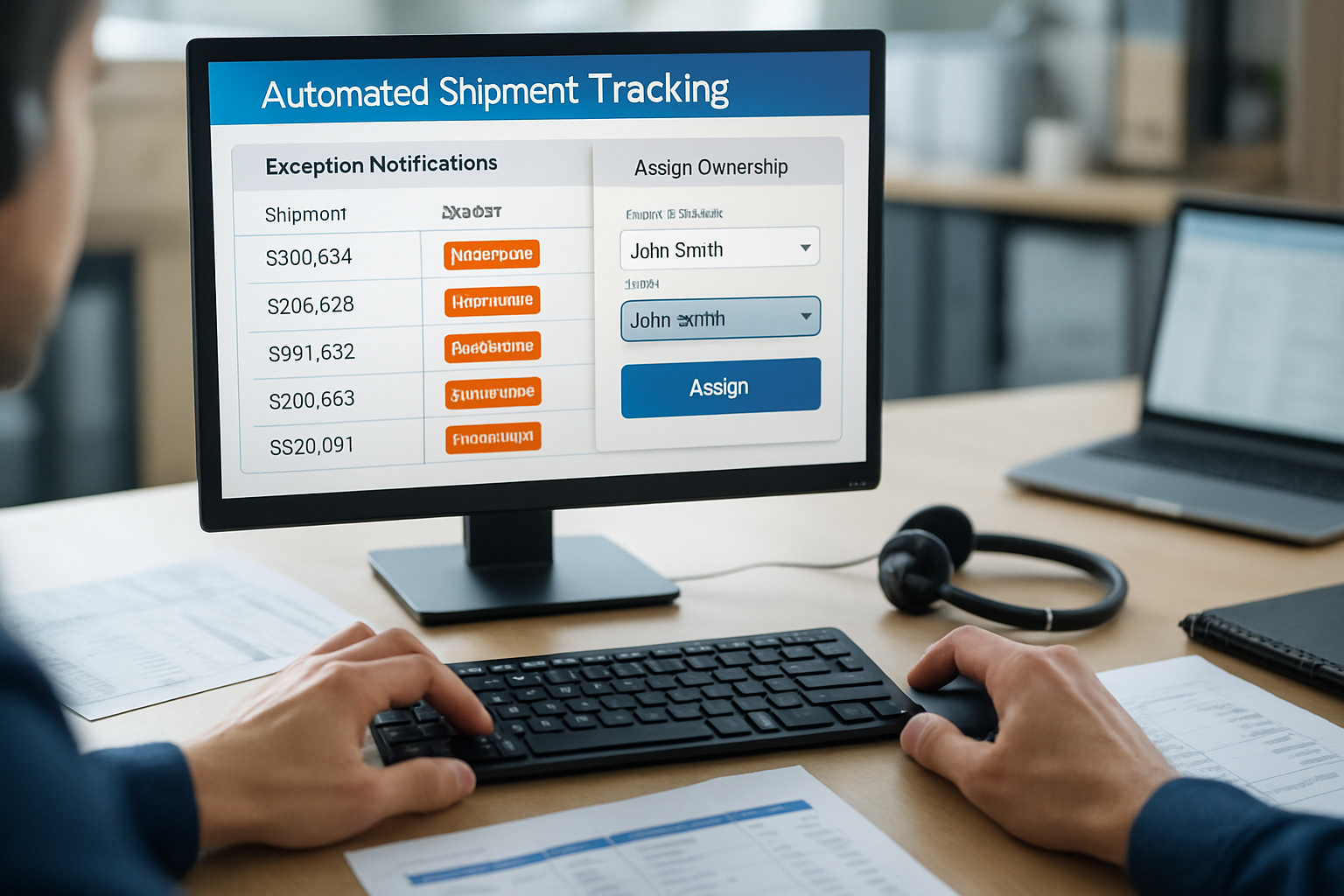
6. Carrier Follow-Ups: Assign ownership to follow up on exceptions quickly.
7. Post-Delivery Review: Audit shipment execution and vendor performance for continuous improvement.
This workflow replaces manual data entry and random follow-ups with centralized, real-time shipment visibility that supports informed operational decisions and reduces risks like detention and demurrage.
Role-Wise Guidance for Transitioning to Automation
Freight forwarders should focus on consolidating carrier data and managing exception ownership to minimize manual carrier portal checks. Importers and exporters must monitor automated ETA/ETD alerts and verify document status linked to shipment visibility. Operations teams need to track milestone adherence and respond promptly to exceptions flagged by automated systems. Procurement teams can use automated tracking data to validate carrier performance and control rate approval based on actual shipment execution.
For example, freight forwarders tracking multiple ocean carriers manually often face delays due to portal fatigue. Automation allows them to view all carrier milestones on one platform, assigning responsibility for exceptions and enabling proactive resolution. Importers benefit by preventing customs delays through synchronized document and shipment tracking, avoiding last-minute bottlenecks.
Process-Wise Breakdown: Before, During, and After Shipment Tracking Automation
Before automation: Teams collect booking data, manually check carrier portals and send email updates. Visibility is fragmented with low auditability.
During automation implementation: Integrate shipment tracking software with carrier APIs and internal systems to centralize milestone data. Define exception rules and automate alerts.
After automation: Operations monitor a unified dashboard showing real-time shipment status, proactive customer alerts, and documented carrier communications. This stage enables faster exception closure and audit readiness.
This lifecycle approach ensures gradual adoption, reducing disruption while driving better operational clarity and control in freight execution.
“Automated shipment tracking turns fragmented updates into decision-ready visibility, minimizing follow-ups and delays.
Automated shipment tracking turns fragmented updates into decision-ready visibility, minimizing follow-ups and delays.
"Automated shipment tracking turns fragmented updates into decision-ready visibility, minimizing follow-ups and delays."
Freight Operations Examples Highlighting the Need for Automation
Example 1: A freight forwarder manually checking multiple carrier portals missed an ETA change causing shipment congestion and additional demurrage charges.
Example 2: An importer faced customs clearance delays because document readiness was not linked to shipment status, creating last-minute coordination issues.
Example 3: An operations team lost time chasing carriers for exception updates, delaying customer communication and escalating costs.
Each case underscores how manual tracking impairs visibility and increases risks that automation mitigates through centralized data, milestone alerts, and exception ownership.
Practical checklist
To ensure a successful automation transition, check the following:
- Is booking data captured centrally with all carrier references?
- Are carrier milestones imported automatically via APIs or smart feeds?
- Are exceptions like ETA changes flagged and assigned immediately?
- Are customer updates automated and exception-driven?
- Is shipment visibility linked to documentation progress for customs?
- Is follow-up ownership on exceptions clearly assigned?
- Are manual spreadsheets and emails replaced with a centralized tracking tool?
- Are multiple carrier tracking systems consolidated into one dashboard?
- Is data auditability maintained to review shipment histories?
- Are teams trained on the new automated shipment tracking workflows?
These checks reduce visibility gaps and free operations from repetitive manual tasks, enabling faster and more accurate freight execution.
Common mistakes in replacing manual shipment tracking—and how to fix them
Mistake 1: Relying on partial automation without integrating all carrier data sources results in blind spots. Fix: Ensure all relevant carriers feed data into the system via APIs or EDI for true centralized visibility.
Mistake 2: Ignoring exception management where delays remain unassigned and untracked. Fix: Build exception-first workflows that detect and allocate responsibility immediately.
Mistake 3: Continuing manual customer updates despite automated tracking, leading to redundant communications. Fix: Automate timely customer alerts triggered by shipment milestones and exceptions.
Mistake 4: Underestimating documentation linkage causing clearance delays despite real-time shipment status. Fix: Integrate tracking with documentation workflows to ensure synchronized readiness.
Mistake 5: Skipping user training, causing poor adoption and fallback to manual methods. Fix: Conduct hands-on training emphasizing operational benefits and new metrics to track.
How to manage automated shipment tracking with a Frayto-aligned workflow
A structured workflow to replace manual tracking incorporates phases that promote visibility and operational control:
1. Booking → 2. Milestone Updates → 3. Exception Handling → 4. Customer Alerts → 5. Documentation Handoff → 6. Carrier Follow-Up → 7. Operational Audit. Each phase automates data capture, flags deviations, communicates proactively, and assigns accountability — reducing manual interventions and follow-ups.
Using a platform aligned with this approach ensures shipment tracking is centralized, exception-first, and auditable—key to practical freight visibility and execution clarity.
Why shipment tracking automation matters more than just tracking
Automated shipment tracking goes beyond simply recording status updates. It provides structured visibility that supports operational decisions, timely customer communication, and risk mitigation like reducing detention or demurrage.
Unlike manual tracking, automation integrates multiple carriers, cross-links documents, detects exceptions early, and enforces ownership — preventing delays and hidden costs. This is why transitioning to automated shipment tracking systems is essential for freight teams aiming to control complexity and improve performance.
How to select and deploy shipment tracking automation tools
Select track-and-trace solutions that consolidate carrier data feeds and provide real-time updates. Ensure the software supports exception management, automated alerts, and document linkage.
Deploy in phases: start with high-volume or critical lanes, configure exception rules specific to your operational needs, and train teams on exception ownership and customer communication. Measure improvement using KPIs like reduction in follow-up emails, exception resolution time, and customer satisfaction.
Comparing manual shipment tracking and automated shipment tracking
Manual tracking depends on repetitive human effort, multiple portals, and disparate communications, leading to delays and errors. Automated tracking centralizes data, detects exceptions immediately, and triggers workflow-driven actions.
For example, manual tracking might miss a last-minute ETA change causing demurrage, while automation alerts the team instantly to adjust downstream plans. This comparison clarifies why automation is critical for operational clarity and customer satisfaction.
Conclusion
Replacing manual shipment tracking with automated systems advances freight operations by centralizing data, enforcing exception-based workflows, and enabling real-time visibility. This structured approach reduces follow-ups, improves carrier coordination, and closes documentation gaps while proactively managing ETA/ETD changes and risks like detention and demurrage. Operations teams benefit from clear ownership, faster decision-making, and better customer communication. Ultimately, embracing automation is not just about tracking shipments but gaining centralized operational control and visibility. Freight teams who implement these practical steps will find more consistent execution and cost control, making their workflow more reliable and scalable in today’s complex global logistics environment.
Get in Touch!
We'll reach out shortly with the info you need. No spam, just a helpful conversation.


For Exporters & Importers
For Freight Forwarders
© 2026 Frayto. All Rights Reserved.