


Solutions
For Exporters & Importers

For Freight Forwarders and Logistics Service Providers
How Freight Forwarders Can Offer Self-Service Shipment Tracking


7 Minutes
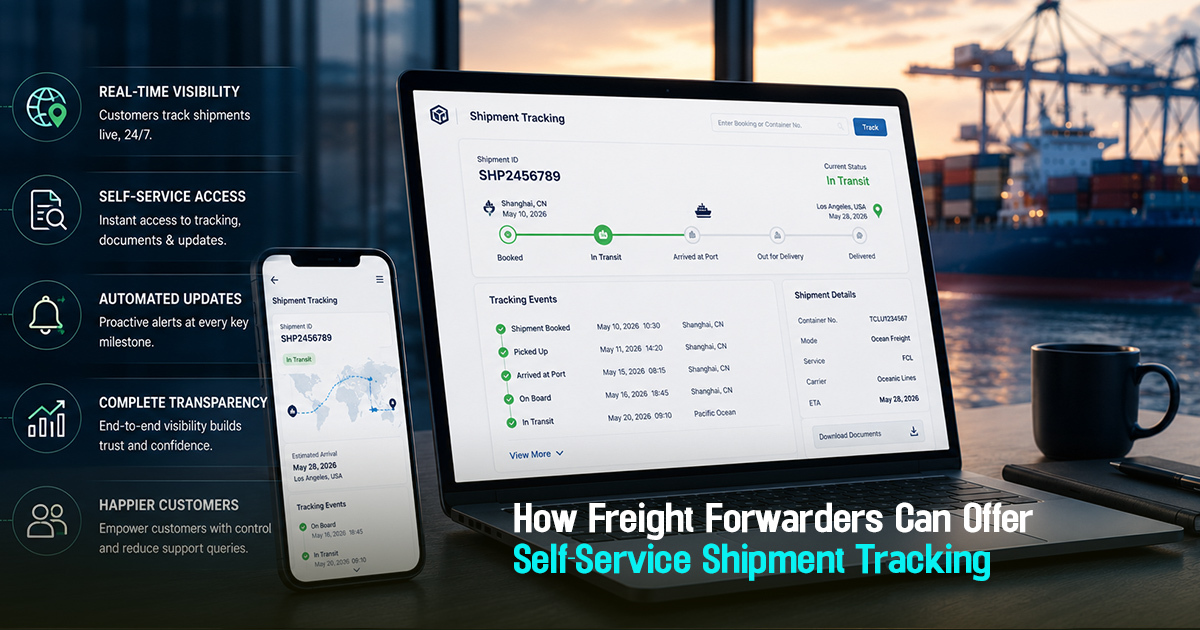
Self-service shipment tracking for freight forwarders is a system that allows customers to independently access real-time updates and visibility on their shipments without repeated manual inquiries. This capability matters operationally because it directly reduces the workload on freight forwarders' customer service teams, minimizes tracking errors, and improves stakeholder confidence through transparency. Freight forwarders often struggle with manual, fragmented tracking workflows causing delays in updates, missed ETA changes, and customer dissatisfaction. This article explores practical workflows, role responsibilities, and implementation stages to enable freight forwarders to successfully deploy self-service shipment tracking solutions with operational clarity and control.
What is Self-Service Shipment Tracking for Freight Forwarders?
Self-service shipment tracking enables customers and stakeholders to access shipment status and updates independently through digital portals or platforms, reducing the need for manual follow-ups and calls. This system integrates carrier data, milestone updates, and ETA/ETD monitoring centrally.
Operationally, it closes visibility gaps that cause delays in responding to shipment deviations or exceptions. Providing structured, real-time freight visibility through customer portals supports proactive exception handling and improves communication without increasing the service team's workload.

A Practical Workflow Framework for Self-Service Shipment Tracking
Implementing self-service shipment tracking requires a clear and structured workflow. Here is a practical 6-step framework freight forwarders can apply:
1. Data Integration: Centralize shipment data from carriers, including milestones and ETA/ETD updates, using APIs or EDI feeds to build a unified tracking system. This reduces data silos and manual portal checks.
2. Milestone Tracking: Track key shipment milestones such as booking confirmation, container receipt, loading, sailing, discharge, customs clearance, and final delivery. Automate alerts for milestone completion or delays.
3. Exception Handling: Identify deviations early (e.g., missed ETAs, transshipment delays) and route alerts internally to owners before informing customers. This supports a proactive communication flow.
4. Customer Portal Access: Provide customers secure, role-based access to shipment status, documents, and alerts through a self-service portal, reducing manual inquiries and improving transparency.
5. Automated Communication: Automate shipment status updates and ETA changes as alerts or notifications through the portal or email, ensuring timely and consistent customer communication.
6. Continuous Improvement: Use feedback and shipment performance data from the tracking platform to refine processes, improve data accuracy, and enhance user experience.
Role-Wise Responsibilities in Implementing Self-Service Tracking
Freight Forwarders: Coordinate with carriers and IT teams to integrate tracking data sources, validate milestone accuracy, and maintain real-time shipment visibility. Managing exception ownership before customer communication is key.
Importers and Exporters: Access the portal to monitor shipment milestones, ETAs, and exceptions directly, enabling timely planning for customs clearance and delivery. They benefit from reduced dependence on manual status calls and emails.
Operations Teams: Track daily shipment statuses and exceptions within the centralized system, assign ownership for follow-ups, and approve communication triggers to customers to maintain credibility and control.
Customer Service Teams: Use the system to respond only to escalated queries beyond automated updates, focusing on complex exceptions rather than routine tracking requests, reducing overload.
Stage-Wise Implementation Breakdown for Freight Forwarders
Before Shipment: Validate carrier data feeds, confirm milestones needed for customer tracking, and prepare the customer portal framework. Early ETA/ETD notification setup is critical.
During Transit: Monitor live shipment milestones and exceptions, assign internal owners for delays, and push real-time notifications to customers. Centralize all carrier updates to avoid fragmented information.
Before Delivery: Confirm customs clearance status and document readiness visible to customers via the portal. Flag potential detention or demurrage risks early to enable preventive action.
After Delivery: Review shipment performance and update customer feedback channels on portal usability. Analyze missed ETAs or exceptions for process improvement.
Centralized visibility and proactive exceptions reduce customer calls and build operational trust in freight forwarding.
Freight Operations Examples Demonstrating Self-Service Tracking Benefits
Example 1: A freight forwarder integrated carrier ETA feeds to trigger early alerts for a delayed vessel transit, allowing internal teams to proactively notify exporters and arrange alternate transit, reducing customer escalations.
Example 2: An importer accessed real-time shipment location and customs clearance status via a self-service portal, enabling warehouse scheduling and avoiding demurrage by timely pickup.
Example 3: Customer service teams redirected daily tracking inquiries to the self-service portal, reducing phone calls by 40%, while focusing efforts on managing exceptions and documentation handoffs.
Practical checklist
Use this checklist to ensure your freight forwarding operation is ready to offer effective self-service shipment tracking:
1. Are carrier milestone events integrated centrally and updated in real-time?
2. Is ETA and ETD tracking automated with alert triggers for changes?
3. Has a secure customer portal or dashboard been set up with role-based access?
4. Are shipment exceptions flagged internally before customer notifications?
5. Is automated communication enabled for routine shipment updates and exceptions?
6. Are documentation status and customs clearance visible within the portal?
7. Is ownership assigned for handling delays and follow-ups in case of exceptions?
8. Are customer inquiries reduced through training and portal promotion?
9. Is feedback collected periodically to improve portal usability and data accuracy?
10. Are data quality checks in place to prevent incorrect or missing tracking details?

Common mistakes
1. Fragmented Data Sources: Relying on multiple carrier portals without centralizing data causes delays and inaccurate updates. Fix: Integrate carrier feeds and unify tracking to ensure consistency and timeliness.
2. Delayed Exception Ownership: Not assigning internal owners quickly for shipment exceptions leads to late or inaccurate customer communication. Fix: Establish clear responsibility and escalation rules within tracking workflows.
3. Limited Customer Access: Providing only manual updates or restricted portal features frustrates customers and increases support calls. Fix: Offer comprehensive, role-specific portal access including documents and real-time status.
4. Ignoring ETA/ETD Changes: Failure to monitor and communicate estimated arrival changes causes planning disruptions and demurrage risk. Fix: Automate ETA tracking and notification triggers within the system.
5. Overloading Customers with Data: Sharing too many minor updates creates noise and reduces trust in the tracking system. Fix: Focus communications on critical milestones and actionable exceptions.
6. Lack of Continuous Improvement: Not collecting feedback or analyzing shipment performance results in stale systems. Fix: Periodically review data accuracy and portal user experience for ongoing refinement.
Frayto-Aligned Workflow for Visibility-First Freight Forwarding
A Frayto-aligned shipment tracking workflow enhances self-service capabilities through these steps: Booking → Data Integration → Milestone Tracking → Exception Management → Customer Portal Update → Automated Notifications → Performance Review. Each stage features centralized data, ownership clarity, and an exception-first approach that improves operational control and customer experience.
This workflow ensures that data flows seamlessly from booking to final delivery while exceptions and ETA changes trigger real-time alerts internally and externally. Centralized tracking dashboards reduce manual carrier portal checks and phone inquiries, allowing freight forwarders to scale without increasing customer service overhead.
Why Freight Forwarders Struggle with Shipment Tracking
Many freight forwarders face challenges due to fragmented carrier data, manual milestone updates, and lack of centralized visibility. This fragmentation causes delayed ETA updates, missed shipment exceptions, and inconsistent communication to customers, generating unnecessary operational fire-fighting.
For example, a forwarder managing ocean and air shipments manually may fail to promptly detect a delayed vessel sailing, causing the importer to miss critical customs filing deadlines and incur demurrage charges. Such issues underscore the need for automated, centralized self-service tracking solutions that delegate routine updates to customers and free operations teams to focus on risk management.
Comparing Manual Tracking vs Self-Service Shipment Tracking Solutions
Manual tracking relies on phone calls, emails, and carrier portal checks leading to inefficiencies and scattered information. Self-service shipment tracking solutions centralize data, automate ETAs and milestone updates, and empower customers with direct dashboards, reducing workload and errors.
This shift means customer service teams handle fewer routine queries and focus on exceptions requiring human intervention. A centralized platform also enhances auditability with consistent shipment histories and communication trails, aiding compliance and dispute resolution.
How to Manage Customer Communication with Self-Service Tracking
Clear communication boundaries are essential. Inform customers upfront about the availability of the self-service portal and emphasize its role as the primary source for routine shipment updates and documents. Reserve direct customer contact for exception notifications or complex queries only.
This approach builds trust through transparency and consistent updates, while reducing manual communication efforts. Automated alerts for milestone completions and ETA changes keep customers informed without delays, limiting escalation risks.
Conclusion
Offering self-service shipment tracking is no longer optional for freight forwarders aiming to improve operational efficiency and customer satisfaction. By adopting a centralized shipment visibility approach with structured data integration, milestones, and exception-first workflows, freight teams reduce manual follow-ups and costly errors. Empowering customers through secure portals and automated communication channels ensures that updates reach stakeholders timely and reliably. Such operational clarity is crucial for managing shipment complexity, reducing detention and demurrage risks, and building trust in logistics partnerships. Freight forwarders should prioritize implementing self-service tracking systems with clear role ownership, continuous data quality checks, and scalable workflows. This practical shift leads to better decision-making, scalable operations, and improved service levels without increasing team overhead.
Get in Touch!
We'll reach out shortly with the info you need. No spam, just a helpful conversation.
Recommended Blogs
Freightstory Technologies Private Limited
A-209, Dynasty Business Park, JB Nagar,
Andheri East, Mumbai- 400059, India


For Exporters & Importers
For Freight Forwarders
© 2026 Frayto. All Rights Reserved.