


Solutions
For Exporters & Importers

For Freight Forwarders and Logistics Service Providers
Hapag-Lloyd Container Tracking: What Data Matters Most for Shipment Visibility


7 Minutes
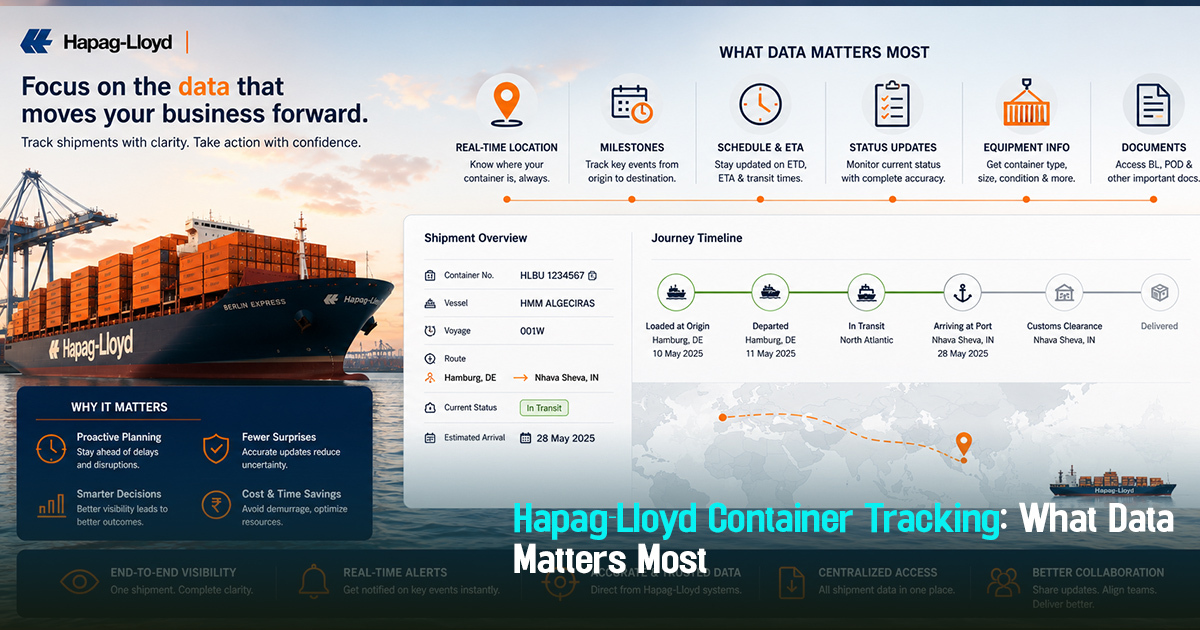
Hapag-Lloyd container tracking refers to monitoring freight containers transported by Hapag-Lloyd shipping lines through real-time and milestone shipment data. Operationally, this tracking is crucial because it enables logistics teams to gain shipment visibility that prevents delays, controls detention risk, and improves customer communication. Without the right tracking data, freight teams struggle with incomplete insights leading to missed ETA updates, duplicated follow-ups, and poor decision-making. This article dives into the key container tracking data points that matter most in Hapag-Lloyd container tracking, offering practical workflows and checks to help logistics professionals maintain operational clarity.
What is Hapag-Lloyd Container Tracking and Why It Matters
At its core, Hapag-Lloyd container tracking is the process of accessing and managing shipment status updates, ETD/ETA milestones, exception alerts, and document status for ocean containers carried by Hapag-Lloyd. This tracking integrates both vessel movement data and intermodal transfer points along the shipment lifecycle.
Operationally, this matters because Hapag-Lloyd is a major ocean carrier with complex global routes where visibility gaps can lead to costly delays, detention, and poor customer communication. Using structured container tracking systems focused on critical tracking data reduces manual workload and enhances decision speed.
Key Data Points in Hapag-Lloyd Container Tracking
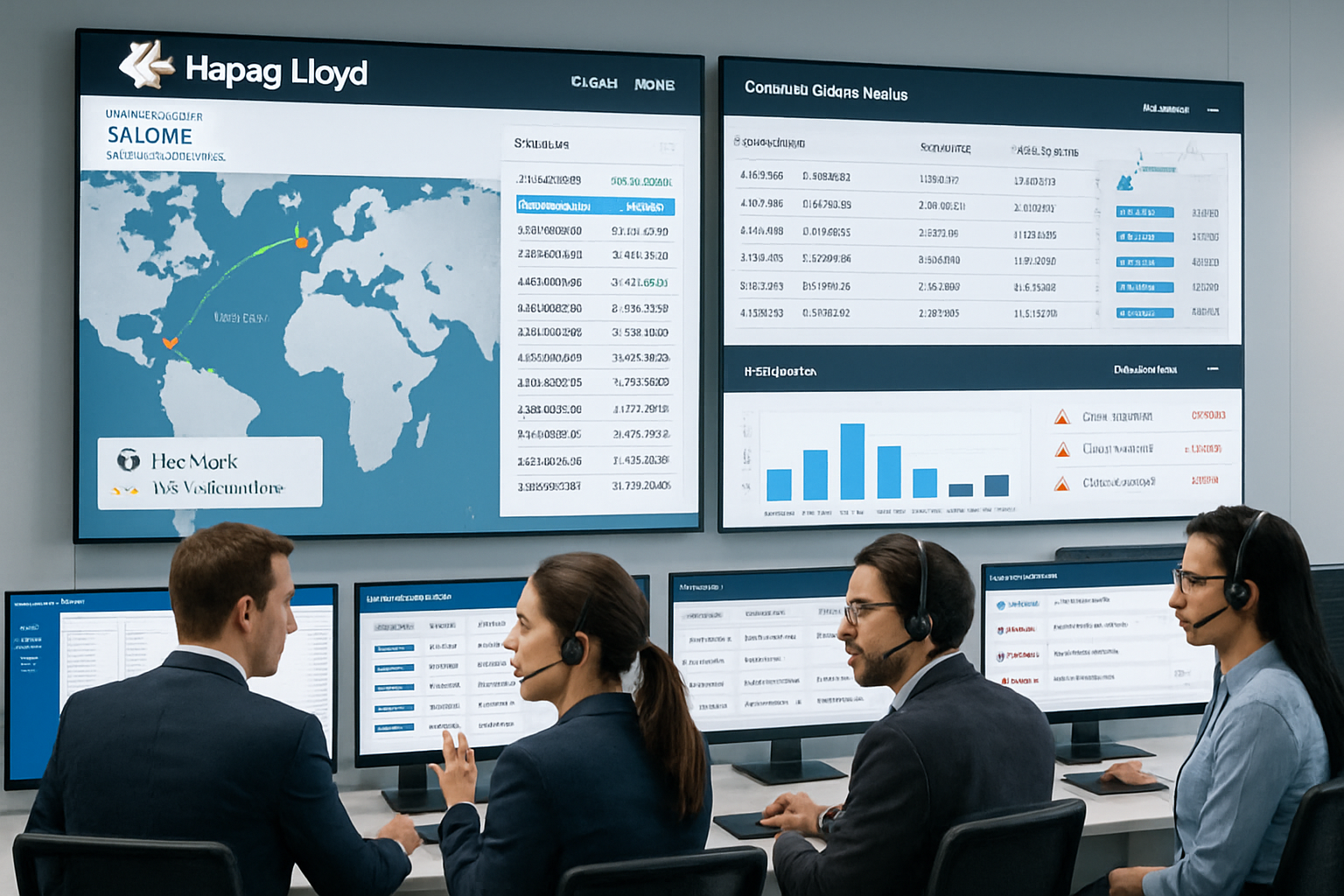
The most important shipment tracking data from Hapag-Lloyd includes container number status, ETD (Estimated Time of Departure), ETA (Estimated Time of Arrival), vessel name, booking number, and exception alerts. Additionally, intermodal transfer points such as port discharge and gate-in/out events must be monitored.
Missing any of these data points can create blind spots in freight visibility. For instance, a delayed vessel ETA without updated ETD reduces the ability to plan last-mile logistics or manage customer expectations. A detailed focus on these freight tracking data elements improves accuracy and exception response.
A Practical Workflow for Hapag-Lloyd Container Tracking
A structured workflow for managing Hapag-Lloyd container tracking can be outlined in these steps: Booking Confirmation → Milestone Monitoring → Exception Detection → Carrier Follow-Up → Customer Communication → Documentation Control → Exception Closure.
First, confirming booking and container numbers ensures correct tracking initiation. Then, monitoring ETD, ETA, vessel sailing, and port gate-in/out milestones provides operational clarity. Early detection of exceptions such as delays or document issues enables timely carrier follow-up. Proactive customer updates based on tracking data build trust. Finally, ensuring documentation handoffs and closing exceptions prevent operational leakage and audit risks.
Role-Wise Responsibilities in Tracking Hapag-Lloyd Containers
Freight forwarders must coordinate closely with Hapag-Lloyd for timely milestone updates and handle exceptions through carrier communication. Importers and exporters should monitor tracking data such as ETD, ETA, and gate movements for arrival planning and customs preparation.
Operations teams focus on centralized shipment visibility dashboards to track milestone adherence and flag anomalies early. Meanwhile, procurement and documentation teams are responsible for validating booking confirmations, ensuring bill of lading accuracy, and monitoring document status to avoid clearance delays.
Before, During, and After Shipment Tracking Stages
During the pre-shipment stage, verify booking details, container numbers, and compliance documents. In the transit stage, track ETD and ETA changes, monitor vessel movements, and watch for port handling milestones. Post-arrival, confirm container gate-in/out events and final delivery milestones to close the shipment lifecycle.
This staged approach creates clarity at each phase, reducing risk of detention or demurrage by identifying delays early and ensuring proper documentation flow for customs clearance.
Visibility without exception ownership delays response; clear assignment accelerates decisions and prevents costly shipment disruptions.
Practical checklist
Use this checklist to improve Hapag-Lloyd container tracking accuracy and operational effectiveness:
- Is the Hapag-Lloyd container number correctly recorded and verified?
- Are ETD and ETA values updated centrally upon any change?
- Are milestone events like vessel departure, port gate-in/out, and discharge monitored in real time?
- Are exceptions such as delays or missing documents flagged immediately?
- Are carrier communications and follow-ups documented with clear ownership?
- Are customer shipment status updates sent proactively for exceptions or delays?
- Is documentation status (BL, customs clearance) tracked alongside physical container movement?
- Are intermodal transfer events (rail, truck) linked to container tracking?
- Is detention and demurrage risk assessed based on visibility of handling milestones?
- Is final delivery milestone confirmed to close the tracking record?

Common mistakes in Hapag-Lloyd container tracking
Mistake 1: Ignoring ETD updates leads to planning gaps. Delayed ETD information affects downstream logistics. Fix: Assign dedicated ownership for monitoring vessel ETD changes daily.
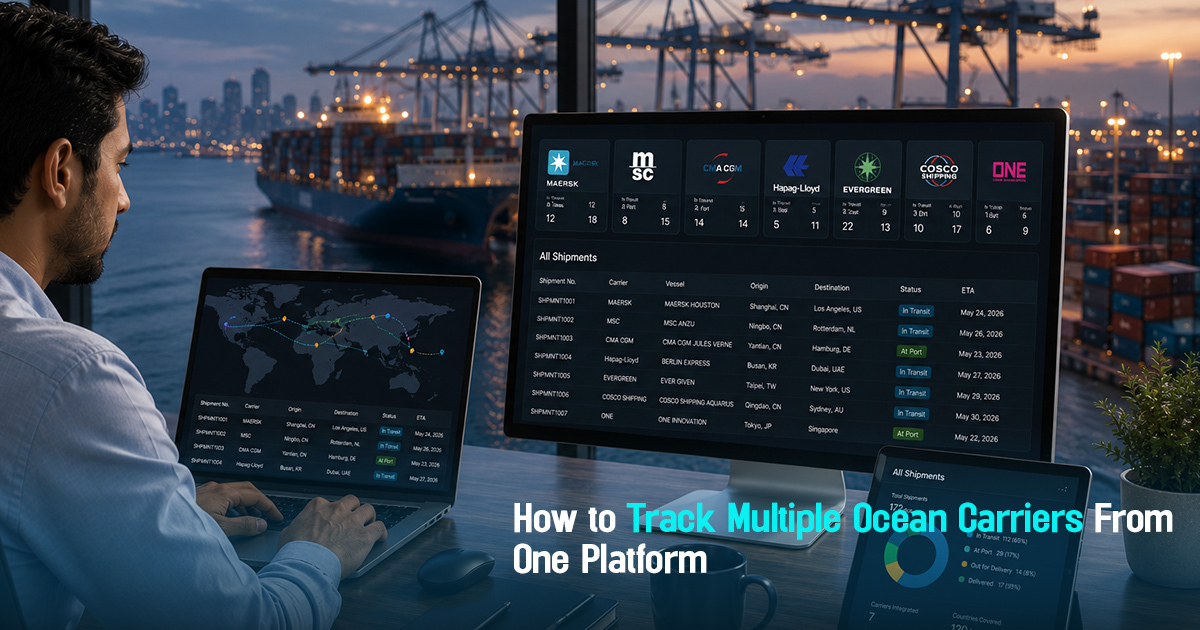
Mistake 2: Over-reliance on carrier portals without centralized tracking. Multiple portals cause fragmented visibility and duplicate effort. Fix: Use unified shipment tracking systems consolidating Hapag-Lloyd data.
Mistake 3: Missing documentation status makes customs clearance unpredictable. Late BL or export docs cause shipment holdups. Fix: Integrate document management with container tracking workflows.
Mistake 4: Lack of exception ownership delays follow-ups. Without clear responsibility, carrier delays worsen. Fix: Assign and track exception owners immediately on alert.
Mistake 5: Not linking intermodal tracking reduces end-to-end visibility. Container moves by road or rail are often missed. Fix: Include intermodal event data in tracking platforms.
Frayto-Aligned Workflow for Effective Container Tracking
Frayto’s approach to container tracking aligns with a workflow emphasizing structured data and exception management: Booking Confirmation → Centralized Tracking Dashboard → Automated Milestone Updates → Exception-First Alerts → Carrier and Vendor Coordination → Customer Status Updates → Documentation and Compliance Control.
This framework reduces manual follow-ups and ensures decision-ready shipment visibility, enabling logistics teams to focus on exception resolution rather than chasing status.
Three Examples of Hapag-Lloyd Container Tracking in Practice
Example 1: A freight forwarder missed an ETA change communicated late by Hapag-Lloyd, resulting in detention at destination. Centralized ETD/ETA updates could have triggered an earlier exception alert and avoided demurrage charges.
Example 2: An importer tracked their Hapag-Lloyd container only via email updates and lost sight of gate-in/out events, causing customs delays. Integrating intermodal container tracking provided clear visibility through port handling milestones.
Example 3: Operations teams manually checked multiple Hapag-Lloyd portals, creating duplication and errors. Adoption of an aggregated tracking platform dramatically improved accuracy and freed resources to handle exceptions proactively.
FAQ
Q1: What is Hapag-Lloyd container tracking?
Hapag-Lloyd container tracking is monitoring the status and location of shipping containers transported by Hapag-Lloyd lines, including key milestones like ETD, ETA, and port events, to provide shipment visibility.
Q2: How does real-time shipment tracking improve container visibility?
Real-time tracking provides up-to-date shipment data, allowing logistics teams to detect delays early, manage exceptions proactively, and communicate accurate status to customers.
Q3: How can I avoid detention and demurrage using Hapag-Lloyd tracking data?
By closely monitoring ETD, ETA, gate-in/out milestones, and timely documentation handoffs, you can predict delays and engage carriers early to avoid detention and demurrage fees.
Q4: Are container tracking APIs available for Hapag-Lloyd data integration?
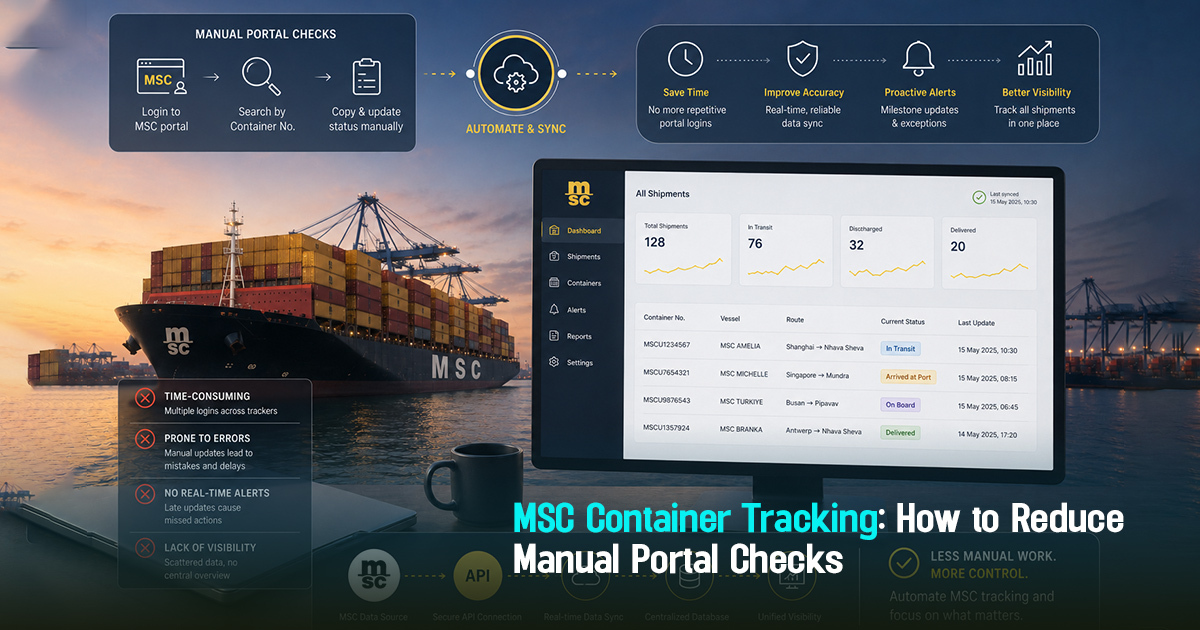
Yes, container tracking APIs enable integration of Hapag-Lloyd shipment data into centralized platforms, enhancing visibility without manual portal checks and reducing operational follow-ups.
Q5: What is the difference between vessel tracking and container tracking?
Vessel tracking monitors the ship's location, while container tracking focuses on the specific container's status including loading, transshipment, and gate events providing detailed shipment-level visibility.
Q6: How do I track intermodal container movements beyond ocean freight?
Integrating data from rail and truck handlers with ocean vessel events into your container tracking system enables end-to-end shipment visibility across all transport modes.
Q7: Why is exception ownership important in container tracking?
Exception ownership assigns responsibility for timely follow-up on delays or anomalies, reducing follow-up gaps and enabling faster resolution of shipment issues.
Conclusion
Hapag-Lloyd container tracking is more than accessing vessel locations; it involves structured monitoring of critical shipment data such as ETD, ETA, milestone events, and documentation status to achieve operational clarity and shipment visibility. Freight teams that integrate centralized tracking dashboards, assign clear exception ownership, and communicate proactively reduce risks of detention, demurrage, and customer escalations. Embracing a systematic, exception-first tracking workflow incorporating intermodal container movements and documentation handoffs creates decision-ready insights. This clarity empowers logistics, procurement, documentation, and customer service teams to work cohesively with minimal friction, improving shipment reliability and operational control on every Hapag-Lloyd container shipment.
Get in Touch!
We'll reach out shortly with the info you need. No spam, just a helpful conversation.
Recommended Blogs

Freightstory Technologies Private Limited
A-209, Dynasty Business Park, JB Nagar,
Andheri East, Mumbai- 400059, India


For Exporters & Importers
For Freight Forwarders
© 2026 Frayto. All Rights Reserved.