


Solutions
For Exporters & Importers

For Freight Forwarders and Logistics Service Providers
How Digital Freight Procurement Helps Reduce Freight Costs


4 Minutes
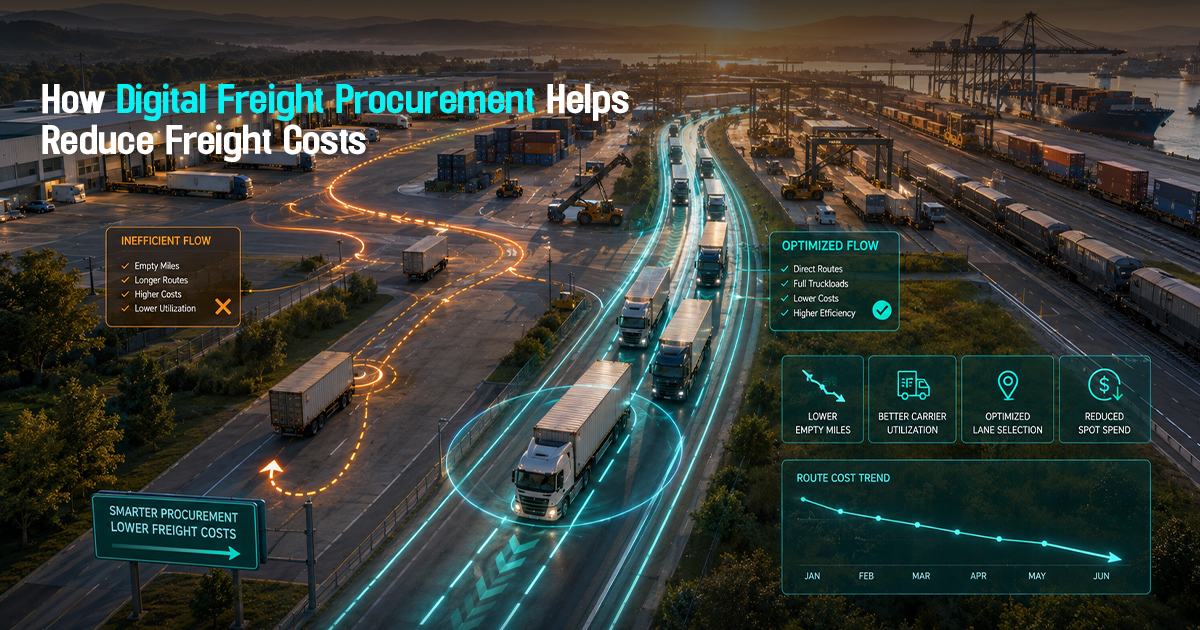
Digital freight procurement refers to the use of technology platforms and software solutions to manage and automate the sourcing, bidding, and contracting of freight services. This operational capability matters because freight costs form a significant portion of supply chain expenses, and inefficient procurement workflows can lead to inflated rates, missed deadlines, and increased risk of charges such as detention and demurrage. Despite its importance, many logistics teams still operate with manual or semi-automated procurement processes, resulting in limited visibility, slow vendor responses, and difficulty negotiating competitive freight rates.
What is digital freight procurement?
Digital freight procurement involves using specialized software to manage freight sourcing, rate comparisons, and bid evaluations in a centralized, transparent, and efficient manner. It replaces manual spreadsheets and email exchanges with automated workflows and real-time data.
This process enhances operational visibility by consolidating carrier offers, shipping schedules, and cost components, enabling logistics teams to make data-driven decisions quickly and minimize unnecessary expenses.

Key benefits of digital freight procurement for cost reduction
Improved rate transparency and benchmarking allow logistics teams to compare multiple carrier quotes side-by-side with greater accuracy. Real-time data helps uncover cost-effective options without sacrificing service levels.
Automated bidding processes reduce cycle times and enable wider freight sourcing from vetted carriers, which increases competition and drives down prices. Structured workflows standardize vendor responses, facilitating clearer comparisons and more effective freight rate negotiation.
How digital tools optimize the freight bidding process
Freight bidding software automates request for proposal (RFP) workflows, allowing simultaneous invitations to multiple carriers. This reduces back-and-forth communication delays and prevents lost follow-ups. A centralized system tracks all bids, offers, and changes in one place for reliable auditing.
With documented bid histories, logistics managers gain more control and confidence during freight rate negotiation. Additionally, digital procurement platforms can flag unusual rates or terms, highlighting potential cost risks before contracts are finalized.
Strategic freight procurement workflows for cost control
A well-defined digital procurement workflow consists of sequential steps from initial shipment profiling through to contract award and order confirmation. Consistent workflows reduce errors and improve accountability across procurement teams and freight partners.
Typical stages include shipment details capture, automated RFP dispatch, bid collection and comparison, negotiation, contract finalization, and confirmation of booking details with carriers. Integrating visibility tools during this cycle helps monitor exceptions that may affect cost outcomes, such as transit delays or documentation lapses.
Structured digital procurement workflows enhance visibility and reduce freight cost risks effectively.
Practical checklist
How to implement digital freight procurement to reduce costs:
- Assess current freight procurement processes and identify manual or inconsistent tasks.
- Select freight sourcing software with automated bidding and real-time rate comparison features.
- Define standardized freight procurement workflows covering RFP distribution to contract awarding.
- Ensure carrier onboarding and vetting are integrated for reliable rate submissions.
- Train teams on usage focused on data visibility, exception monitoring, and negotiation tactics.
- Set up dashboards to track bidding cycle times, carrier responses, and freight cost variances.
- Regularly audit bid histories and freight spend to refine sourcing strategies.
Common mistakes
Ignoring data consistency and workflow discipline leads to fragmented information and missed cost control opportunities. Without an enforced digital process, teams often revert to ad hoc communication and manual rate comparisons.
Failing to monitor exceptions during freight bidding and contract execution can result in unforeseen charges or delays. Lack of visibility into carrier performance or delayed follow-ups with vendors also increase risk of detention and demurrage penalties, inflating freight costs unnecessarily.
Digital freight procurement versus traditional sourcing
Traditional freight sourcing typically depends on emails, phone calls, and spreadsheets for rate gathering, which is slow and error-prone. By contrast, digital procurement platforms centralize these functions, enabling faster response times and better rate auditing.
Digital freight procurement also facilitates wider carrier participation, encouraging competitive bidding, while traditional methods often limit sourcing to familiar or local vendors. The result is increased freight cost savings with improved compliance and auditability in digital workflows.
Integrating procurement with freight management technology
Connecting digital procurement to freight management systems enables operational teams to monitor shipments post-contract, track milestones, and anticipate exceptions that affect costs. This end-to-end visibility supports proactive decision-making to minimize demurrage, detention, and late penalties.
Moreover, linking procurement data with shipment tracking improves coordination with carriers and vendors, streamlining communications and accelerating dispute resolution, resulting in stronger cost control across the supply chain.

Conclusion
Adopting digital freight procurement practices is essential for logistics and freight forwarding teams aiming to reduce freight costs effectively while maintaining operational control. Structured digital workflows empower teams to streamline the freight bidding process, enforce consistency, and enhance transparency around pricing and vendor performance. Integrating sourcing with broader freight management technology creates synergy that mitigates risks such as demurrage and detention, improving budget predictability. Ultimately, digital freight procurement equips supply chain decision-makers with data, visibility, and control required to negotiate smarter rates and optimize logistics procurement strategies in today’s dynamic freight environment. For teams managing complex freight operations, embracing these digital tools fosters stronger collaboration, reduced manual effort, and sustained cost savings.
Get in Touch!
We'll reach out shortly with the info you need. No spam, just a helpful conversation.
Recommended Blogs
Freightstory Technologies Private Limited
A-209, Dynasty Business Park, JB Nagar,
Andheri East, Mumbai- 400059, India


For Exporters & Importers
For Freight Forwarders
© 2026 Frayto. All Rights Reserved.