


Solutions
For Exporters & Importers

For Freight Forwarders and Logistics Service Providers
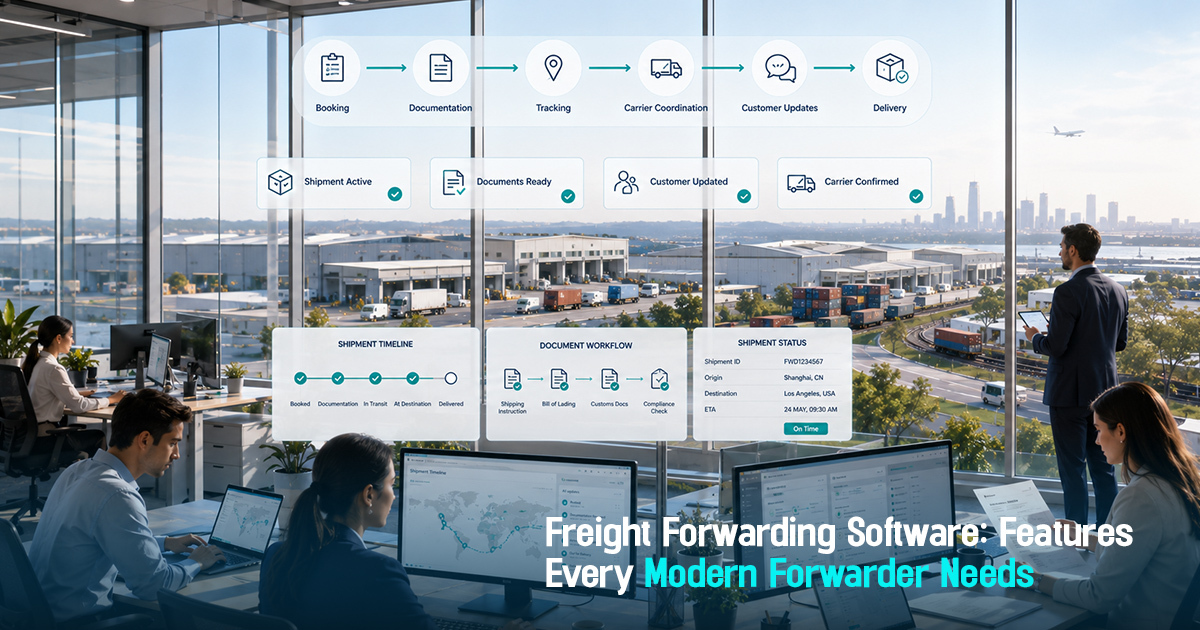
Freight Forwarding Software: Essential Features Every Modern Forwarder Needs


4 Minutes
Freight forwarding software is a specialized logistics management tool designed to streamline and optimize the freight forwarding process. Operationally, it matters because it addresses common inefficiencies related to shipment visibility, vendor coordination, documentation management, and exception handling. Despite the increasing adoption of such software, many freight forwarders still struggle with fragmented tools, lack of real-time data, and manual workflows that impede timely decision-making and cost control.
What is Freight Forwarding Software?
Freight forwarding software refers to digital platforms tailored for managing freight operations, including booking, documentation, shipment tracking, compliance, and vendor oversight. It integrates various freight processes under one system for improved operational efficiency.
By centralizing freight operations, this software enables freight forwarders to maintain real-time visibility over shipments and automate critical tasks, reducing errors and delays across supply chains.
Key Challenges in Freight Forwarding Operations
Freight forwarders often face operational challenges such as poor shipment visibility, fragmented documentation processes, inconsistent vendor follow-ups, and lack of automation in procurement and exception handling.
These issues cause delays, increased costs, and compliance risks, undermining customer service and impacting the ability to control detention, demurrage, and exceptions.

Essential Freight Forwarding Software Features
Modern freight forwarding software must include shipment tracking and milestone visibility, enabling teams to monitor ETD and ETA updates, detect exceptions early, and respond proactively.
Additionally, features like document management for customs and regulatory compliance, automated booking workflows, and vendor communication modules are crucial for smooth freight operations.
Practical checklist
To effectively evaluate or implement freight forwarding software, freight forwarders should verify the software supports the following workflow steps:
- Booking management with real-time carrier and rate integration
- Digital document handling with validation workflows for customs and compliance
- End-to-end shipment visibility including ETD, ETA, and exception alerts
- Automated notifications to internal teams and customers on shipment status
- Vendor and carrier coordination tools with audit trails and communication logs
- Exception handling modules for demurrage, detention, and delay resolution
- Reporting and analytics for cost control and operational performance
These core elements ensure freight forwarding teams operate with greater clarity and control across freight workflows.
Structured freight software workflows reduce delays and improve vendor coordination across shipments.
How Freight Forwarding Software Supports Process Improvement
Integration of freight forwarding software into daily operations enforces structured workflows and automates repetitive tasks, minimizing manual errors and administrative delays.
By prioritizing exception-first approaches, operations teams can quickly identify shipment issues and act decisively on vendor follow-ups and compliance gaps, improving overall service reliability.
Comparison: Manual Workflows vs. Freight Forwarding Automation
Manual freight forwarding workflows often rely on spreadsheets, email communications, and disparate systems, leading to information silos and delayed responses.
In contrast, freight forwarding automation delivers centralized data, real-time updates, and automated alerting, significantly reducing operational friction and enhancing cross-team coordination.
Common mistakes
Many freight forwarding teams adopt software without aligning it to their operational workflows, leading to underutilization and poor data quality.
Neglecting exception management features or failing to enforce document validation processes can cause costly shipment delays, compliance violations, and increased detention or demurrage charges.
Integrating Freight Procurement Automation with Freight Forwarding Software
Combining freight forwarding software with specialized freight procurement technology can streamline vendor rate discovery, bidding, and contract management, enabling more efficient freight spend control.
Tools such as freight procurement automation with InstaProcure complement forwarding platforms by enhancing auditability and reducing manual procurement errors, forming part of an integrated freight operations ecosystem.

Ensuring Compliance and Visibility Across Freight Operations
Freight forwarding software must support robust compliance checkpoints, ensuring documentation accuracy and adherence to customs, carrier, and regulatory requirements.
Real-time visibility engines provide continuous monitoring that aids in proactive exception handling, reducing risks associated with shipment delays and unexpected costs like detention.
Conclusion
Freight forwarding software is a critical tool for modern freight forwarders aiming to improve operational efficiency, reduce risks, and enhance customer communication. By focusing on integrated workflow visibility, structured exception handling, and compliance discipline, forwarders gain the clarity needed to control costs, avoid shipment delays, and manage vendors more effectively. Incorporating automation and digital freight solutions within core freight operations not only addresses everyday challenges but also supports sustainable process improvement. Teams that align software capabilities closely with their real freight forwarding workflows unlock the full potential of technology, driving operational consistency and measurable performance gains. For forwarders seeking advanced freight operations management, aligning tools with procurement automation and centralized tracking workflows ensures comprehensive control across the freight lifecycle.
References: FIATA, Drewry, U.S. Customs and Border Protection
Get in Touch!
We'll reach out shortly with the info you need. No spam, just a helpful conversation.
Recommended Blogs
Freightstory Technologies Private Limited
A-209, Dynasty Business Park, JB Nagar,
Andheri East, Mumbai- 400059, India


For Exporters & Importers
For Freight Forwarders
© 2026 Frayto. All Rights Reserved.