


Solutions
For Exporters & Importers

For Freight Forwarders and Logistics Service Providers
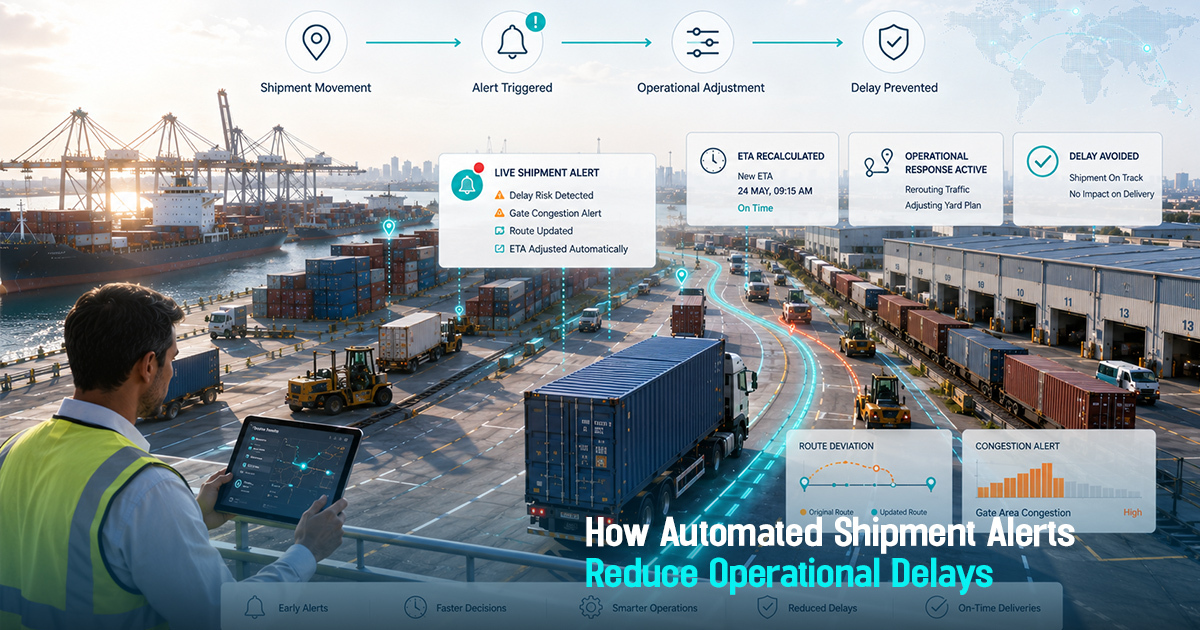
How Automated Shipment Alerts Reduce Operational Delays


4 Minutes
Automated shipment alerts are digital notifications triggered by shipment status changes, providing real-time updates to logistics teams and stakeholders. Operationally, they matter because timely, accurate information on shipments directly impacts decision-making and helps prevent costly delays in complex freight workflows. However, many freight operations struggle with scattered communication and reactive shipment monitoring, leading to late responses and increased detention or demurrage risks. This article explores how deploying automated shipment alerts can proactively reduce operational delays and improve overall freight management efficiency.
What Are Automated Shipment Alerts?
Automated shipment alerts are system-generated notifications sent when predefined shipment milestones or exceptions occur. These alerts notify logistics teams about important events such as departure, arrival, customs clearance, or exceptions like delays and damages. They transform passive monitoring into active management.
By shifting from manual shipment checks to automated alerts, operations gain immediate awareness of shipment status changes. This enables faster response times to exceptions and improved coordination among freight forwarders, carriers, and customers, crucial for minimizing disruptions in freight operations.

Why Timely Alerts Matter in Shipment Tracking
One of the biggest challenges in freight operations is the delay in recognizing and reacting to shipment issues. Late identification of exceptions such as customs holdups, routing changes, or carrier delays causes a cascade of operational disruptions. Automated shipment alerts provide real-time notification, allowing teams to act promptly.
With instant insights from these alerts, logistics teams can initiate exception workflows early, coordinate with vendors swiftly, and update customers proactively. This reduces friction in the supply chain and limits exposure to detention, demurrage, or additional transportation costs.
Key Components of an Effective Shipment Alert System
An effective automated shipment alert system includes accurate milestone tracking, configurable alert rules, exception monitoring, and multi-channel notification capabilities. These elements ensure alerts are relevant, timely, and actionable.
Customizing alert triggers based on shipment type, customer requirements, and risk tolerance strengthens operational control. Clear alert categorization helps teams prioritize responses, aligning with broader logistics operational visibility and compliance goals.
Practical checklist
How to implement and leverage automated shipment alerts effectively:
- 1. Define critical shipment milestones and exception scenarios to monitor.
- 2. Select shipment tracking solutions capable of real-time data integration.
- 3. Configure alert thresholds and notification rules customized to your operation.
- 4. Ensure multi-channel delivery (email, SMS, platforms) for alerts to reach all relevant teams.
- 5. Establish clear exception-handling workflows linked to alerts for immediate action.
- 6. Train teams on interpreting alerts and responding within defined timelines.
- 7. Continuously review alert effectiveness and adjust triggers to reduce noise and false positives.
Timely automated alerts shift freight operations from reactive to proactive exception management.
Common mistakes
A frequent operational pitfall is overloading teams with excessive or irrelevant alerts, which causes alert fatigue and reduces timely responses. Balancing alert sensitivity is key.
Another mistake is relying on fragmented tracking tools that lack integration or real-time data, leading to blind spots in visibility. Failure to link alerts with structured exception handling workflows also limits their practical impact on reducing delays.
Automated alerts vs manual shipment tracking
Automated shipment alerts deliver immediate updates without manual intervention, while manual tracking relies on periodic status checks and ad hoc communication. This difference affects responsiveness and operational proactivity.
Choosing automated alerts minimizes human errors, reduces follow-up burden, and enhances overall freight status updates frequency and accuracy. This allows logistics teams to allocate resources more efficiently and focus on exception resolution rather than constant monitoring.
Integrating alerts with shipment monitoring tools
Integrating automated alerts into comprehensive shipment monitoring tools centralizes logistics operational visibility. This integration supports end-to-end freight visibility and collaborative communication.
For example, real-time shipment tracking with Instatrac enables seamless alert delivery linked directly to shipment status dashboards and exception management workflows. Such centralized control reduces delays caused by information silos and improves auditability for freight procurement and compliance checkpoints.

Conclusion
Automated shipment alerts are a practical tool essential for reducing delays and enhancing operational clarity in freight logistics. By providing real-time, relevant notifications, they enable logistics teams to respond promptly to shipment status changes and exceptions. Integrating these alerts into structured workflows supports better vendor coordination, customer communication, and compliance management. This proactive approach helps minimize common issues like detention, demurrage, and miscommunication delays, which often escalate costs and disrupt supply chains. For operations teams aiming to improve shipment tracking and reduce friction, investing in an effective automated alert system and embedding it within centralized monitoring tools is a sound strategy. Adopting this method not only supports greater supply chain visibility but also drives more reliable and efficient freight management processes overall.
For further reading on improving shipment visibility and operational efficiency, consider resources from UNCTAD, IMO, and CBP.
Get in Touch!
We'll reach out shortly with the info you need. No spam, just a helpful conversation.
Recommended Blogs
Freightstory Technologies Private Limited
A-209, Dynasty Business Park, JB Nagar,
Andheri East, Mumbai- 400059, India


For Exporters & Importers
For Freight Forwarders
© 2026 Frayto. All Rights Reserved.