


Solutions
For Exporters & Importers

For Freight Forwarders and Logistics Service Providers
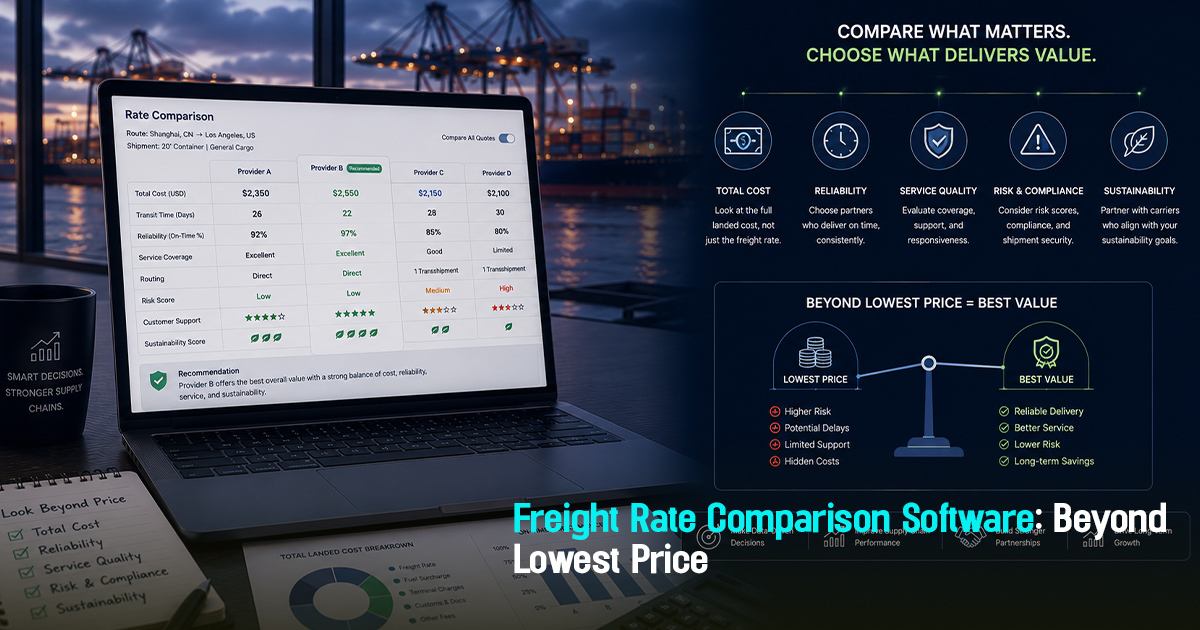
Freight Rate Comparison Software: Beyond Lowest Price


5 Minutes
Freight rate comparison software is a tool that helps logistics teams evaluate and compare freight quotes from multiple vendors systematically, focusing on more than just the lowest price. Operationally, relying solely on the cheapest offer can lead to hidden costs, service delays, and increased risk. This article examines how freight procurement benefits from structured rate comparison that integrates cost optimization, vendor coordination, and auditability to support better decision-making and control.
What is Freight Rate Comparison Software?
Freight rate comparison software is a digital solution enabling logistics teams to collect, standardize, and evaluate freight quotes across carriers and trade lanes. It goes beyond manual spreadsheets by offering structured vendor comparison that includes accessorial charges, transit times, and service conditions.
Such software ensures freight cost optimization through transparent pricing analysis and streamlines procurement workflows by automating quote validation and approval stages, reducing errors and follow-ups.

A Practical Freight Rate Comparison Workflow
To maximize the value of freight rate comparison software, freight teams can follow a structured workflow:
- Rate Request Definition: Clearly specify shipment details, routing options, accessorial needs, and timelines to vendors.
- Centralized Vendor Quote Collection: Gather quotes in one platform to avoid scattered emails and manual consolidation.
- Comprehensive Quote Evaluation: Compare rates including all surcharges, transit times, and vendor reliability metrics.
- Approval & Validation: Enforce approval discipline ensuring cost transparency and policy compliance before booking.
- Booking Coordination: Confirm carrier availability and lock rates while aligning shipment milestones.
- Shipment Tracking Integration: Link rate details with shipment visibility to monitor ETA, exceptions, and cost-to-serve.
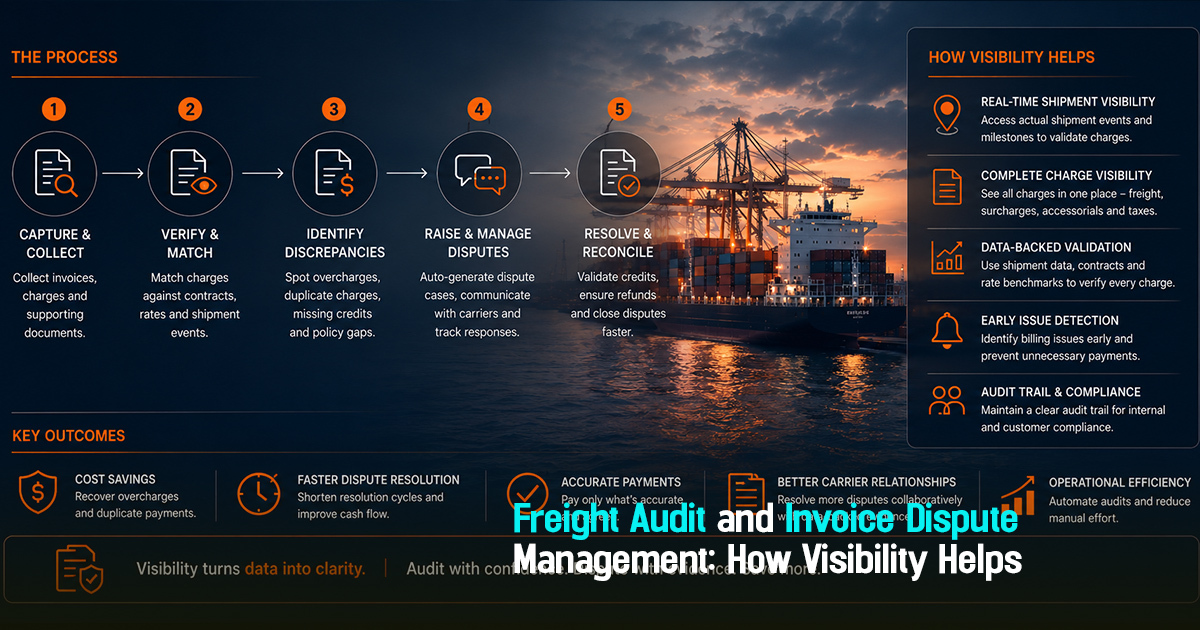
- Post-Shipment Audit: Review invoice versus quoted rates, accessorial approvals, and vendor performance for continuous improvement.
This framework enhances operational clarity and reduces risks associated with hidden costs and manual errors.
Role-wise Responsibilities in Freight Rate Comparison
Freight forwarders must ensure all quotes are collected promptly, standardized for comparison, and vendor performance data is updated for informed decisions.
Importers and exporters should monitor key cost components, clarify routing and service constraints, and provide timely feedback on carrier performance affecting procurement choices.
Operations teams need to link approved rates with shipment tracking, highlight exceptions impacting cost or timelines, and coordinate with procurement on deviations.
Procurement teams must validate rate transparency, compare accessorial charges rigorously, enforce policy compliance during approvals, and maintain audit trails for future negotiations.
Documentation and customer service teams should communicate booking confirmations, track contract terms, and escalate exceptions impacting invoicing or client commitments.
Stage-wise Implementation Breakdown: Before, During, and After Booking
Before booking: Define shipment parameters precisely and ensure the request for quotes (RFQ) captures all cost factors including surcharges, transit time expectations, and vendor qualifications.
During booking: Utilize freight rate comparison software to centralize quotes, assess trade-offs between cost and service, and enforce workflow discipline ensuring only validated rates proceed to booking.
After booking: Integrate rate details with shipment tracking platforms to monitor ETA/ETD changes, handle exceptions, and prepare for invoice reconciliation linked to the initial comparison data.
Structured rate comparison links cost, service, and execution for smarter freight decisions.
Practical Checklist for Using Freight Rate Comparison Software
- Are all freight quotes collected centrally and on the same terms?
- Is the software capturing accessorial charges and service conditions, not just base rates?
- Is there a standardized vendor comparison dashboard with performance metrics?
- Are approval workflows automated to enforce procurement policy compliance?
- Is rate data linked to actual booking and shipment tracking systems?
- Are exceptions in quotes and booked shipments flagged for review early?
- Is historical vendor performance analyzed post-shipment for future bidding?
- Are quote validity dates tracked to avoid unapproved bookings?
- Is audit trail maintained, including changes, approvals, and deviations?
- Are customer and documentation teams updated with relevant booking and contract details?
Regularly auditing this checklist helps avoid hidden costs and manual errors.

Common Mistakes in Freight Rate Comparison and How to Fix Them
- Ignoring accessorial charges: Teams focus only on base rates, leading to unexpected expenses. Fix: Use software that includes all surcharge elements for accurate comparison.
- Lack of approval discipline: Bookings occur before final rate validation, increasing risk. Fix: Enforce automated approval flows linking quotes to bookings.
- Manual data consolidation: Scattered quotes cause errors and slow decisions. Fix: Centralize quotes within a standardized platform for real-time comparison.
- Overemphasis on lowest price: Leads to service disruptions and delayed deliveries. Fix: Evaluate transit time, vendor reliability, and exceptions alongside rates.
- Disconnect between procurement and operations: Operations face unexpected service failures because procurement decisions lacked visibility. Fix: Integrate rate and shipment tracking data for end-to-end control.
- Ignoring quote validity periods: Leads to booking with outdated or expired rates. Fix: Track quote expiration dates and require re-validation before booking.
Frayto-Aligned Freight Procurement Workflow
Frayto recommends a procurement workflow focusing on control and visibility: Rate Request → Vendor Comparison → Quote Validation → Approval → Booking → Tracking → Exception Closure. This ensures procurement decisions are connected to operational execution, minimizes follow-ups, and catches deviations before they impact cost or service.
For example, when an importer faced unexpected detention charges due to a missed accessorial in the initial quote, this structured workflow prevented recurrence by integrating exception alerts with procurement reviews.
Real Freight Operations Examples
1. A freight forwarder managing multiple ocean carriers manually missed crucial accessorial fees in bids, causing invoice disputes. Implementing centralized rate comparison software helped identify the total landed cost upfront, reducing disputes by 30%.
2. An importer approved a seemingly low-cost air freight quote without reviewing transit times, resulting in missed project deadlines and expedited charges. Structured freight procurement software enabled comparing transit and cost parameters side-by-side, improving budgeting accuracy.
3. A logistics head noticed frequent exceptions after bookings because procurement and operations teams weren’t aligned. By integrating rate data with shipment tracking systems, the team prioritized follow-ups based on impact and cost risk, cutting delay resolution times significantly.
Get in Touch!
We'll reach out shortly with the info you need. No spam, just a helpful conversation.


For Exporters & Importers
For Freight Forwarders
© 2026 Frayto. All Rights Reserved.