


Solutions
For Exporters & Importers

For Freight Forwarders and Logistics Service Providers
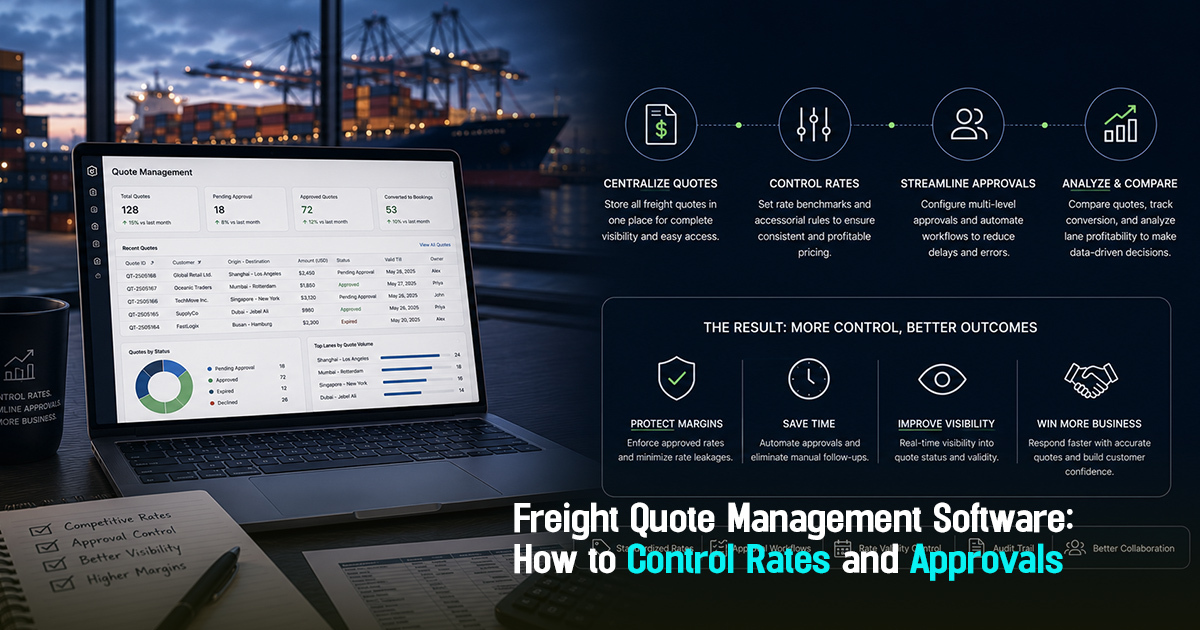
Freight Quote Management Software: How to Control Rates and Approvals


6 Minutes
Freight quote management software is a specialized tool designed to streamline the complex processes of freight rate control and approval workflows in logistics procurement. Effectively managing quotes is crucial to maintaining cost efficiency and ensuring operational clarity, especially when freight costs directly impact supply chain profitability. Without structured quote management, teams risk approval delays, inconsistent pricing, and loss of auditability, leading to increased freight expenses and operational confusion. This article offers a practical, workflow-focused guide on using freight quote management software to control rates and approvals, helping freight forwarders, supply chain managers, and logistics operations teams implement disciplined, transparent procurement processes.
What is Freight Quote Management Software?
Freight quote management software centralizes the collection, comparison, validation, and approval of freight rate quotes from multiple vendors. It enforces approval discipline and maintains audit trails across the procurement process.
This software reduces manual errors and ensures freight rate control by making all vendor offers visible in one structured platform. It also supports compliance and cost management by tracking accessorial charges and routing details alongside the core rates, allowing logistics teams to make informed procurement decisions.

A Practical Freight Quote Management Workflow Framework
Effective freight quote management consists of six key workflow steps. Each stage ensures that rates are controlled, approvals are disciplined, and freight expenses are tracked accurately.
The six-stage workflow includes:
- Rate Request Initiation: Define shipment details clearly and send out requests to multiple carriers and vendors simultaneously to get comparable quotes.
- Vendor Quote Consolidation: Centralize all vendor responses in one platform for easy comparison of rates, routing, and accessorial charges.
- Quote Validation and Compliance Check: Verify that all charges, terms, and conditions comply with company policies and regulatory requirements before proceeding.
- Approval Workflows: Route quotes through predefined approval hierarchies to ensure appropriate authorization before booking.
- Booking and Confirmation: Convert approved quotes to bookings, ensuring all operational teams have access to the rate and carrier details.
- Audit and Expense Tracking: Maintain records of quotes, approvals, and bookings for audit purposes and ongoing freight cost management.
Implementing this structured workflow reduces approval delays and prevents freight cost leaks by maintaining operational clarity and centralized control.
Role-Wise Guidance for Freight Quote Management
Different roles have distinct responsibilities in freight quote management that contribute to rate control and approval efficiency. Clear role delineation can streamline collaboration and accountability.
Here’s what key roles should focus on:
- Freight Forwarders: Coordinate timely rate requests with multiple carriers and consolidate vendor quotes accurately to ensure complete comparison.
- Importers and Exporters: Monitor key cost factors, request transparent rate breakdowns, and verify vendor compliance with company procurement standards.
- Operations Teams: Track approval status and booking confirmations to align freight execution with negotiated terms and expected service levels.
- Procurement Teams: Validate rate offers for accuracy, scrutinize accessorial and routing charges, and enforce timely approvals following organizational policy.
- Documentation Teams: Ensure all contractual documents and rate confirmations are properly collected, disseminated, and archived for audit readiness.
Before, During, and After Booking: A Process-wise Implementation Plan
Effective freight quote management requires distinct operational focus before, during, and after the booking stage. Each phase demands specific controls to maintain rate integrity and approval clarity.
Here’s how teams should approach each phase:
- Before Booking: Confirm shipment details, compare multiple vendor quotes on uniform terms, check for hidden charges, and get formal approvals using freight approval workflows.
- During Booking: Ensure booking references, carrier confirmation, and rate details are accurately recorded and shared centrally to all relevant teams for execution.
- After Booking: Track invoicing versus approved rates, document any accessorial charges or deviations, and review vendor performance for future procurement decisions.
Centralized quote management and disciplined approvals prevent costly errors and streamline freight procurement workflows.
Practical checklist
Use this checklist during freight quote management to ensure rate control and smooth approvals. Regular compliance with these checks supports operational clarity and cost efficiency.
- Are all vendor quotes collected in a centralized platform with consistent shipment details?
- Have accessorial and routing charges been itemized and validated against company policies?
- Is there a logged and auditable approval workflow before any booking is confirmed?
- Are quote validity dates tracked to prevent booking on expired rates?
- Are exceptions or deviations from standard rate terms flagged and reviewed before approval?
- Have any negotiated discounts or special terms been documented clearly in the system?
- Is booking confirmation matched with the approved quote to avoid discrepancies?
- Are post-booking rate audits conducted regularly to identify cost leaks or unauthorized approvals?
- Is communication maintained with vendors for timely updates on rate revisions or cancellations?
- Are freight expense tracking reports generated and shared with key stakeholders for transparency?
Concrete Freight Operations Examples
Practical examples demonstrate common pain points and solutions in freight quote management. These illustrate why structured software and workflows are essential.
Example 1: A procurement team approved a freight quote without checking the accessorial surcharges, leading to unexpected detention fees. With centralized quote management software, such hidden charges would have been visible before approval, allowing cost-saving negotiations.
Example 2: A freight forwarder manually compiled rates from multiple carrier emails, leading to errors in vendor comparison and a delay in approvals. Adopting freight quote management software streamlined quote consolidation and shortened approval cycles significantly.
Example 3: An operations team faced shipment delays because booking was done before final rate approvals, resulting in revision disputes and rescheduling. A defined approval workflow integrated with booking systems would have prevented premature confirmations.

Common mistakes
Even experienced logistics teams can fall into frequent pitfalls when managing freight quotes and approvals. Identifying these mistakes and applying practical fixes is crucial for operational improvements.
- Mistake: Approving quotes without centralized comparison leads to missed cost-saving opportunities.
Fix: Use freight quote management software to collate all vendor quotes consistently, enabling valid comparisons before approval. - Mistake: Ignoring accessorial charges during quote evaluation causes unexpected expenses.
Fix: Validate all line items including surcharges as part of the quote validation step to ensure total cost transparency. - Mistake: Lack of approval audit trails increases compliance risk and disputes.
Fix: Enforce formal approval workflows with digital sign-offs and maintain logs accessible for audits and reviews. - Mistake: Booking shipments before completing approvals results in rework and cost overruns.
Fix: Implement strict process controls that block bookings until approvals are electronically confirmed. - Mistake: Delayed communication with carriers about rate changes affects operational coordination.
Fix: Integrate milestone tracking and exception alerting with procurement workflows to trigger timely vendor and team updates.
A Frayto-aligned Freight Quote Management Workflow
A typical structured workflow using freight quote management software follows the sequence: Rate Request → Vendor Comparison → Quote Validation → Approval → Booking → Tracking → Exception Closure.
Practical context: Freight procurement teams initiate rate requests specifying shipment parameters. Vendors submit quotes consolidated centrally. Validation teams check rates and accessorials, routing them through multi-level approvals. Once approved, operations teams confirm bookings, track shipment progress with milestone visibility, handle exceptions promptly, and ensure exceptions are closed with minimal cost impact. This tight integration of procurement and execution greatly reduces errors and cost leakage.
Get in Touch!
We'll reach out shortly with the info you need. No spam, just a helpful conversation.


For Exporters & Importers
For Freight Forwarders
© 2026 Frayto. All Rights Reserved.