


Solutions
For Exporters & Importers

For Freight Forwarders and Logistics Service Providers
Daily Status Report for Freight Forwarders: A Practical Format Guide


5 Minutes
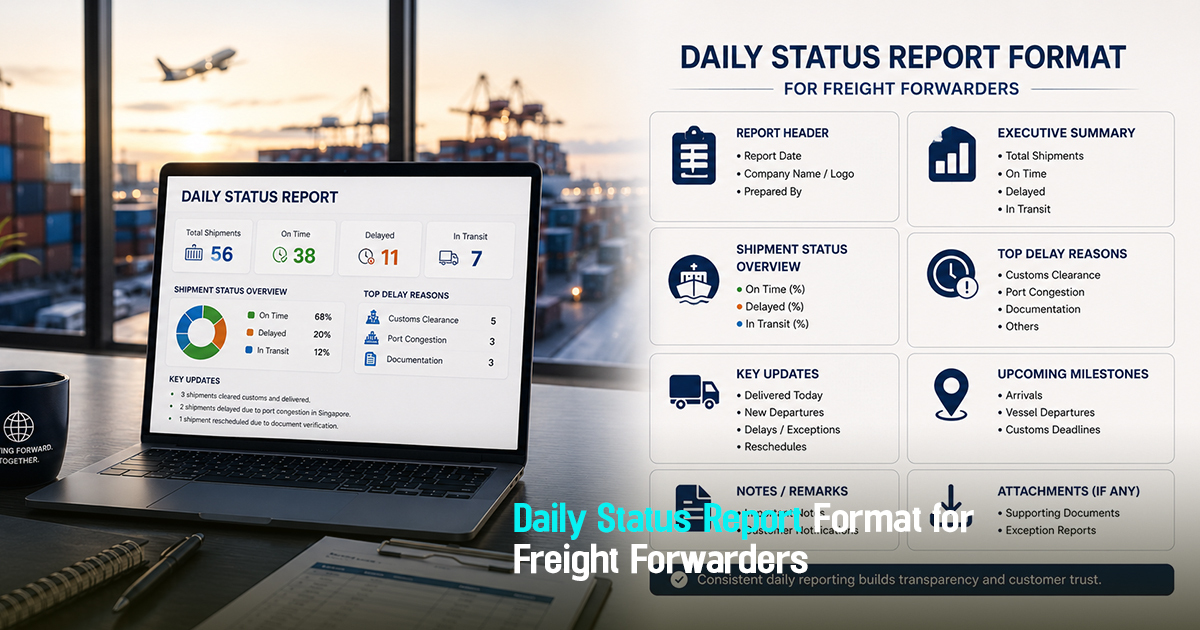
A daily status report for freight forwarders is a standardized document that captures the key shipment updates, exceptions, vendor status, and operational issues to provide clear visibility and control over freight operations. Operationally, it matters because freight forwarding involves multiple stakeholders, complex shipment stages, and tight timelines, making timely and structured communication essential to avoid delays and missed milestones. This article explains how to design a comprehensive daily status report for freight forwarders focusing on visibility, coordination, milestone tracking, exception handling, and communication workflows to improve decision-making and reduce risks.
What Is a Daily Status Report for Freight Forwarders?
A daily status report is a routine logistics document that consolidates current shipment progress, exceptions, and vendor updates into a clear, accessible format for operational teams and customers. Its primary goal is to ensure shipment visibility and timely issue resolution.
It tracks key milestones such as booking confirmation, loading, transit, customs clearance, and delivery while highlighting ETA/ETD changes, exceptions, and the status of documentation handoffs. By doing so, it enables structured communication and decision-ready freight operations across carriers, vendors, and customers while maintaining auditability and exception ownership.

A Practical Workflow Framework for Daily Freight Status Reporting
Building a daily status report involves these workflow steps: Shipment Identification & Prioritization, Milestone Data Collection, Exception Highlighting, Vendor Coordination, Customer Communication, and Documentation Review.
First, identify critical shipments with upcoming activities or risks. Next, collect milestone data such as ETD, ETA updates, loading status, and customs checkpoints. Flag any exceptions like delays or missing documents and assign clear owners for resolution. Coordinate with carriers and vendors to validate information and actions. Prepare concise customer communication highlighting current shipment status and any concerns. Finally, review document handoffs to ensure no bottlenecks. Each step supports centralized operational control and improves freight visibility.
Key Sections to Include in a Daily Status Report
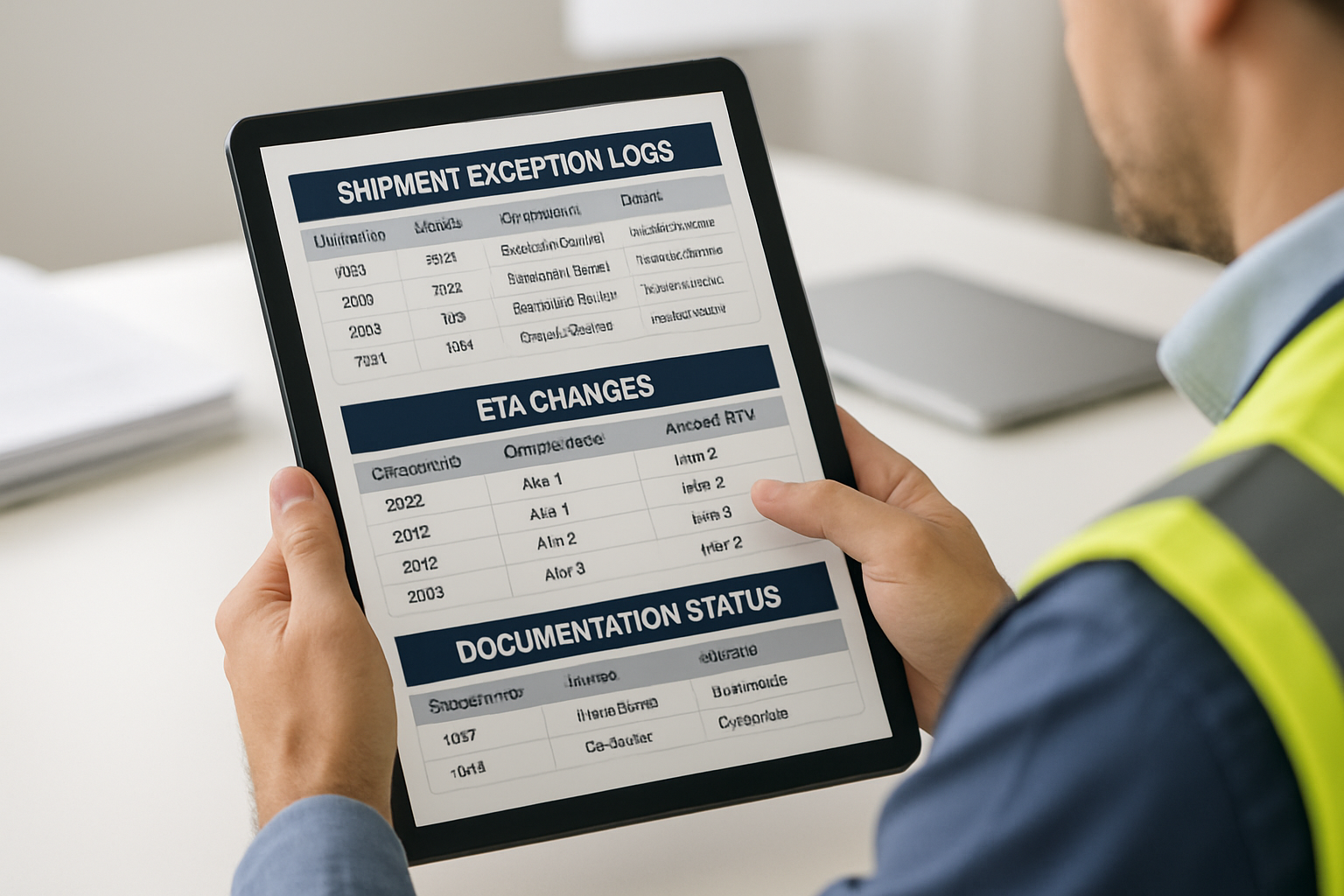
A daily status report should capture structured data and narrative insights in these core sections: Shipment Details, Current Milestones, ETA/ETD Updates, Exceptions & Issue Logs, Vendor/Carrier Status, Documentation Status, and Next Steps.
Shipment Details include container or AWB numbers, routing, and customer references. Milestones reflect progress at origin, transshipment, and destination points. ETA/ETD updates inform all stakeholders of schedule shifts. Exception logs focus attention on delays, missing paperwork, or stakeholder queries needing immediate action. Vendor and carrier updates verify booking and handling status. Documentation status tracks bill of lading or customs clearance progress. Each report section facilitates exception ownership and risk mitigation at the right decision points.
Role-Wise Guidance for Daily Status Reporting
Freight forwarders should coordinate vendor updates, milestone confirmation, and exception ownership to drive closure. Importers and exporters require clear visibility on ETA changes, customs status, and document readiness to manage inventories and customer commitments.
Operations teams must track milestone progress daily and ensure exceptions have assigned owners with clear deadlines. Procurement and documentation teams need to validate vendor performance data and document compliance status in the report to prevent avoidable shipment delays and cost impacts. Structured responsibilities reduce follow-ups and improve transparency.
Daily Status Report: Before, During, and After Shipment Workflow Breakdown
Before shipment: Confirm booking details, vendor readiness, and document submission plans to reduce last-minute surprises. During shipment: Track milestones such as loading, departure, transshipment events, and customs clearance while updating ETA/ETD and exceptions promptly.
After shipment: Confirm delivery milestones, document receipt by consignee, and exception closure. This stage is critical for audit trails and to review vendor performance against KPIs. The report structure must adapt to these stages for efficient milestone tracking and exception management.
Practical checklist
Use this checklist to ensure your daily status report is comprehensive and actionable:
1. Are all active shipments listed with shipment reference and customer details?
2. Are key milestones such as stuffing, vessel departure, and customs status updated daily?
3. Are ETA/ETD changes clearly highlighted with impact assessment?
4. Have exceptions and risks been documented with assigned owners?
5. Is vendor or carrier status updated with relevant contact and action points?
6. Is document submission and clearance status tracked with due dates?
7. Are customer updates summarized concisely and sent proactively?
8. Does the report include next action steps and responsible team members?
9. Is the report distributed to all relevant stakeholders on schedule?
10. Are audit records or historical reports archived for future reference?
Visibility and clear ownership in daily reports transform freight operations from reactive to controlled and predictable.
Common mistakes
Mistake 1: Missing exception ownership leads to delayed resolution and customer escalations. Fix: Assign clear owners with deadlines for every exception in the report.
Mistake 2: Overloading reports with irrelevant data causes information fatigue and missed priorities. Fix: Focus on decision-critical milestones and exceptions only.
Mistake 3: Lack of ETA/ETD update discipline prevents timely customer communication and operational adjustments. Fix: Schedule daily verification of ETAs and include changes prominently in the report.
Mistake 4: Manual, siloed vendor status updates increase risks of inconsistent information. Fix: Centralize vendor updates through coordinated workflows and automated data collection.
Mistake 5: Poor documentation tracking results in customs or delivery delays. Fix: Include document status checkpoints with deadlines and handoff confirmations.
Frayto-Aligned Daily Status Reporting Workflow
Frayto’s operational workflow emphasizes: Shipment Booking → Centralized Milestone Tracking → Exception Flagging and Ownership → Vendor Coordination → Documentation Control → Customer Updates → Audit-Ready Reporting.
This structured approach ensures shipment visibility is centralized with real-time ETD/ETA updates and exception management. Vendor performance and documentation status are tracked in parallel, enabling proactive customer communication and risk reduction. The daily status report emerges as a decision-ready document, bridging multiple teams and reducing manual follow-ups.
Freight Operations Examples Illustrating Daily Status Report Impact
Example 1: A freight forwarder missed an ETA change for a key shipment, resulting in demurrage charges because no exception was flagged in the daily report. With improved reporting discipline, the team identified ETA shifts early and corrected the course.
Example 2: Documentation delays at customs went unnoticed until late, causing shipment hold-ups. Regular documentation status entries in daily reports enabled the operations team to intervene in time, improving clearance times significantly.
Example 3: A customer escalated due to lack of visibility on transshipment events. Integrating milestone updates and vendor coordination into daily reports restored timely communication, reducing escalations and building trust.
FAQ
Get in Touch!
We'll reach out shortly with the info you need. No spam, just a helpful conversation.
Recommended Blogs
Freightstory Technologies Private Limited
A-209, Dynasty Business Park, JB Nagar,
Andheri East, Mumbai- 400059, India


For Exporters & Importers
For Freight Forwarders
© 2026 Frayto. All Rights Reserved.