


Solutions
For Exporters & Importers

For Freight Forwarders and Logistics Service Providers
Automated Shipment Tracking Alerts: A Complete Guide for Logistics Teams


5 Minutes
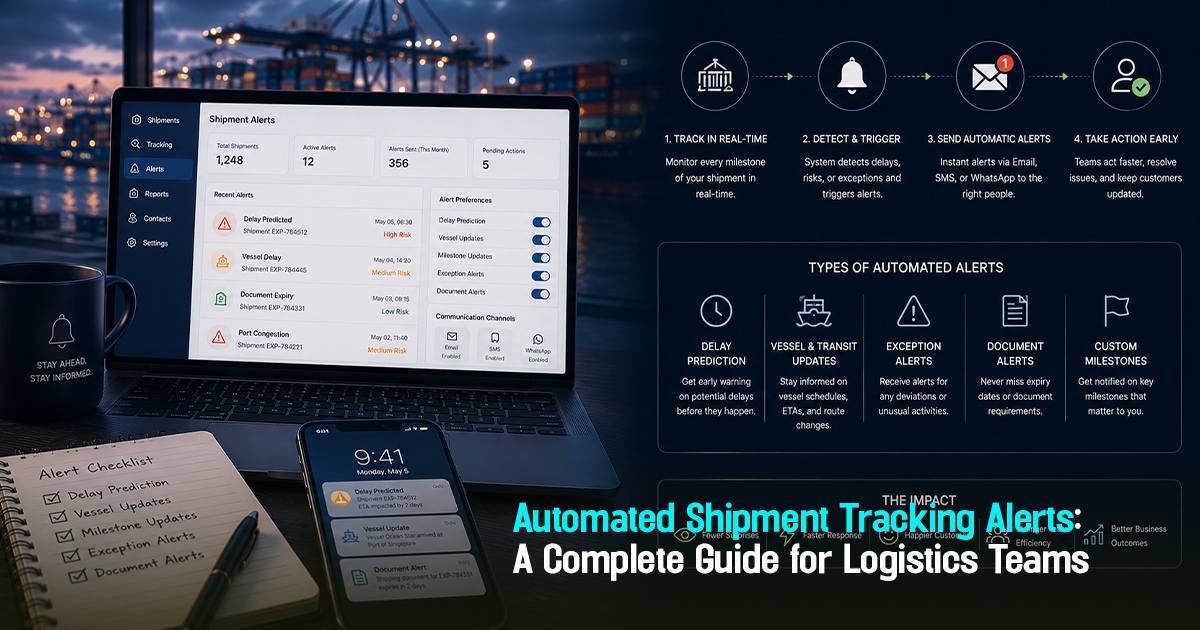
Automated shipment tracking alerts use technology to send timely, structured email notifications and updates about freight movements. This enhances operational clarity by keeping all stakeholders informed of shipment status changes, milestones, ETD/ETA variations, and exceptions. Effective automation addresses common freight problems like missed ETA shifts, late milestone visibility, customer communication gaps, and manual follow-ups. This article offers a practical, operational guide on implementing automated email shipment notifications to improve shipment visibility and control.
What Are Automated Shipment Tracking Alerts?
Automated shipment tracking alerts are system-generated email or digital notifications triggered by predefined shipment events or changes. They provide real-time updates on milestones, delays, exceptions, and estimated time of arrival/departure (ETA/ETD) adjustments.
These alerts replace manual status checks and uncoordinated communication by delivering structured, timely information. Operationally, they enable teams to detect and resolve exceptions faster, reduce customer follow-ups, and maintain centralized control over freight visibility.

A Practical Workflow for Automated Shipment Tracking Alerts
Implementing automated shipment alerts requires a well-defined workflow to ensure relevant stakeholders receive clear and actionable updates. A practical 6-point workflow includes:
- Milestone Event Detection: Systems monitor shipment progress and capture key events such as departure, transshipment, customs clearance, and arrival.
- Exception Identification: Automated logic flags delays, missed milestones, or ETA/ETD changes needing attention.
- Notification Triggering: Predefined rules send email shipment notifications to freight teams, importers/exporters, and customers per event severity.
- Action Ownership Assignment: Alerts assign responsibility to specific operations or customer service personnel for follow-up and resolution.
- Customer Communication: Timely, proactive shipment status notifications reduce inquiries and build trust.
- Audit and Closure: Once exceptions or milestones are resolved, alerts confirm closure and update records for auditability.
This workflow brings an exceptions-first approach, ensuring operational teams focus on disruptions without wasting effort on normal shipments.
Role-Specific Guidance for Automated Alerts
Freight forwarders are responsible for coordinating carriers and ensuring the alert system reflects accurate, updated shipment data. They must monitor exceptions flagged by alerts and coordinate corrective actions.
Importers and exporters benefit from receiving consistent, prompt email shipment notifications that update them on key milestones, ETA changes, and customs clearance, allowing them to plan inbound or outbound logistics accordingly.
Operations teams should use these alerts as their daily task lists for exception handling and milestone tracking, assigning ownership and communicating updates to customers early.
Procurement and documentation teams gain from timely updates on booking confirmations, document submissions, and clearance events, reducing delays caused by missing or late paperwork.
Before, During, and After Shipment: Implementation Stages for Alerts
Before shipment: Set up alert rules around booking confirmations, vendor assignments, and document submissions. Ensure email lists include all relevant recipients.
During shipment: Track carrier milestones, container scans, ETA/ETD updates, and exceptions. Automated alerts should notify owners immediately about delays, transit issues, or customs stalls.
After delivery: Alerts confirm final delivery milestones and prompt closure of exceptions or audit checks. Feedback from customers on communication quality can help refine alert types and timing.
Practical checklist
Use this checklist to evaluate your automated shipment tracking alerts system:
- Are key shipment milestones defined and monitored in the system?
- Do alerts trigger immediately on ETA/ETD changes or missed milestones?
- Are email shipment notifications sent to all necessary stakeholders including customers?
- Is alert ownership clearly assigned for every exception?
- Are alert templates structured with concise, actionable information?
- Does the system avoid redundant or excessive alert emails that cause fatigue?
- Are documentation delays flagged with automated reminders to vendors?
- Is there centralized visibility of all alert history and completions for auditing?
- Can users respond to alerts with status updates or follow-up notes centrally?
- Are alerts integrated with your broader shipment tracking and freight management tools?
Automated shipment alerts empower teams to detect exceptions early and maintain operational clarity throughout shipment execution.
Common mistakes
1. Overloading recipients with generic alerts: Sending too many untargeted email shipment notifications causes alert fatigue, leading to missed critical updates. Fix: Implement alert categorization and role-specific filters so only relevant exceptions reach each recipient.
2. Missing ETA/ETD changes in alerts: Teams fail to react promptly if alerts exclude estimated time updates, risking detention or demurrage charges. Fix: Ensure ETD/ETA monitoring is integrated into the alert triggers with clear change logs.
3. Lack of ownership assignment for exceptions: Alerts without a designated owner cause confusion and delayed responses. Fix: Assign alert ownership automatically based on shipment role or region, with escalation if unresolved.
4. Manual email creation instead of automation: Manual alerts lead to inconsistency, delays, and higher workloads. Fix: Adopt automated email shipment notifications integrated with your freight tracking system for consistent, timely updates.
5. Ignoring customer communication needs in alert design: Alerts missing customer-focused language or timing increase inquiry volume. Fix: Customize alert templates to include customer-friendly summaries and deliver updates proactively.
Real-World Examples of Automated Shipment Tracking Alerts
An importer avoided demurrage charges when an alert flagged a change in vessel ETA at the destination port, prompting expedited document release.
A freight forwarder reduced manual carrier portal checks by centralizing milestone updates and sending automated email shipment notifications to all stakeholders.
An exporter improved customer satisfaction by implementing proactive email alerts during transshipment delays, reducing escalation calls by 30%.
A Frayto-Aligned Workflow for Automated Shipment Tracking Alerts
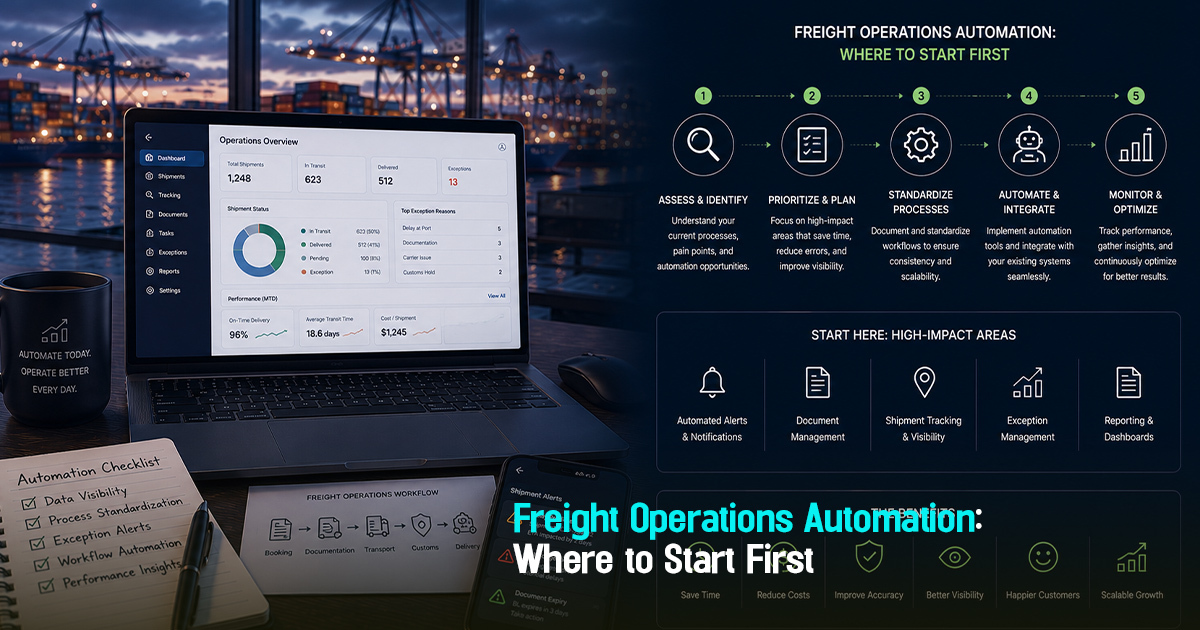
Frayto’s freight management approach integrates automated shipment alerts into a visible workflow: Booking → Documentation Validation → Milestone Tracking → Exception Alert → Customer Notification → Exception Closure. Each stage triggers email notifications for timely intervention and transparent communication. This minimizes missed ETAs and documentation delays, maintaining operational control across teams.
By centralizing alerts within shipment visibility, teams avoid redundant follow-ups and improve audit accountability through structured notification records.
How to Manage Automated Shipment Tracking Alerts Effectively
Effective management starts with configuring alert thresholds that balance timeliness with information relevance. Set alert priorities so critical ETD/ETA changes or customs exceptions get immediate escalation while routine milestones have informative but non-intrusive updates.
Next, establish clear roles and responsibilities for alert recipients. For example, operations control tower users handle exceptions, customer service teams manage client-facing notifications, and procurement monitors booking confirmations. A weekly review of alert counts and resolution times can identify bottlenecks or alert fatigue.
Why Automated Email Shipment Notifications are Essential for Today’s Freight Operations
Increased trade complexity, multi-carrier environments, and tighter delivery windows have made manual shipment status communication inefficient and error-prone. Automated shipment alert systems promote operational clarity by providing consistent, centralized visibility into shipment progress and exceptions.
They improve exception handling speed, reduce detention and demurrage risks by flagging ETA/ETD changes early, and support customer trust through proactive communication. These benefits directly impact cost control and service reliability in freight management.
Get in Touch!
We'll reach out shortly with the info you need. No spam, just a helpful conversation.


For Exporters & Importers
For Freight Forwarders
© 2026 Frayto. All Rights Reserved.