


Solutions
For Exporters & Importers

For Freight Forwarders and Logistics Service Providers
Logistics Control Tower vs Shipment Visibility Platform: Key Differences Explained


4 Minutes
A shipment visibility platform provides centralized, real-time tracking and status updates for freight shipments across carriers and transport modes. This capability is crucial operationally as it enables logistics teams to monitor key milestones, detect exceptions early, and communicate accurate status updates. However, understanding how a shipment visibility platform differs from a logistics control tower is essential for tailoring technology investments and process designs that best fit freight operations.
What is a Shipment Visibility Platform?
Definition: A shipment visibility platform is a digital system focused on aggregating real-time data and providing actionable tracking insights for ongoing shipments across multiple carriers and transport legs.
Such platforms emphasize container, parcel, and cargo tracking via GPS, EDI, IoT sensors, and carrier integrations. They ensure stakeholders have instant status visibility on estimated times of departure and arrival, transit alerts, and exception flags.

What is a Logistics Control Tower?
Definition: A logistics control tower is an operational hub and technology-enabled function that centrally manages end-to-end supply chain events, decisions, and exceptions beyond basic shipment tracking.
Control towers combine shipment visibility tools with workflow orchestration, stakeholder collaboration, and scenario-based decision support. They offer holistic operational visibility by integrating procurement, transport, inventory, and customer communication into one structured system, enabling proactive exception management and cost control.
Key Functional Differences Between the Two
Shipment visibility platforms concentrate on data aggregation, real-time updates, and accessible tracking dashboards. Their primary focus is on status monitoring and communication.
Logistics control towers advance this with process integration, vendor coordination, exception handling workflows, and operational decision engines that reduce delays, detention, and demurrage risks.
Operational visibility depends on timely exception management, not just data collection.
Operational Benefits of Logistics Control Towers
Centralized oversight of supply chain events allows teams to handle exceptions swiftly and reduce costly disruptions.
They provide advanced analytics, automate vendor follow-ups, and control procurement cycles, enabling better freight cost management and compliance adherence.
How Shipment Visibility Platforms Support Freight Operations
Visibility platforms are vital for real-time shipment monitoring, allowing operations teams to confirm ETDs and ETAs accurately and alert stakeholders proactively.
Timely access to shipment status improves customer communication, reduces manual follow-up workloads, and supports better planning of warehousing and last-mile delivery.
Practical checklist for Choosing Between a Control Tower and Visibility Platform
Use this checklist to assess your freight operation needs and technology choices:
- Scope of operations: Is end-to-end supply chain orchestration required or only shipment tracking?
- Exception management: Do you need automated workflow-driven follow-ups and alerts?
- Vendor coordination: Are multiple carriers and vendors involved needing centralized control?
- Data integration: Do you require combined procurement, transport, and inventory visibility?
- Cost control: Are you looking to reduce detention, demurrage, or unplanned freight expenses?
Answering these will clarify the right platform to improve operational visibility and control.
Common mistakes when implementing Shipment Visibility and Control Towers
A frequent error is relying solely on raw shipment data without integrating follow-up processes or exception workflows. This leads to reactive operations and missed cost-saving opportunities.
Another pitfall is underestimating the need for vendor coordination and centralized communication, causing delays and compliance gaps.

Integrating Shipment Visibility Into Control Tower Workflows
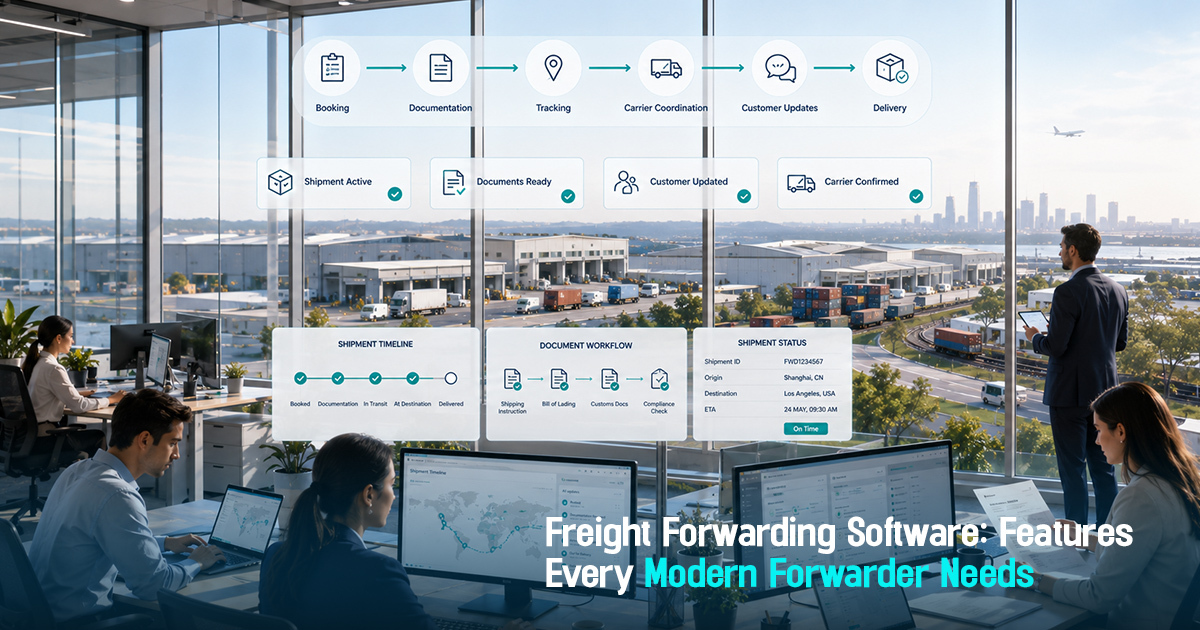
Effective logistics operations often require combining shipment visibility platforms within a control tower framework. This workflow typically follows:
- Booking & Documentation: Secure freight bookings and prepare compliant shipping documentation.
- Visibility & Tracking: Use visibility platforms to monitor shipment milestones and real-time locations.
- Exception Handling: Detect deviations such as delays or customs holds and trigger workflows.
- Delivery Control: Coordinate vendors and stakeholders to resolve exceptions and ensure timely delivery.
This integrated process reduces operational risks and strengthens freight cost discipline.
Conclusion
Understanding the distinct roles of shipment visibility platforms and logistics control towers is critical for freight forwarders, supply chain managers, and operations teams aiming to streamline their workflows. While shipment visibility platforms provide essential real-time tracking and status updates, control towers offer a broader scope, integrating exception management, vendor coordination, and procurement oversight. Choosing the right solution depends on operational complexity and control needs, where combining both can yield optimal results. Investing in structured visibility and control workflows improves decision-making, reduces detention and demurrage exposure, and sharpens customer communication. For freight teams looking to enhance operational clarity and cost control, a clear distinction and integration strategy between these two technologies ensures freight moves efficiently through complex global networks. Relevant external information can be explored from authoritative sources like UNCTAD and FIATA.
Get in Touch!
We'll reach out shortly with the info you need. No spam, just a helpful conversation.
Freightstory Technologies Private Limited
A-209, Dynasty Business Park, JB Nagar,
Andheri East, Mumbai- 400059, India


For Exporters & Importers
For Freight Forwarders
© 2026 Frayto. All Rights Reserved.