


Solutions
For Exporters & Importers

For Freight Forwarders and Logistics Service Providers
How Freight Forwarders Can Reduce Customer Follow-Ups With a Visibility Portal


4 Minutes
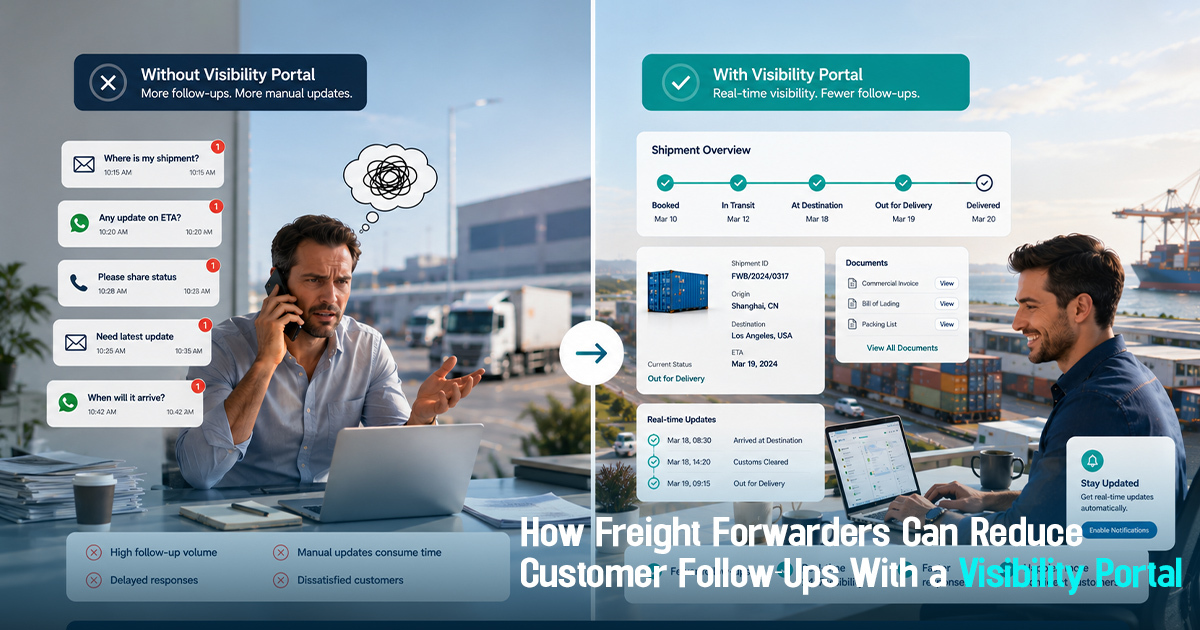
A freight visibility portal is a centralized digital platform that provides real-time freight tracking and shipment status updates to customers and operations teams. This technology is crucial for freight forwarders because it reduces the operational burden of managing constant customer inquiries and follow-ups. When visibility is clear and accessible, freight teams can redirect time and resources from reactive communication to proactive shipment management, avoiding costly delays and improving overall service quality.
Understanding the freight visibility portal
Freight visibility portals integrate shipment tracking software with logistics workflows to provide both forwarders and customers with transparent, timely updates on shipment movement. These portals consolidate carrier data, documentation status, and exception alerts in one interface.
Operationally, these platforms reduce fragmented communication by automating shipment status distribution. This allows freight forwarding teams to focus on exceptions and decision-making while customers independently track their cargo, reducing the need for repetitive follow-ups and status requests.

Why customer follow-ups are a challenge in freight forwarding
Freight forwarders often face intensive follow-ups due to limited visibility in traditional manual or disconnected tracking systems. Shipment status updates may be delayed or inconsistent, increasing customer anxiety and the volume of inquiries.
This uncertainty leads to inefficient communication cycles that pull operational teams into reactive modes, causing delays in addressing exceptions and increasing the risk of detention, demurrage, and compliance issues. A structured visibility solution addresses these issues by providing clear and proactive information flow.
Key features that reduce follow-ups
Real-time freight tracking, automated notifications, and centralized document access are core features that empower both forwarders and customers to see shipment progress without direct intervention. These features facilitate predictive exception handling and timely communication.
By incorporating data from multiple carriers and transportation modes, these portals remove the need for customers to reach out to different parties individually. This smooths vendor coordination and lets freight teams concentrate on resolving actual issues rather than answering status questions.
Clear, real-time shipment visibility cuts follow-ups and frees operations for exception management.
Practical checklist
Implementing a freight visibility portal requires focus on the following workflow elements:
- Integration: Connect all carrier and mode tracking systems into a unified platform.
- Automation: Set up automated shipment status updates and alerts for customers.
- Centralized documentation: Provide easy, real-time access to essential shipping and compliance documents.
- Exception management: Highlight and escalate shipment exceptions proactively to operations teams.
- User access control: Define customer permissions to enable secure and appropriate visibility.
- Customer communication: Reduce manual follow-ups by empowering customers with self-service tracking.
This checklist supports a shift from reactive to proactive freight operations, cutting down ad-hoc customer queries and fostering stronger trust.
Common mistakes
Failing to fully integrate all relevant carriers and transport data sources leads to incomplete visibility, causing customers to still seek updates manually. Partial or siloed tracking systems defeat the purpose of a consolidated portal.
Another frequent error is neglecting exception handling workflows. Without timely flags on delays or issues, forwarders remain unaware until customers call, negating any reduction in follow-ups. Additionally, poor onboarding of customers on how to use the portal can limit adoption and engagement.
How to integrate a freight visibility portal into existing workflows
Effective integration starts with mapping existing freight forwarding operations and identifying critical control points where visibility gaps cause the most follow-ups. Incorporate the portal into the booking and documentation phases to ensure status updates are triggered early and tracked continuously.
Align customer communication protocols to encourage self-service status checks through the portal, supported by training and clear guidelines. Vendor coordination becomes centralized with automated updates replacing manual outreach. This builds an operational discipline around visibility and exception management that reduces unnecessary callbacks.

Comparing manual vs automated customer communication
Manual follow-ups rely on phone calls, emails, or spreadsheets to relay shipment status. This method is labor-intensive, prone to errors, and causes delayed responses. Conversely, automated communication through a visibility portal delivers instant, consistent updates that both customers and freight teams access independently.
Automation also enforces an audit trail of communications and status changes, essential for compliance and resolving disputes. This distinction supports better resource allocation, allowing forwarders to prioritize exception handling over routine inquiries, thus improving operational efficiency.
Leveraging insights from visibility data
A freight visibility portal collects extensive data on shipment progress and delays. Forwarders can analyze this data to identify patterns causing repeated follow-ups, such as recurring carrier delays or documentation bottlenecks. These insights enable continuous process improvements and strategic planning.
Proactive use of shipment tracking software and real-time freight tracking metrics supports more accurate ETA forecasting and timely interventions, which ultimately decrease customer anxiety and follow-up volume.
Conclusion
Implementing a comprehensive freight visibility portal is a practical approach for freight forwarders aiming to reduce customer follow-ups and elevate service levels. By embedding a structured, automated freight tracking system into existing workflows, forwarders gain operational clarity and enhance vendor coordination. This shift allows logistics teams to focus on managing exceptions and compliance issues rather than routine status requests. Empowering customers with accessible, real-time shipment status updates fosters trust and transparency, reinforcing stronger business relationships. Maintaining discipline in data integration, exception alerts, and customer onboarding ensures the portal delivers sustained benefits, reducing communication overhead and improving decision-making. As global freight operations face increasing complexity, a visibility portal is no longer optional but essential for efficient and responsive freight management.
References: FIATA, CBP, World Bank.
Get in Touch!
We'll reach out shortly with the info you need. No spam, just a helpful conversation.
Recommended Blogs
Freightstory Technologies Private Limited
A-209, Dynasty Business Park, JB Nagar,
Andheri East, Mumbai- 400059, India


For Exporters & Importers
For Freight Forwarders
© 2026 Frayto. All Rights Reserved.