


Solutions
For Exporters & Importers

For Freight Forwarders and Logistics Service Providers
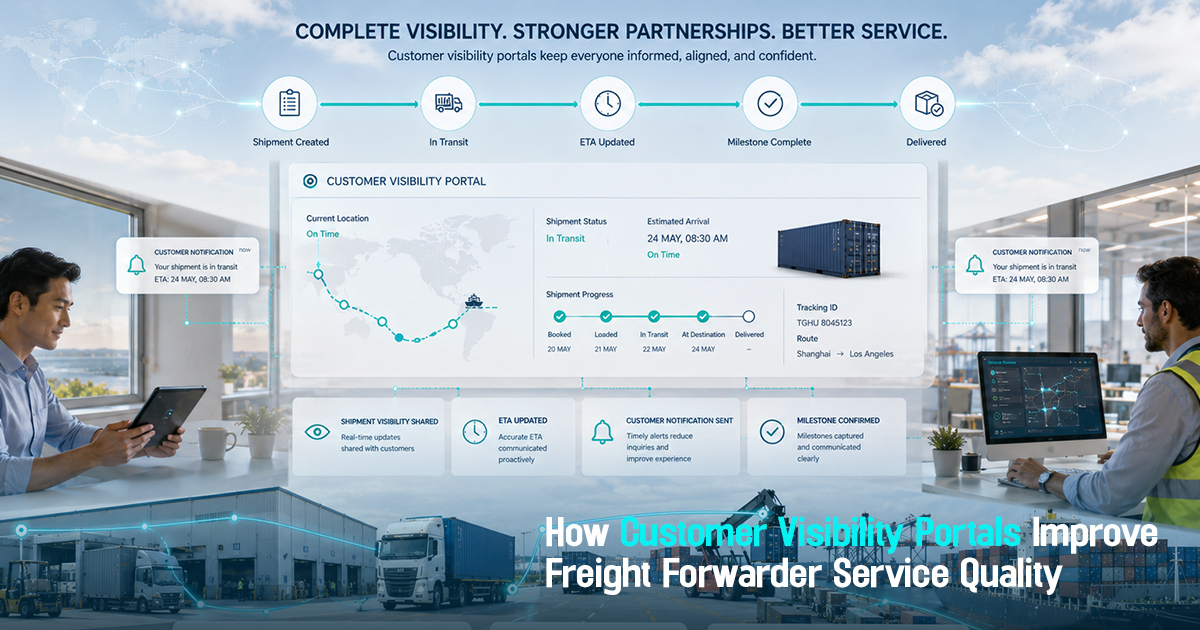
How Customer Visibility Portals Improve Freight Forwarder Service Quality


4 Minutes
Customer visibility portals for freight forwarders are digital platforms designed to provide shippers and logistics partners with real-time access to shipment status, document updates, and exception notifications. Operationally, these portals are critical because they bridge information gaps, reduce follow-up burden, and increase transparency across the shipment lifecycle. However, many freight forwarders still struggle with fragmented communication and delayed visibility, which negatively impacts service quality and customer satisfaction.
What Are Customer Visibility Portals for Freight Forwarders?
Customer visibility portals are specialized online tools enabling shippers and customers to track their freight in real time, access documentation, and receive proactive updates. These portals consolidate data from multiple sources such as carriers, customs, and internal systems into a unified interface.
By providing a centralized view of shipment milestones and exceptions, these portals enhance operational transparency and streamline communication. They serve as a critical link in managing expectations and reducing manual follow-ups, contributing to measurable freight forwarder service improvement.

Key Benefits of Customer Visibility Portals in Freight Forwarding
Implementing customer visibility portals leads to several operational advantages, including improved shipment tracking accuracy and faster exception handling. Forwarders can quickly identify delays or compliance issues and communicate them promptly to customers.
This enhanced visibility reduces costly detention and demurrage risks by enabling proactive responses to cargo status changes. Additionally, a transparent workflow promotes trust and strengthens customer relationships.
How Customer Visibility Portals Support Better Customer Communication
Customer communication in freight forwarding relies heavily on timely and accurate information sharing. Visibility platforms for logistics reduce the need for frequent manual status requests, allowing operations teams to prioritize exception handling.
By enabling automated notifications and real-time updates, these portals ensure that customers remain informed about ETAs, document readiness, and potential disruptions, minimizing uncertainty and operational friction.
Addressing Common Challenges in Freight Visibility
Fragmented data sources and lack of integration often result in delayed or inaccurate shipment information. This creates operational inefficiencies and undermines customer confidence.
Customer visibility portals centralize shipment data from carriers, customs, and internal systems, enabling real-time shipment monitoring. This centralized approach supports faster decision-making and reduces the risk of compliance gaps or missed milestones.
Real-time visibility reduces manual follow-ups and enables proactive exception management in freight operations.
Practical checklist
To implement customer visibility portals effectively, freight forwarders should follow these steps:
- Assess integration requirements to connect carrier systems, customs data, and internal databases.
- Select a platform that supports real-time tracking and exception management workflows.
- Define user access levels for customers, vendors, and internal teams to ensure data security.
- Automate notification triggers for shipment milestones, delays, and documentation updates.
- Train operations and customer service teams on portal use and exception escalation protocols.
Following this checklist ensures that visibility platforms become a tool for enhancing operational efficiency, compliance discipline, and customer satisfaction.
Common mistakes
Overlooking data accuracy can lead to misinformation, eroding trust. Forwarders must validate all data feeds to maintain reliable shipment updates.
Failing to incorporate exception-first workflows means that critical delays or compliance events may go unnoticed until customer escalation. Visibility portals should prioritize alerting and managing exceptions promptly.
Comparing visibility platforms and shipment tracking portals
Visibility platforms offer comprehensive operational control, integrating multiple data sources, exception handling, and customer communication tools. They focus on end-to-end freight management transparency.
In contrast, shipment tracking portals typically provide basic location updates and ETA information without processing exceptions or supporting operational workflows deeply. For freight forwarders aiming to improve service quality, visibility platforms deliver more practical value.
Integrating customer visibility portals in freight procurement and operations
Customer visibility portals also support freight procurement by offering transparent shipment status and carrier performance data during contract negotiations. This insight enables more informed vendor comparison and better auditability.
Operational teams benefit from centralized tracking, which streamlines booking workflows, documentation handoffs, and vendor coordination, contributing significantly to reducing detention and demurrage risks.

Conclusion
Customer visibility portals for freight forwarders provide a structured approach to improving service quality by enhancing transparency, communication, and exception management. These platforms reduce manual follow-ups, enable real-time updates, and support compliance discipline, which are essential for managing complex freight operations efficiently. Implementing these solutions impacts not only customer satisfaction but also operational cost control and risk reduction. Freight forwarders adopting such portals experience stronger vendor coordination and streamlined workflows, making visibility a core component of modern freight management practices. With the continuous complexity of supply chains, embracing these portals is a practical step toward achieving consistent, measurable service improvements in freight forwarding today.
Get in Touch!
We'll reach out shortly with the info you need. No spam, just a helpful conversation.
Recommended Blogs
Freightstory Technologies Private Limited
A-209, Dynasty Business Park, JB Nagar,
Andheri East, Mumbai- 400059, India


For Exporters & Importers
For Freight Forwarders
© 2026 Frayto. All Rights Reserved.