


Solutions
For Exporters & Importers

For Freight Forwarders and Logistics Service Providers

Freight Exception Management: A Catalogue for Handling Rollover, Transhipment Miss, and Sailing Delay


4 Minutes
Freight exception management refers to the systematic process of identifying, tracking, and resolving unplanned disruptions in freight shipments such as rollover, transhipment misses, and sailing delays. Effective management of these exceptions matters operationally because unchecked exceptions degrade shipment reliability, increase detention and demurrage costs, and impair customer trust. The core challenge lies in timely detection and structured handling of these freight disruptions to maintain operational visibility and control.
Defining Key Freight Exceptions
Rollover refers to a shipment missing its planned vessel departure, requiring it to be 'rolled over' to a later sailing. Transhipment miss occurs when a container fails to transfer at a hub port as scheduled, affecting onward movement. Sailing delay involves postponed vessel departure impacting the entire shipment timeline.
These exceptions not only disrupt schedules but affect documentation workflows, customer communication, and cost management. Operational teams must understand these exceptions clearly to preempt cascading issues in multi-leg freight movements.

How Freight Exception Management Supports Shipment Visibility
At its core, freight exception management integrates real-time alerts and milestone monitoring, enabling logistics teams to detect deviations such as rollover or transhipment misses as soon as they occur. This proactive visibility allows immediate follow-ups and corrective actions before delays worsen.
By linking shipment delay tracking with operational follow-up workflows, teams control exception resolution costs such as detention or demurrage charges. Structured exception workflows also improve audit trails and compliance, critical for regulatory and customer accountability.
Rollover vs. Transhipment Miss: Operational Differences
Rollover primarily affects the departure leg of a shipment, caused by operational delays at origin or terminal congestion. Transhipment miss impacts the middle leg of the supply chain, often due to container transfer mishandling or port processing errors.
Understanding this distinction guides resource allocation for exception handling. Rollover often requires rate re-negotiations or rebooking while transhipment misses often trigger additional coordination across carriers and inland transport teams. Both demand differing documentation updates and customer communications.
Impact of Sailing Delay on Freight Exception Management
Sailing delays have a broad footprint, affecting all containers on the vessel and subsequently scheduled connections. Managing sailing delay exceptions requires close monitoring of estimated time of departure (ETD) and arrival (ETA) adjustments and quick stakeholder updates. Failure to handle these dynamically can lead to compounded disruptions such as missed transhipments or storage charges.
Effective sailing delay management depends on integrated communication with carriers, terminal operators, and customers. This discretion allows operations teams to minimize additional detention and demurrage risks and maintain clear visibility across the freight lifecycle.
Timely exception detection and clear workflows are key to minimizing shipment delays and costs.
Practical checklist
A structured checklist standardizes freight exception management workflows, improving response speed and reducing errors:
- 1. Monitor planned departure and arrival milestones continuously for deviations.
- 2. Identify the exception type: rollover, transhipment miss, or sailing delay.
- 3. Notify internal stakeholders and vendors immediately upon exception detection.
- 4. Coordinate with carriers to confirm alternative bookings or reschedule transfers.
- 5. Update shipment documentation and compliance records to reflect changes.
- 6. Communicate revised ETD/ETA and exception status to customers promptly.
- 7. Track exception resolution progress and verify cost implications like demurrage.
- 8. Document final outcomes for auditability and process improvement analysis.
Common mistakes
A frequent error in freight exception management is delayed awareness, where teams detect rollovers or transhipment misses late, limiting resolution options. Lack of structured escalation paths further prolongs disruptions and increases cost exposure. Inadequate documentation updates after exceptions lead to compliance gaps and invoicing inaccuracies.
Another common mistake is insufficient communication with customers and downstream partners, which worsens service perception and complicates exception audits. Teams also often underestimate the operational impact of sailing delays, failing to recalculate subsequent milestones or coordinate alternate transport effectively.
Leveraging Technology for Effective Freight Exception Management
Technology solutions that offer real-time shipment alerts and centralized visibility simplify managing freight exceptions. Integrated platforms that track milestones and flag deviations enable teams to move from reactive firefighting to proactive exception workflows. Real-time shipment tracking with Instatrac is an example of such a capability that aligns exception visibility with operational action.
Digital exception management frameworks also facilitate automatic documentation updates and audit trails, which are critical for compliance under complex trade regulations. With structured alerts and analytics, logistics managers can reduce detention and demurrage exposure through timely resolution and informed decision-making.
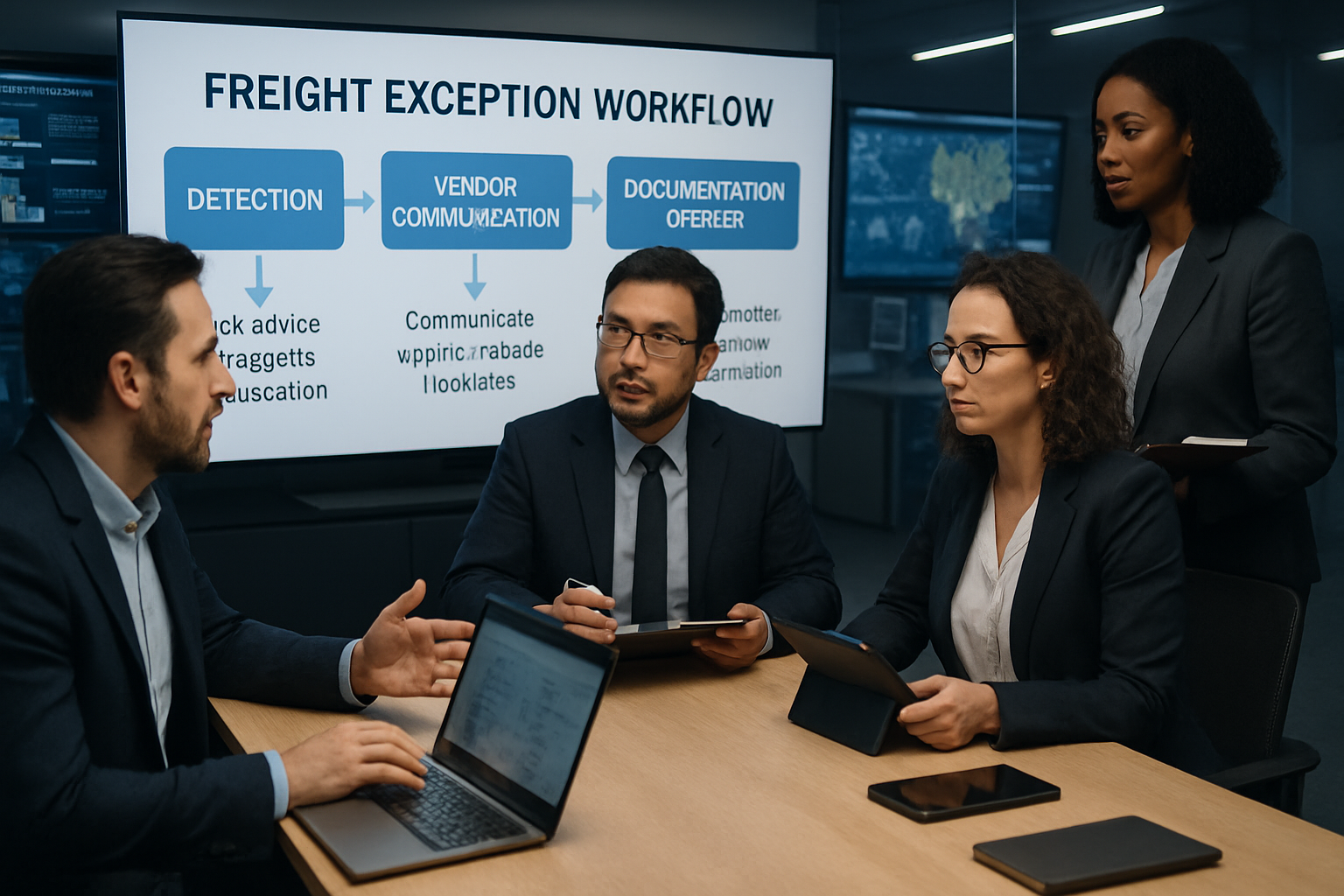
Integrating Exception Management into Freight Procurement and Operations
Exception handling should be embedded into freight procurement and operational workflows. Contract provisions can include clauses addressing rollover and delay contingencies, clarifying responsibilities and cost liabilities. Operational teams benefit from structured booking workflows incorporating exception scenarios to minimize reactive disruptions.
By creating a feedback loop between freight procurement and exception management, organizations improve vendor performance monitoring and negotiation leverage. This integration also strengthens cost control by identifying recurrent exception patterns and optimizing carrier selections accordingly.
Conclusion
Freight exception management is a critical capability that strengthens shipment reliability and operational resilience. Clear identification and structured workflows for exceptions such as rollover, transhipment miss, and sailing delay help reduce costly delays and compliance risks. Emphasizing real-time visibility and timely communication ensures stakeholders remain informed and empowered to act on disruptions. Incorporating these processes into procurement and operations elevates freight performance, lowers detention and demurrage charges, and promotes a culture of continuous process improvement. Operational teams that adopt comprehensive exception management frameworks position themselves to maintain competitive service levels amid growing global shipping complexities.
References: UNCTAD, Drewry, U.S. Customs and Border Protection
Get in Touch!
We'll reach out shortly with the info you need. No spam, just a helpful conversation.
Recommended Blogs



Freightstory Technologies Private Limited
A-209, Dynasty Business Park, JB Nagar,
Andheri East, Mumbai- 400059, India


For Exporters & Importers
For Freight Forwarders
© 2026 Frayto. All Rights Reserved.