


Solutions
For Exporters & Importers

For Freight Forwarders and Logistics Service Providers
Why Process Visibility Matters More Than Shipment Visibility in Logistics Operations


4 Minutes
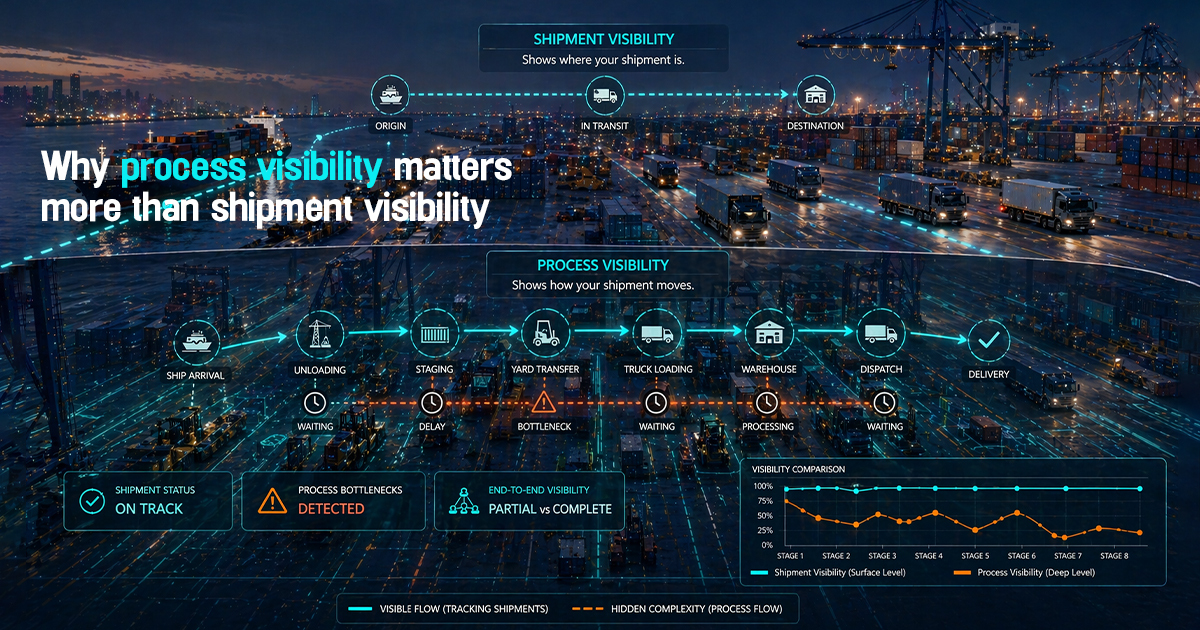
Process visibility in logistics is the comprehensive insight into the full range of freight movement and operational workflows that extend beyond simple shipment tracking. It matters operationally because it enables logistics teams to anticipate risks, manage exceptions, optimize vendor coordination, and control costs in ways shipment visibility alone cannot achieve. The key issue is that many operations rely heavily on shipment visibility—knowing where a container or parcel is—but miss the broader picture of process steps and interactions that directly impact the supply chain’s efficiency and reliability.
What is Process Visibility in Logistics?
Process visibility in logistics means tracking and understanding every operational step involved in freight procurement, shipment handling, documentation, customs clearance, and delivery beyond the mere location of cargo. It encompasses end-to-end logistics workflows rather than isolated shipment states.
This visibility integrates data from procurement schedules, vendor performance, document flows, exception alerts, and customer communications. It provides supply chain decision-makers with actionable insights to manage each phase with control and predictability, mitigating common logistics risks that simple tracking misses.

Shipment Visibility vs Process Visibility
Shipment visibilityIt shows where the shipment is but not what happens around it.
In contrast, process visibilitywhy behind delays or disruptions so teams can proactively intervene.
Benefits of Process Visibility in Logistics
Operational clarityReal-time logistics monitoring of process steps reveals hidden inefficiencies and helps prioritize follow-ups effectively.
By enabling structured freight procurement workflows and centralized communication across stakeholders, process visibility reduces errors and enhances compliance discipline. This leads to better cost control by minimizing detention charges and improving vendor performance management through audit-ready tracking.
How to Improve Supply Chain Visibility Through Process Tracking
Improving supply chain visibilityOperational visibility tools that unify these inputs provide a true end-to-end view rather than siloed shipment statuses.
Start by mapping critical workflows such as booking → documentation → visibility → exception handling → delivery control, and identify key control points to track. Setting clear responsibilities for each step and automating milestone alerts enables proactive intervention before issues worsen.
True operational control comes from monitoring the process, not just the shipment location.
Practical checklist
To implement effective process visibility in your logistics operations, consider the following steps:
- 1. Define key process milestones: Identify critical operational events such as booking confirmation, document submission, customs clearance, cargo arrival, and delivery.
- 2. Integrate data sources: Connect procurement, carrier, customs, and warehouse systems to aggregate process data.
- 3. Assign clear responsibilities: Make teams accountable for progress and exceptions at each milestone.
- 4. Automate alerts and exception notifications: Set triggers for delays, missing documents, or vendor non-compliance.
- 5. Use centralized dashboards: Monitor process status in real-time with visibility across stakeholders.
- 6. Standardize communication workflows: Ensure consistent updates to customers and partners.
- 7. Review and optimize: Regularly analyze process data to identify improvement opportunities.
Common mistakes
Relying solely on shipment visibilityThis results in reactive rather than proactive operations.
Ignoring exception management workflows and lacking structured procurement processes increase risks of detention, demurrage, and costly customer disputes. Overlooking the need for integrated process data reduces operational efficiency and weakens cost control measures.
Leveraging Operational Visibility Tools for Freight Forwarder Process Optimization
Operational visibility toolsThis integration empowers faster decision-making and reduces manual follow-ups.
For example, platforms offering real-time shipment tracking with InstaTrac enhance process visibility by linking location data to procurement and document status. This holistic view streamlines vendor coordination and improves customer communication.

Conclusion
In modern logistics operations, process visibility in logistics provides a more comprehensive and reliable basis for operational control than shipment visibility alone. By capturing the full scope of freight workflows—from booking and documentation to exception handling and delivery—teams gain the ability to reduce risks, improve compliance, and optimize costs. This end-to-end visibility is essential for proactive management and continuous improvement, translating into tangible efficiency gains and better service levels. Companies that invest in process visibility can expect more predictable freight flows, fewer disruptions, and enhanced vendor collaboration—critical factors to succeed amid increasing supply chain complexity and regulatory demands. For ongoing operational clarity, integrating structured workflows with centralized monitoring tools is the practical path forward. Reliable insights into process steps empower logistics teams to act before challenges escalate, ultimately strengthening overall supply chain resilience.
References: unctad.org, oecd.org, fiata.com
Get in Touch!
We'll reach out shortly with the info you need. No spam, just a helpful conversation.
Recommended Blogs

Freightstory Technologies Private Limited
A-209, Dynasty Business Park, JB Nagar,
Andheri East, Mumbai- 400059, India


For Exporters & Importers
For Freight Forwarders
© 2026 Frayto. All Rights Reserved.