


Solutions
For Exporters & Importers

For Freight Forwarders and Logistics Service Providers
.jpg)
Cost Control in Logistics: What Actually Works Compared to Cost Cutting


4 Minutes
Cost control in logistics is a critical operational focus for freight forwarders, supply chain managers, and operations teams aiming to maintain profitability without compromising service quality. It matters because unchecked logistics costs can quickly erode margins, delay shipments, and complicate vendor relationships. This article clarifies the practical differences between cost control and cost cutting in logistics and outlines what actually works to optimize costs while supporting reliable freight operations.
What is Cost Control in Logistics?
Cost control in logistics means actively monitoring, managing, and optimizing logistics expenses through disciplined workflows and strategic decision-making. It involves detailed cost analysis, budgeting, and continuous improvement rather than simply reducing spending.
Effective cost control allows teams to maintain operational efficiency while identifying realistic savings. By contrast, cost cutting often implies reactive or arbitrary cuts that risk service disruptions or compliance issues. Cost control prioritizes visibility and informed decisions based on freight procurement data, transportation cost analysis, and operational cost management logistics.

Why Cost Control Matters More Than Cost Cutting
In logistics, wholesale cost cutting can lead to unintended consequences like shipment delays, detention and demurrage, poor vendor relations, and increased exceptions. Cost control manages expenses without sacrificing service quality by focusing on freight cost management and supply chain cost optimization through process visibility and auditability.
Implementing cost control strategies supports structured procurement and operational workflows that reduce risks associated with aggressive budget cuts. It enables logistics budgeting techniques that promote transparency and continuous operational improvement across document handling, compliance checks, and carrier coordination.
Core Differences Between Cost Cutting and Cost Control
Cost cutting typically means one-time or arbitrary expense reductions, often without analyzing root causes or impact. It risks disrupting logistic operations and causing overload on other processes.
Cost control is a methodical process that emphasizes continuous monitoring, data-driven decisions, and workflow improvements for sustainable savings in freight procurement cost saving and transportation cost analysis.
Sustainable savings come from clear visibility and disciplined cost control, not arbitrary cost cutting.
Effective Cost Control Strategies in Logistics
Strategies that work focus on freight procurement transparency, shipment visibility, and exception-first management. Centralizing freight management under structured systems enhances cost tracking and vendor coordination. This reduces avoidable expenses like detention and delayed payments.
Leveraging logistics cost reduction strategies such as optimized routing, carrier performance audits, contract rate versus spot rate analysis, and compliance discipline ensures costs are realistic and manageable in day-to-day operations.
Practical checklist
Steps to implement effective cost control in logistics:
- 1. Establish detailed budgeting and forecasting for freight and transportation costs
- 2. Monitor shipment tracking and exceptions in real-time to avoid demurrage and detention
- 3. Conduct regular vendor and carrier performance reviews using freight cost management data
- 4. Standardize documentation and compliance checkpoints to prevent delays and fines
- 5. Implement centralized freight management for consolidated visibility and control
- 6. Compare contract rates vs spot rates frequently to optimize procurement decisions
- 7. Use transportation cost analysis to identify inefficiencies and operational bottlenecks
Common mistakes
Many logistics teams confuse cost cutting with cost control, leading to short-term savings that create long-term costs. Cutting budgets without visibility often causes supplier disputes, shipment delays, and missed compliance deadlines.
Other pitfalls include ignoring exception handling data, lacking centralized cost audit processes, and neglecting transportation cost analysis. These mistakes weaken operational cost management logistics efforts and reduce overall supply chain cost optimization potential.
Integrating Cost Control with Freight Procurement
Freight procurement is a pivotal area for cost control in logistics. Structured bidding, rate comparison, and vendor selection aligned to real-time shipment tracking improve spend visibility. Strategic procurement workflows avoid unnecessary cost cutting that hurts service levels. They enable better vendor coordination and auditability of freight cost management.
Adopting global freight management for cost optimization ensures consolidated data and visibility across modes and lanes, turning procurement from a cost center into a value contributor.
Workflow framework for cost control
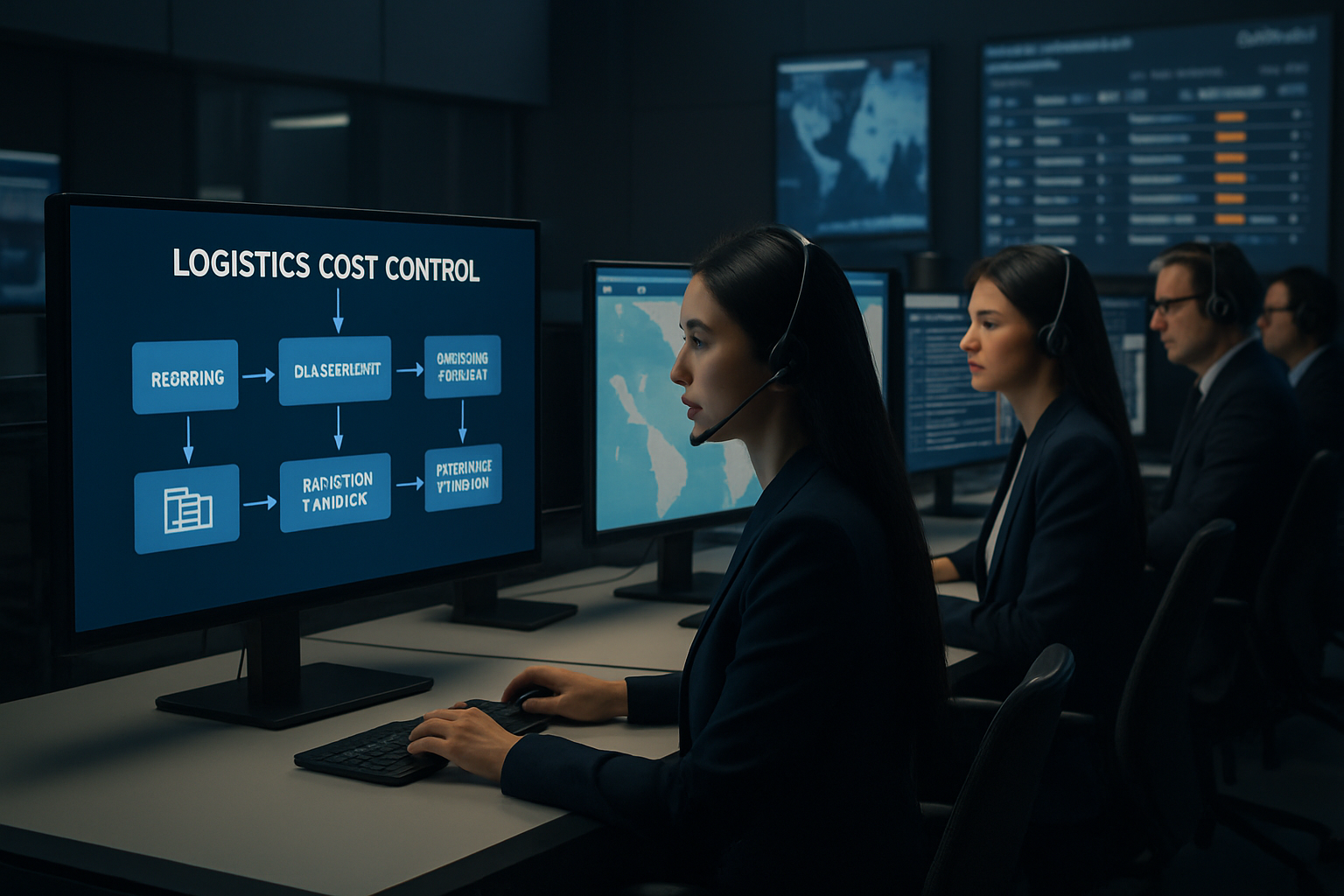
Effective cost control in logistics follows this workflow: Booking → Documentation → Visibility → Exception Handling → Delivery Control.
Beginning with accurate booking and documentation ensures clarity of true costs. Ongoing visibility through shipment tracking allows timely detection of exceptions. Proactive handling minimizes demurrage or delays, leading to controlled delivery execution and verified costs.
Conclusion
In logistics, cost control is a sustainable approach prioritizing visibility and structured processes over abrupt cost cutting that can jeopardize operations. Logistics teams focusing on detailed budgeting, transparent freight procurement, and exception-first workflows enhance service reliability and reduce overall expenses. Integrating transportation cost analysis and vendor coordination into daily operations ensures a clear view of where costs arise and how to optimize them effectively. Adopting these principles supports continuous improvement, mitigates risk from compliance gaps or shipment delays, and strengthens supply chain resilience for the long term. For freight forwarders and supply chain managers aiming for operational clarity, focusing on cost control rather than cost cutting leads to measurable, practical savings and improved customer satisfaction.
References: FIATA - Logistics Insights, Drewry Shipping Reports, UNCTAD Trade and Transport
Get in Touch!
We'll reach out shortly with the info you need. No spam, just a helpful conversation.

Freightstory Technologies Private Limited
A-209, Dynasty Business Park, JB Nagar,
Andheri East, Mumbai- 400059, India


For Exporters & Importers
For Freight Forwarders
© 2026 Frayto. All Rights Reserved.