


Solutions
For Exporters & Importers

For Freight Forwarders and Logistics Service Providers
.jpg)
Why Poor Visibility Increases Logistics Expenses


4 Minutes
Logistics visibility challenges refer to difficulties in obtaining timely, accurate, and comprehensive information about shipments throughout the supply chain. These challenges matter operationally because restricted visibility limits proactive decision-making and increases the risk of delays, exceptions, and cost overruns. Poor visibility creates blind spots in freight operations, leading to higher expenses and reduced efficiency across procurement, shipment tracking, and vendor coordination.
Defining logistics visibility challenges
Logistics visibility challenges occur when supply chain stakeholders lack real-time, end-to-end shipment information. This deficit prevents accurate tracking of freight location, status updates, and exception alerts across modes and vendors.
Without reliable visibility, operations teams face difficulty in price control, resource planning, and exception management, making freight operations harder to optimize. This creates a cascade of incremental costs that add up significantly over time.

How poor visibility drives up logistics expenses
Limited shipment visibility increases detention and demurrage risks due to delayed responses and coordination failures with carriers and consignees. It also causes higher labor costs because operations teams spend more time chasing incomplete or inaccurate data from multiple sources.
Cash flow can be impacted by delayed invoice auditing and increased penalties, while poor visibility also contributes to unplanned storage and handling fees, missed delivery windows, and customer dissatisfaction—all of which inflate logistics expenses.
Impact on shipment tracking and exception handling
Lack of real-time shipment tracking leads to slow exception detection and reaction, increasing costs related to rerouting, expedited transport, and emergency vendor coordination. Teams often resort to reactive operational workflows, losing the chance to prevent costly disruptions.
With poor visibility, communication with customers and partners becomes fragmented, causing repeated follow-ups and manual data reconciliation, further straining resources and amplifying operational inefficiencies.
Freight procurement and cost control challenges
Visibility gaps cloud freight procurement by limiting auditability and hindering vendor performance evaluation, resulting in suboptimal rate negotiations and contract compliance issues. This directly affects logistics cost reduction efforts.
A lack of transparent data prevents structured bidding and benchmarking processes, making it difficult to identify the most cost-effective carriers and shipping options. This weakens the entire freight operations optimization cycle.
Proactive visibility reduces costs by preventing delays and enabling timely exception responses.
Practical checklist
To address logistics visibility challenges, operations teams should follow these steps:
- Implement real-time shipment tracking solutions that provide end-to-end status updates.
- Centralize communication and documentation to reduce information silos and manual follow-ups.
- Establish exception-first workflows to prioritize timely handling of delays and disruptions.
- Audit vendor performance regularly using transparent data to optimize procurement decisions.
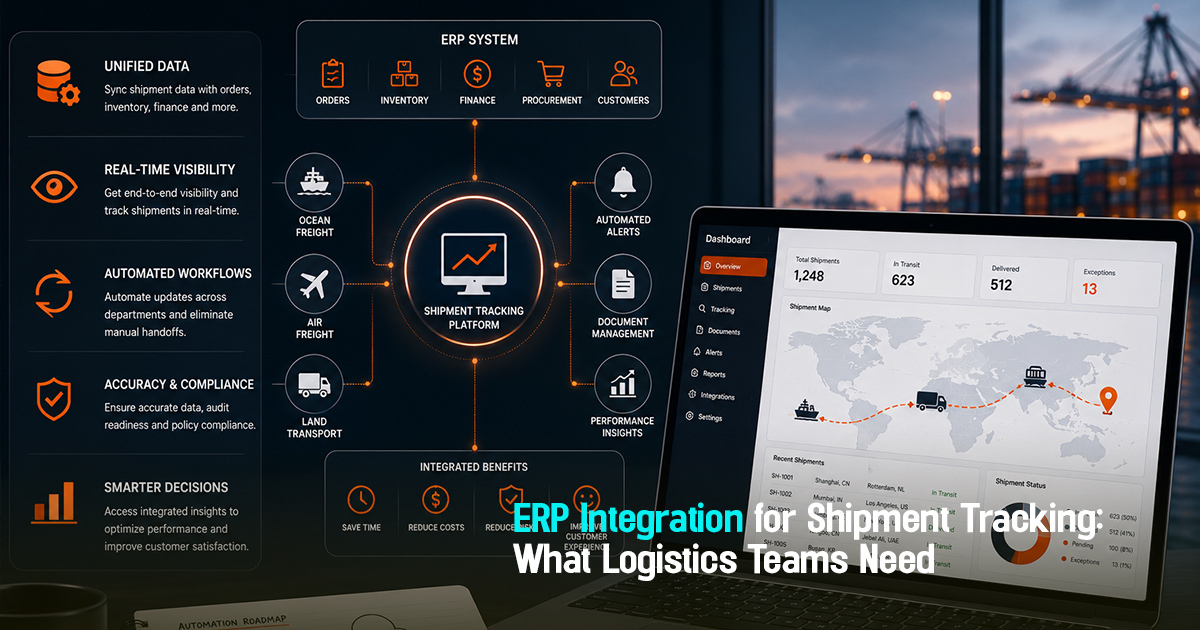
- Integrate shipment visibility technology with freight management systems for unified operational control.
These practical actions reduce unforeseen costs and improve supply chain transparency, supporting sustained logistics cost control.
Common mistakes
Ignoring the root causes of poor visibility often leads to inefficient manual follow-ups and siloed tracking methods. Relying solely on carrier updates without internal tracking efforts is another frequent error that causes blind spots.
Another common oversight is neglecting to align procurement processes with visibility data, resulting in missed opportunities for cost savings and operational improvements. Lastly, underestimating the impact of poor visibility on detention and demurrage penalties can significantly inflate logistics expenses.
Comparison insight: visibility vs tracking
Logistics visibility provides a holistic, end-to-end view of freight movement, encompassing milestones, documentation status, and exceptions. In contrast, shipment tracking commonly refers to monitoring a shipment’s real-time physical location.
While tracking is a component of visibility, comprehensive logistics visibility integrates multiple data sources and operational workflows. Emphasizing visibility over mere tracking enables proactive exception management and cost control rather than reactive problem-solving.
Workflow framework to reduce visibility challenges
A structured workflow to enhance logistics visibility and reduce costs involves key stages:
Booking → Documentation → Visibility → Exception Handling → Delivery Control
Starting with accurate booking data, teams secure correct documentation and enable centralized visibility platforms. This setup allows early detection of issues in the exception handling phase, culminating with tight delivery control to avoid detention or demurrage. This cycle supports freight operations optimization and better logistics cost reduction.

Conclusion
Poor logistics visibility challenges have a direct and measurable impact on overall logistics expenses. Without clear operational insight, teams incur higher costs through unplanned detention and demurrage fees, inefficient manual interventions, and reactive exception management. Improving visibility with integrated tools such as a real-time shipment tracking platform, centralized documentation, and exception-first workflows creates a foundation for sustained logistics cost control and operational clarity. This approach reduces costly disruptions and delays while enhancing supply chain transparency. Freight forwarders and logistics managers who prioritize resolving visibility gaps position their operations to optimize costs and maintain competitive service performance in a complex global environment. FIATA, UNCTAD, and OECD provide valuable insights on global freight visibility and cost impacts that support these operational perspectives.
Get in Touch!
We'll reach out shortly with the info you need. No spam, just a helpful conversation.


For Exporters & Importers
For Freight Forwarders
© 2026 Frayto. All Rights Reserved.