


Solutions
For Exporters & Importers

For Freight Forwarders and Logistics Service Providers

What Makes Shipment Data Actually Useful for Decisions


4 Minutes
Shipment data analytics is the process of collecting, processing, and interpreting freight information to improve logistics decision-making. Operations teams rely on shipment data to manage scheduling, identify risks, and control costs. However, raw data alone often fails to support timely or effective decisions without proper context and interpretation.
What is shipment data analytics?
Shipment data analytics refers to the extraction of actionable insights from freight data captured through tracking technology and other sources. It involves applying structured analysis to movement information, milestones, exceptions, and performance metrics to guide operational responses and strategic planning.
This discipline turns raw logistics data into meaningful indicators that can improve visibility, expedite exception handling, and reduce costs associated with delays or miscommunication. Without analytics, supply chain teams face fragmented information that hampers predictive planning and timely intervention.

The impact of real-time shipment data on operations
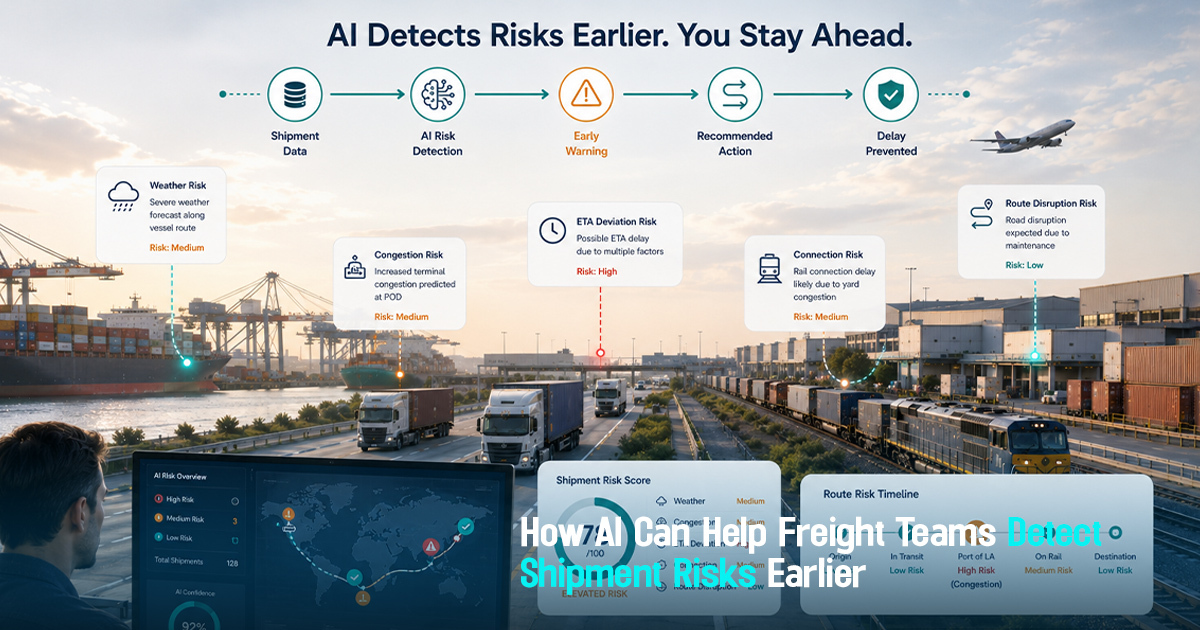
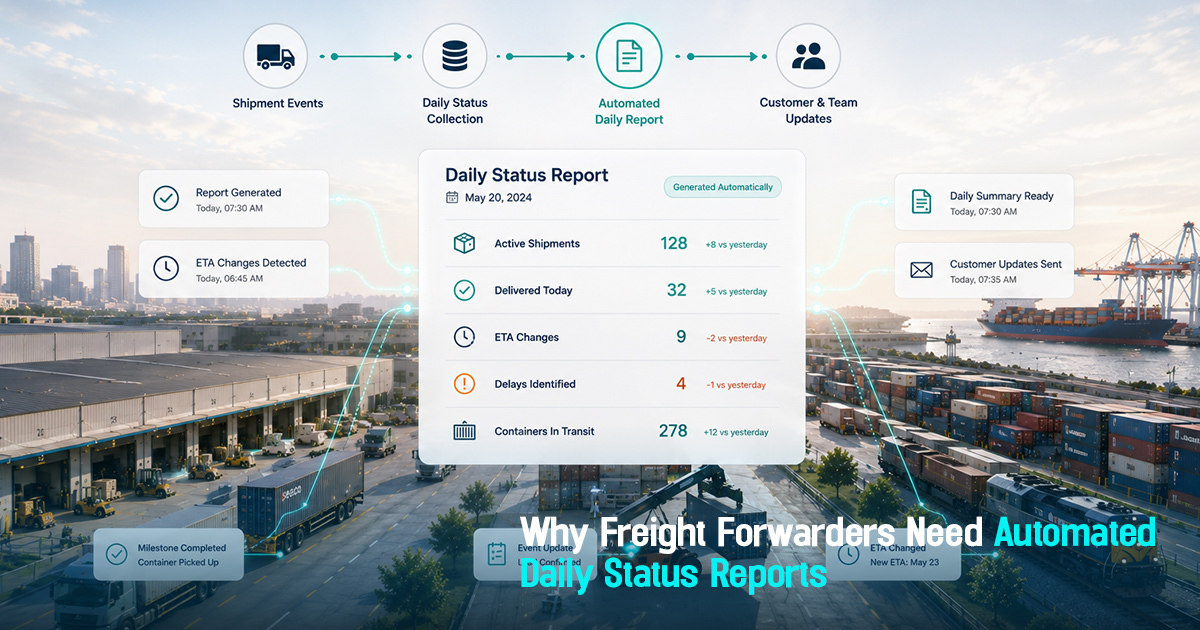
Access to real-time shipment data is critical for operational teams aiming to maintain control over freight flows and respond rapidly to deviations. It enables proactive exception management by surfacing delays, route changes, or documentation issues as they occur.
Without timely updates, managing stakeholder expectations and coordinating vendor actions becomes reactive and often inefficient. Integrating real-time data feeds with operational workflows reduces blind spots and supports better shipment tracking technology adoption for continuous freight visibility.
Common problems with shipment data in logistics
A frequent challenge is the sheer volume of shipment data without clear prioritization, which can overwhelm teams and dilute focus. This leads to missed exceptions or delays like detention and demurrage that escalate costs.
Another issue is inconsistent data quality caused by fragmented vendor systems or irregular updates, resulting in inaccurate visibility and poor decision confidence. Lack of standardized processes to interpret and escalate exceptions worsens these impacts, causing operational disruptions and customer dissatisfaction.
How to interpret freight data for decision making
Effective freight data interpretation requires focusing on key milestones, exception flags, and performance trends rather than raw event logs. Data should be filtered and contextualized to highlight risks and opportunities.
This involves setting threshold alerts, benchmarking shipment times against norms, and correlating delays with supply chain bottlenecks. Good interpretation sharpens operational clarity, enabling teams to allocate resources efficiently and prioritize interventions that minimize disruption and cost.
Accurate shipment data is the foundation for timely decisions and cost control in freight operations.
Practical checklist
To make shipment data truly useful, logistics teams should:
- Ensure data accuracy: Validate carrier updates and vendor inputs consistently.
- Implement real-time tracking: Use reliable shipment tracking technology for continuous updates.
- Standardize data formats: Harmonize inputs from multiple sources for unified analysis.
- Define key performance metrics: Focus on ETD, ETA, transit times, and exception causes.
- Set automated alerts: Highlight risks such as detention, demurrage, or documentation delays.
- Integrate with operational workflows: Connect data insights with follow-up and exception handling processes.
- Communicate clearly: Share filtered and actionable insights with stakeholders timely.
Following this checklist supports consistent data-driven logistics decisions and reduces reactive firefighting in freight management.
Choosing the right shipment tracking technology
Selecting appropriate shipment tracking technology impacts how effectively teams can harness real-time data. Freight visibility solutions vary in data granularity, system integration, and exception alert capabilities.
Reliable tools should support automated status updates from multiple carriers, API integration with procurement and operations platforms, and intuitive dashboards that highlight critical freight events. This promotes centralized freight management and faster decision cycles, helping avoid costly delays.
Common mistakes
One of the most common errors is relying solely on raw shipment data without analysis, which buries useful information beneath noise. Teams also often fail to align data streams with operational priorities, leading to missed exceptions and late interventions.
Another frequent misstep is ignoring data governance and accuracy, resulting in trust issues across stakeholders and poor compliance with documentation requirements. Finally, inadequate communication of insights to forwarding teams and customers weakens control and transparency throughout the shipment lifecycle.

Integrating shipment data with exception handling
Embedding shipment data analytics into exception handling workflows ensures focus remains on real risks rather than overwhelming teams with excessive alerts. Data integration enables rapid root cause analysis of delays and coordinated vendor communication to avoid detention or demurrage charges.
A structured escalation process linked with analytics dashboards improves operational response times and passenger satisfaction. Modern supply chain visibility tools provide this orchestration, reinforcing discipline and auditability across freight operations.
Conclusion
Shipment data analytics becomes operationally valuable when it is accurate, timely, and tied directly to decision workflows across logistics teams. Relying on clean, real-time shipment data combined with standardized interpretation helps reduce costly exceptions such as detention and demurrage. It also boosts proactive communication with vendors and customers, improving visibility and control. Integrating these analytics into structured exception handling and operational workflows is essential for turning information into measurable improvements. Teams that prioritize disciplined data management and smart freight visibility solutions position themselves for better cost control and efficient shipment operations in an increasingly complex global logistics environment. For more effective operational visibility, solutions like real-time shipment tracking with Instatrac enable continuous monitoring and centralized freight management, helping logistics professionals streamline their daily workflows while staying alert to exceptions.IMO, UNCTAD, and FIATA provide in-depth research and guidelines on improving supply chain visibility and freight management.
Get in Touch!
We'll reach out shortly with the info you need. No spam, just a helpful conversation.
Freightstory Technologies Private Limited
A-209, Dynasty Business Park, JB Nagar,
Andheri East, Mumbai- 400059, India


For Exporters & Importers
For Freight Forwarders
© 2026 Frayto. All Rights Reserved.